Craft Friendly Email Sign-Offs: Best Practices for Effective Communication
Crafting an effective email sign-off is not merely a courtesy; it is a crucial component of impactful communication that can significantly influence how
Sophie Grant
Email Signature Specialist, Scribe
Introduction
Crafting an effective email sign-off is not merely a courtesy; it is a crucial component of impactful communication that can significantly influence how messages are received. With the right closing, professionals can enhance their credibility, foster relationships, and reinforce brand identity, making it a vital aspect of email etiquette.
Navigating the subtleties of tone and context can be daunting for many professionals. This article explores best practices for email sign-offs, providing insights and examples that empower individuals to enhance their communication skills and sidestep common pitfalls.
Define Email Sign-Offs and Their Importance
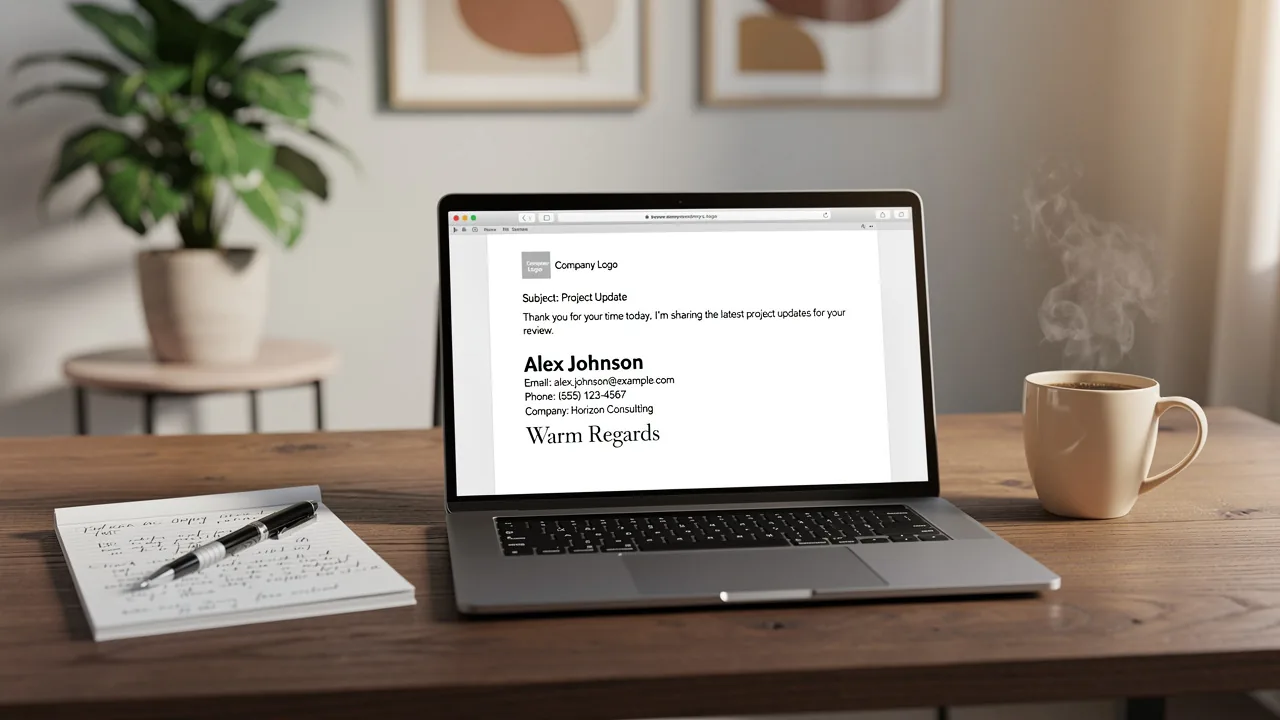
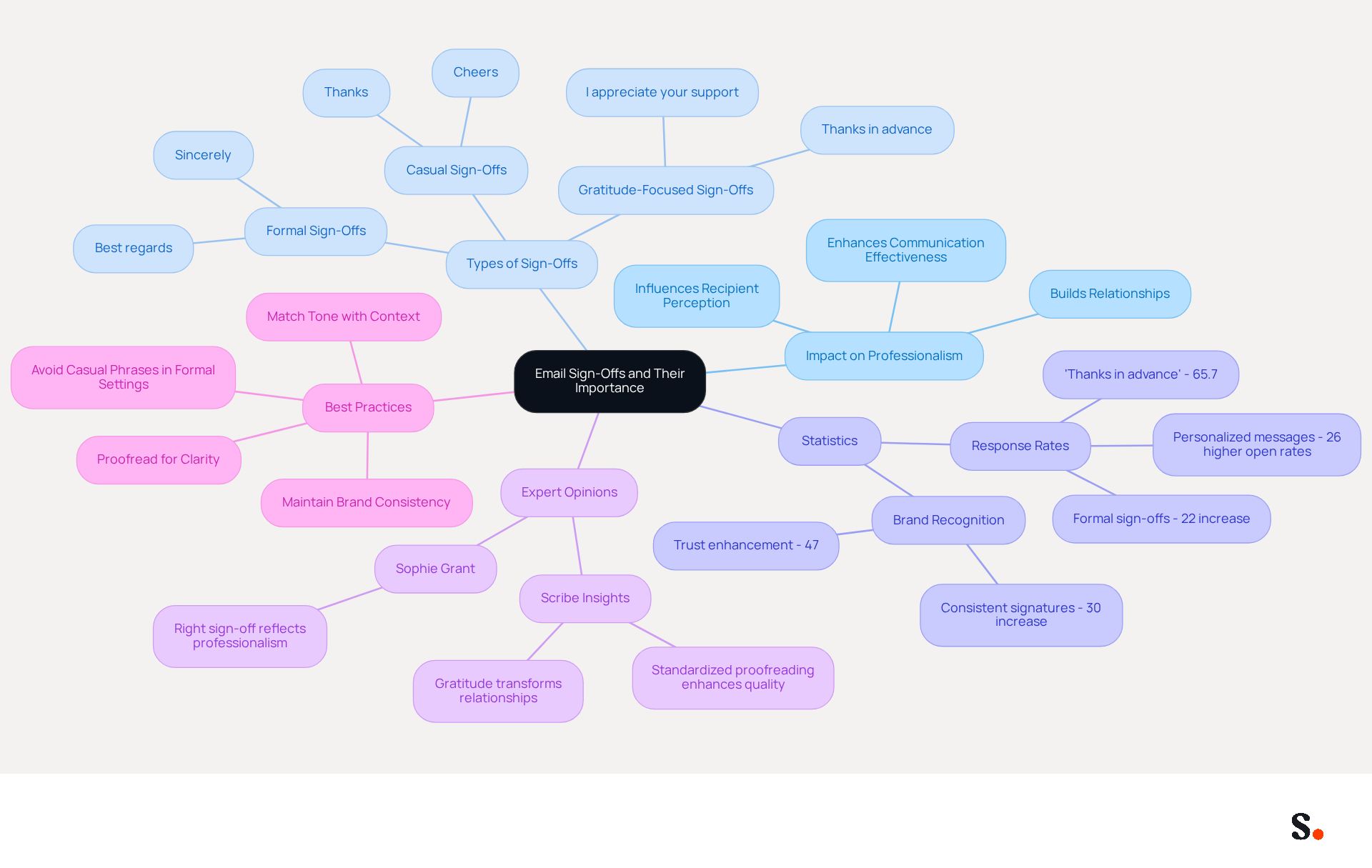
The choice of email closures significantly impacts the professionalism and effectiveness of communication. Email closures, also known as email sign-offs friendly, are the phrases used to conclude an email before the sender's name. They serve as a final impression, encapsulating the tone and intent of the message. Choosing email sign-offs friendly can enhance professionalism, build relationships, and strengthen brand identity. For instance, email sign-offs friendly like 'Best regards' convey respect and warmth, while 'Cheers' may indicate a more casual relationship. Understanding the importance of these closings can significantly shape how recipients perceive the sender and the message, making it a crucial element of effective interaction.
Statistics show just how important it is to conclude messages effectively: communications that end with a 'thank you' receive notably more replies than those that do not, with 'Thanks in advance' achieving a response rate of 65.7%. Moreover, businesses with uniform format styles experience a 22% increase in response rates, emphasizing the influence of branding on messaging. Case studies show that organizations employing standardized email sign-offs friendly report enhanced brand recognition and trust among recipients, reinforcing the idea that a professional closing can elevate communication effectiveness.
Expert opinions highlight that the appropriate approval not only demonstrates professionalism but also strengthens the message's tone and intent. For example, Sophie Grant, an Email Signature Specialist, notes that "the right sign-off not only reflects your professionalism but also reinforces your message's tone and intent." By incorporating gratitude and maintaining a cohesive brand identity, professionals can create meaningful connections that enhance engagement and strengthen relationships. However, it is essential to avoid overly casual phrases like 'xoxo,' 'peace,' and 'cheers' in serious discussions to maintain professionalism. Using casual phrases in serious discussions can undermine the intended message and professionalism. Therefore, mastering email closures can transform professional interactions and enhance the perception of your brand.
Explore Types of Email Sign-Offs: Professional, Casual, and Industry-Specific
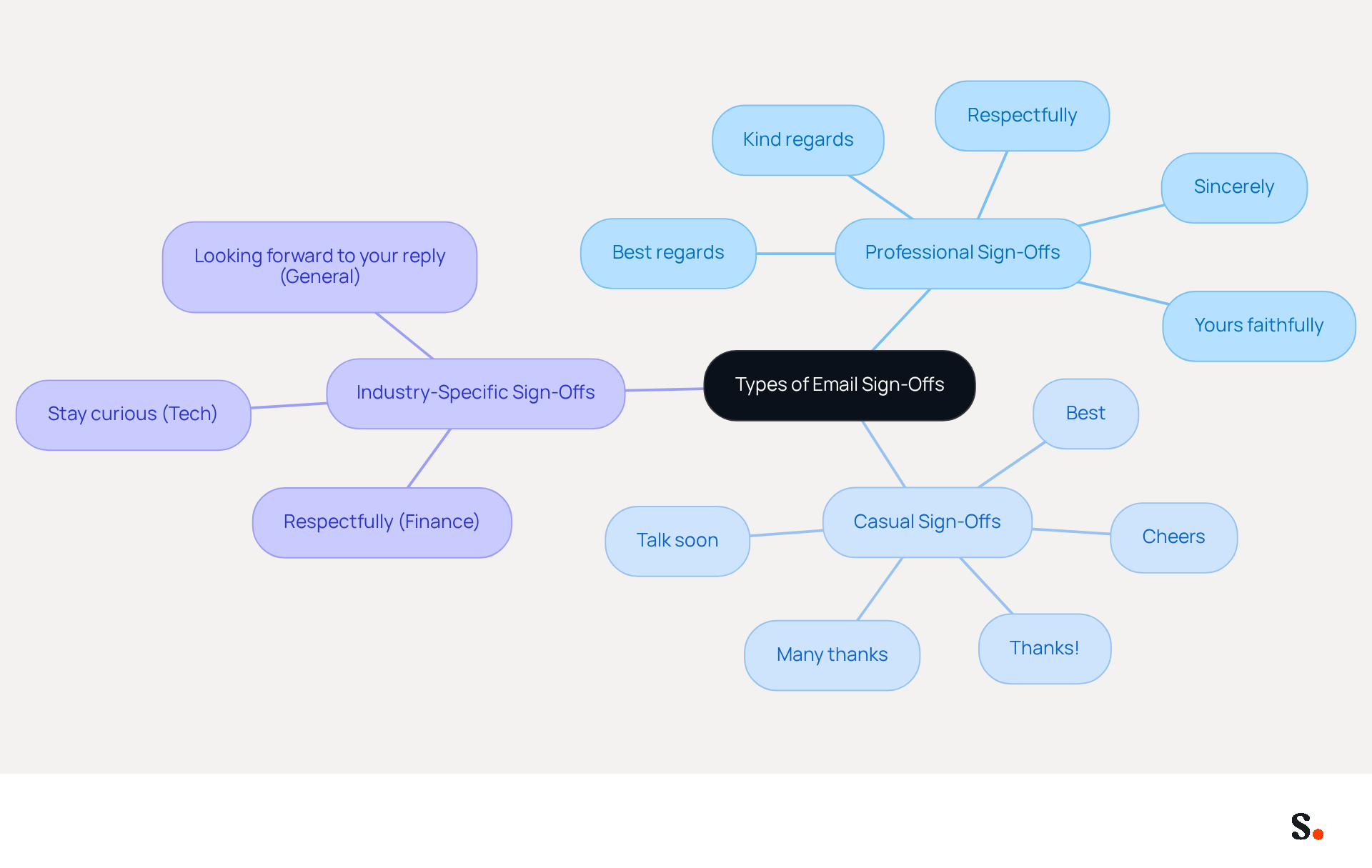
Choosing email sign-offs friendly is crucial, as it can significantly impact the tone and effectiveness of communication. Email sign-offs friendly can be classified into three primary categories: professional, casual, and industry-specific, each fulfilling unique roles in interaction.
- Professional Sign-Offs: These include phrases such as 'Sincerely,' 'Best regards,' and 'Kind regards.' They are essential for formal communications, including business proposals, legal correspondence, and interactions with clients or superiors. These email sign-offs friendly express respect and professionalism, boosting the sender's credibility. In high-stakes situations, 'Strictly Formal' closures like 'Yours faithfully' and 'Respectfully' are also recommended to ensure the appropriate level of formality.
- Casual Sign-Offs: More relaxed phrases like 'Cheers,' 'Talk soon,' or 'Thanks!' are suitable for informal emails among colleagues or friends. These email sign-offs friendly create a vibe that is perfect for communication among colleagues. For example, informal farewells can enhance team cohesion and create a warm environment, as shown by their frequent use in creative industries. Additionally, email sign-offs friendly like 'Best' and 'Many thanks' are ideal for 'Team & Allies' closings among internal coworkers and established contacts, promoting a sense of camaraderie.
- Industry-Specific Sign-Offs: Certain industries may favor unique sign-offs that resonate better with their audience. For instance, in the tech sector, a phrase like 'Stay curious' might be well-received, while in finance, 'Respectfully' may be more appropriate. Understanding these nuances is crucial for selecting email sign-offs friendly that align with the email's tone and purpose.
Research indicates that the right closing phrases can significantly enhance interaction effectiveness. A study found that expressions of gratitude, such as 'Thanks in advance,' led to a 65.7% increase in response rates, highlighting the importance of choosing the right closing phrase. However, choosing the wrong sign-off can lead to misunderstandings and damage professional relationships. By selecting the right closing, professionals can enhance their communication effectiveness and strengthen their relationships.
Select Sign-Offs Based on Relationship and Email Purpose
The choice of email sign-offs significantly influences the effectiveness of communication, impacting both the recipient's perception and the email's intent.
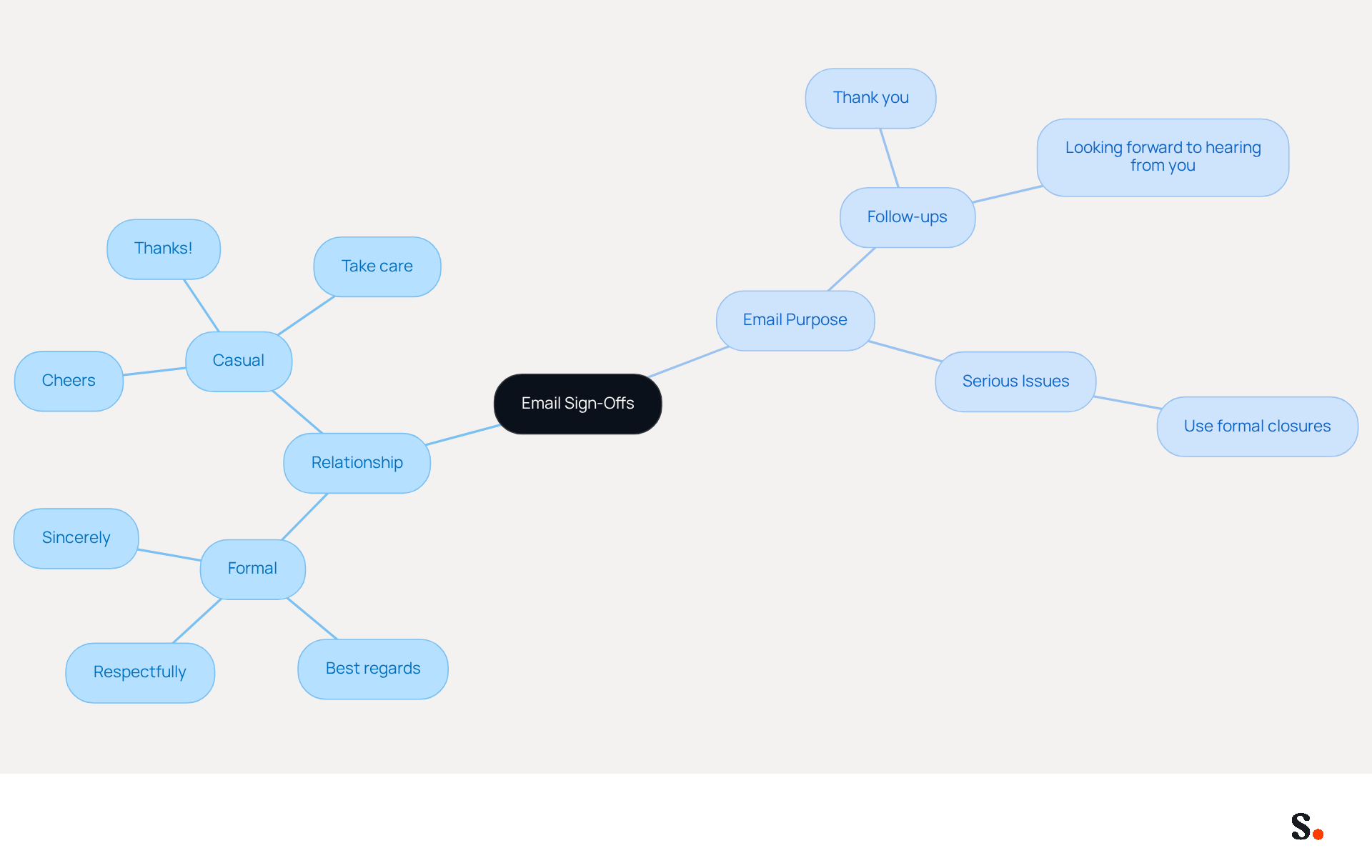
Assessing the Relationship: For formal relationships, such as those with clients or superiors, professional closings like 'Sincerely' or 'Best regards' are recommended. According to communication specialists, for initial interactions or official requests, use closings like 'Sincerely' or 'Respectfully.' In contrast, casual closings such as 'Cheers' or 'Thanks!' are more suitable for colleagues or friends, fostering a friendly tone.
Understanding the Email Purpose: The purpose of the email also dictates the sign-off choice. For follow-ups or thank-you notes, phrases like 'Thank you' or 'Looking forward to hearing from you' reinforce the message and encourage engagement. Studies show that emails with gratitude-based closings achieve response rates of 65.7%, significantly higher than the 47.5% average for other sign-offs. On the other hand, messages concerning serious issues, such as legal matters, should employ formal closures to uphold professionalism. Customizing closing lines in this way can greatly improve interaction efficiency. This is supported by a study from Boomerang, which analyzed over 350,000 message threads and found that messages expressing gratitude received more responses.
By aligning approvals with the recipient's relationship and the message's intent, you can create a more impactful and engaging experience. Ultimately, using email sign-offs can transform a simple email into a powerful tool for building relationships and ensuring clarity in communication.
Avoid Common Mistakes in Email Sign-Offs
To enhance the effectiveness of your email communication, it is crucial to recognize and avoid common sign-off mistakes:
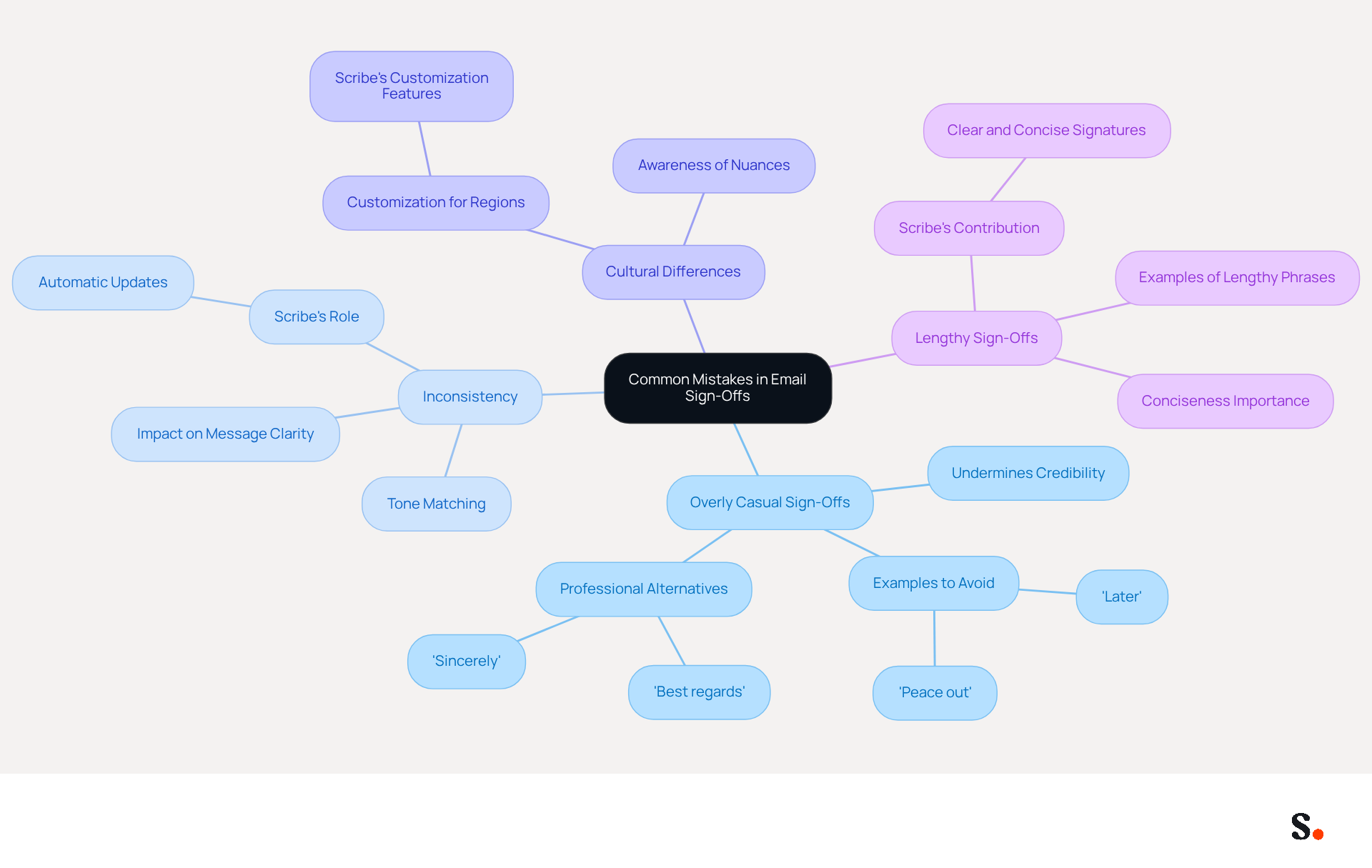
- Overly Casual Sign-Offs: Using informal sign-offs in professional contexts can undermine your credibility. Phrases like 'Later' or 'Peace out' should be avoided in business correspondence, as they may come across as unprofessional. Syncing your Google Workspace with Scribe ensures your signatures maintain a professional tone, avoiding casual sign-offs.
- Inconsistency: Your approval should match the tone of the message. A formal email should not conclude with a casual sign-off, as this can create confusion about the message's intent. Scribe's automatic updates ensure that any changes in your team’s roles or contact information are reflected in their signatures, maintaining consistency across all communications.
- Neglecting Cultural Differences: Be mindful of cultural nuances in conclusions. What is acceptable in one culture may be inappropriate in another, potentially leading to misunderstandings. Scribe allows you to customize signatures for different regions, helping to navigate these cultural differences effectively.
- Lengthy Sign-Offs: Keep it concise. A sign-off should typically be one to three words. Lengthy or complex phrases can dilute the message and may leave the recipient unsure of your intent. Using Scribe helps you keep your signatures clear and concise, which contributes to making your email sign-offs friendly and more effective.
Avoiding these common pitfalls enhances the professionalism and clarity of your written communication, fostering better relationships. Additionally, integrating Scribe with your Google Workspace can streamline your email signature management, ensuring that any updates to your teammates' information are automatically reflected. This not only saves time but also maintains consistency across your communications, allowing you to focus on crafting the perfect sign-off.
Conclusion
The choice of an email sign-off can profoundly affect the perception of communication, often determining the success of professional interactions. By understanding the nuances of email closures, professionals can enhance their interactions, foster relationships, and maintain a consistent brand identity. The right sign-off encapsulates the tone of the message and leaves a lasting impression on the recipient, reinforcing the importance of thoughtful communication.
Throughout the article, various types of email sign-offs were explored, including professional, casual, and industry-specific options. Key insights highlighted the importance of aligning sign-offs with the relationship between the sender and recipient, as well as the purpose of the email. Additionally, common mistakes, such as using overly casual phrases in formal contexts or neglecting cultural differences, were addressed, emphasizing the need for careful consideration in crafting email closures.
Failing to master email sign-offs can hinder effective communication, potentially damaging professional relationships and brand image. By implementing these best practices, professionals can enhance their email interactions, leading to improved engagement and stronger relationships. Recognizing the impact of email sign-offs can redefine how professionals connect, ultimately shaping their brand's reputation in every correspondence.
Frequently Asked Questions
What are email sign-offs and why are they important?
Email sign-offs, also known as email closures, are phrases used to conclude an email before the sender's name. They are important because they impact the professionalism and effectiveness of communication, encapsulating the tone and intent of the message.
How can email sign-offs enhance professionalism?
Choosing appropriate email sign-offs can enhance professionalism by conveying respect and warmth, thereby shaping how recipients perceive the sender and the message.
What are some examples of friendly email sign-offs?
Examples of friendly email sign-offs include "Best regards," which conveys respect, and "Cheers," which may indicate a more casual relationship.
What statistics highlight the importance of effective email closures?
Statistics show that emails ending with "thank you" receive more replies, with "Thanks in advance" achieving a response rate of 65.7%. Additionally, businesses with uniform format styles experience a 22% increase in response rates.
How do standardized email sign-offs affect brand recognition?
Organizations that employ standardized email sign-offs report enhanced brand recognition and trust among recipients, reinforcing the idea that a professional closing can elevate communication effectiveness.
What do experts say about the role of email sign-offs?
Experts highlight that the right sign-off reflects professionalism and reinforces the message's tone and intent. Incorporating gratitude and maintaining a cohesive brand identity can create meaningful connections.
Are there any phrases to avoid in serious discussions?
Yes, it is essential to avoid overly casual phrases like "xoxo," "peace," and "cheers" in serious discussions to maintain professionalism, as using casual phrases can undermine the intended message.
How can mastering email closures transform professional interactions?
Mastering email closures can enhance the perception of your brand and transform professional interactions by creating a more engaging and effective communication style.
List of Sources
- Define Email Sign-Offs and Their Importance
- Master Proper Email Sign-Offs to Boost Your Brand Image (https://scribe-mail.com/en-US/blog/master-proper-email-sign-offs-to-boost-your-brand-image)
- 10 Email Ending Examples to Enhance Your Professional Communication (https://scribe-mail.com/en-US/blog/10-email-ending-examples-to-enhance-your-professional-communication)
- Email Sign Offs for Every Industry and Situation | Mailchimp (https://mailchimp.com/resources/email-sign-offs)
- The beautiful ways different cultures sign emails (https://bbc.com/worklife/article/20190508-why-the-way-you-close-your-emails-is-causing-confusion)
- Email Sign Offs Professional: Best Practices for Business Emails (https://mailwarm.com/blog/professional-email-sign-offs-best-practices)
- Explore Types of Email Sign-Offs: Professional, Casual, and Industry-Specific
- Mastering Professional Email Sign-Offs in 2026 (https://linkedin.com/pulse/mastering-professional-email-sign-offs-2026-bulksignature-qsr4e)
- Email Sign Offs for Every Industry and Situation | Mailchimp (https://mailchimp.com/resources/email-sign-offs)
- How to Sign Off on an Email Correctly | Rocketseed (https://rocketseed.com/blog/correct-way-to-sign-off-emails)
- 110 Best Ways to Sign Off an Email Correctly - Warmup Inbox (https://warmupinbox.com/blog/email-marketing/email-sign-offs)
- Select Sign-Offs Based on Relationship and Email Purpose
- Email Sign Offs Professional: Best Practices for Business Emails (https://mailwarm.com/blog/professional-email-sign-offs-best-practices)
- Best Email Sign-Offs for Any Correspondence (https://wisestamp.com/examples/email-sign-offs)
- Master Business Sign-Off Emails: Best Practices for Impactful Communication (https://scribe-mail.com/en-US/blog/master-business-sign-off-emails-best-practices-for-impactful-communication)
- 110 Best Ways to Sign Off an Email Correctly - Warmup Inbox (https://warmupinbox.com/blog/email-marketing/email-sign-offs)
- How to Sign Off on an Email Correctly | Rocketseed (https://rocketseed.com/blog/correct-way-to-sign-off-emails)
- Avoid Common Mistakes in Email Sign-Offs
- 100 Compelling Email Statistics for 2026 | PGM Solutions (https://porchgroupmedia.com/blog/100-compelling-email-statistics-to-inform-your-strategy-in-2023)
- Memorable Email Sign-Offs: A Beginner's Guide (https://constantcontact.com/blog/email-sign-offs)
- How to Sign Off on an Email Correctly | Rocketseed (https://rocketseed.com/blog/correct-way-to-sign-off-emails)
- Email Sign Offs for Every Industry and Situation | Mailchimp (https://mailchimp.com/resources/email-sign-offs)
- Mastering Professional Email Sign-Offs in 2026 (https://linkedin.com/pulse/mastering-professional-email-sign-offs-2026-bulksignature-qsr4e)
Get started with Scribe
Build a professional email signature
Free 14-day trial — no credit card.