How to End Email Informal: 4 Steps for Effective Sign-Offs
The conclusion of an email plays a pivotal role in shaping the recipient's perception and response. Effective sign-offs not only reinforce the tone of the
Sophie Grant
Email Signature Specialist, Scribe
Introduction
The conclusion of an email plays a pivotal role in shaping the recipient's perception and response. Effective sign-offs not only reinforce the tone of the message but also reflect the relationship between the sender and the recipient, making them a crucial element of communication.
Choosing the right informal sign-off can be challenging due to the numerous options available. This guide provides practical steps and insights for crafting effective email closings, ensuring that every message ends on a positive note.
Mastering effective email closings can lead to improved communication outcomes and stronger professional relationships.
Understand Email Sign-Offs and Their Importance
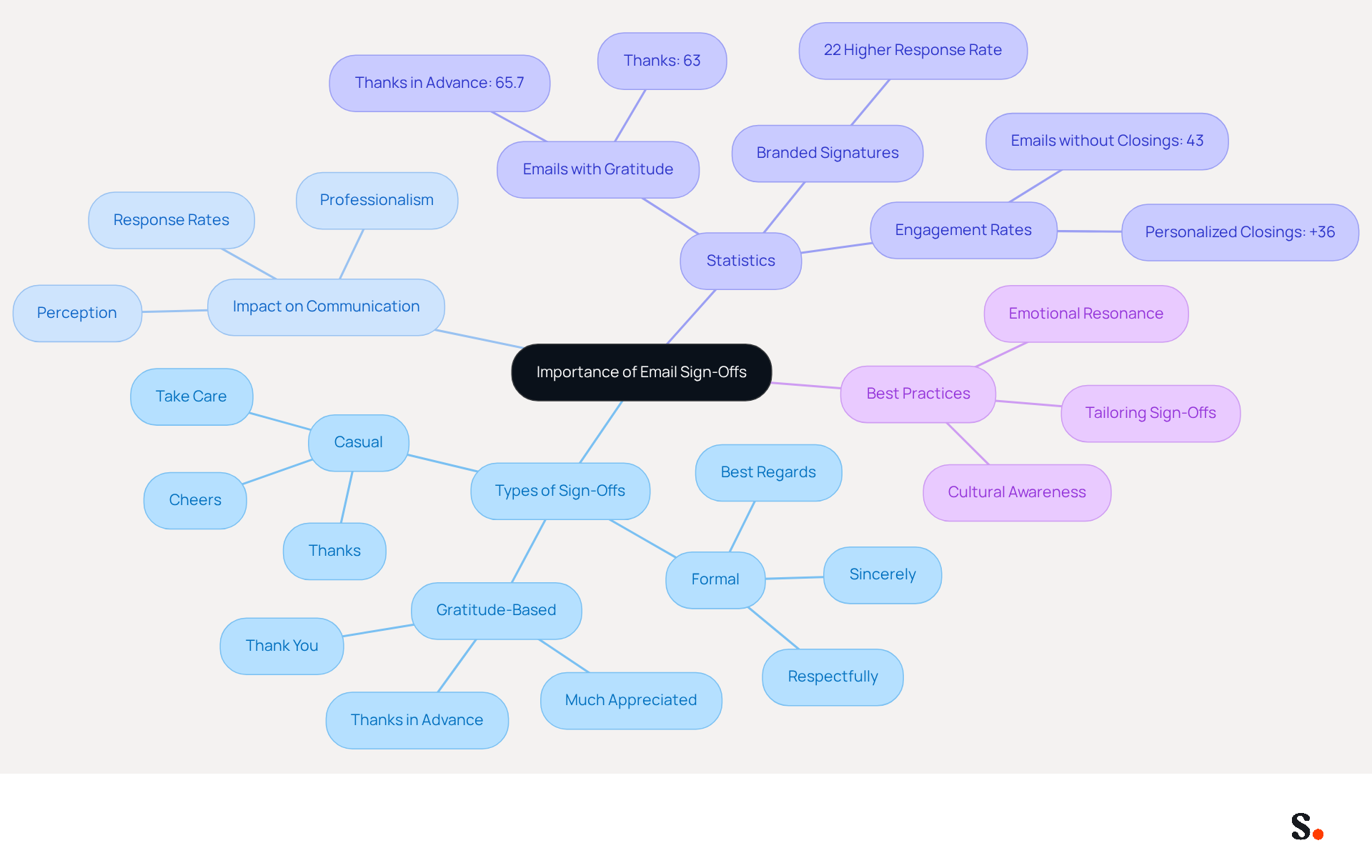
The way you close your emails can significantly influence how your message is received. Email closings serve as the final touchpoint in your communications, affecting how individuals perceive your message. A thoughtfully chosen sign-off can reinforce the tone of your message, reflect your relationship with the recipient, and even impact the likelihood of receiving a response. For instance, casual farewells like 'Cheers' convey a friendly rapport, while formal closings such as 'Sincerely' denote professionalism. Research indicates that messages that end with gratitude-based phrases, like 'Thanks in advance,' see a response rate of 65.7%, demonstrating the effectiveness of thoughtful closings. Moreover, messages with branded signatures achieve a 22% higher response rate, showing how crucial effective sign-offs are in enhancing communication.
With Scribe, all modifications made to your Calendly configuration automatically sync with your signatures, ensuring brand consistency and effortless updates. This seamless integration allows marketing teams to maintain a professional appearance in all communications without the hassle of manual adjustments. Scribe ensures secure data handling by adhering to SOC 2 Type II compliance. In informal contexts, understanding how to end email informal with the appropriate sign-off encourages camaraderie and warmth, making your messages feel more personal and engaging. Conversely, inappropriate closures can lead to misunderstandings or seem unprofessional. Grasping the significance of message closings is crucial for effective communication in both personal and professional environments. Case studies reveal that messages with personalized or considerate closings can experience a response increase of up to 36%, underscoring the strategic value of tailoring your endings to the situation. Furthermore, messages without closings have an average response rate of only 43%, emphasizing the importance of effective conclusions. By mastering the nuances of sign-offs, including the emotional resonance of phrases like 'Is Best,' you can enhance your communication strategies and foster stronger connections with your audience. Mastering the art of sign-offs can transform your communication effectiveness and strengthen your professional relationships.
Identify the Right Tone for Informal Sign-Offs
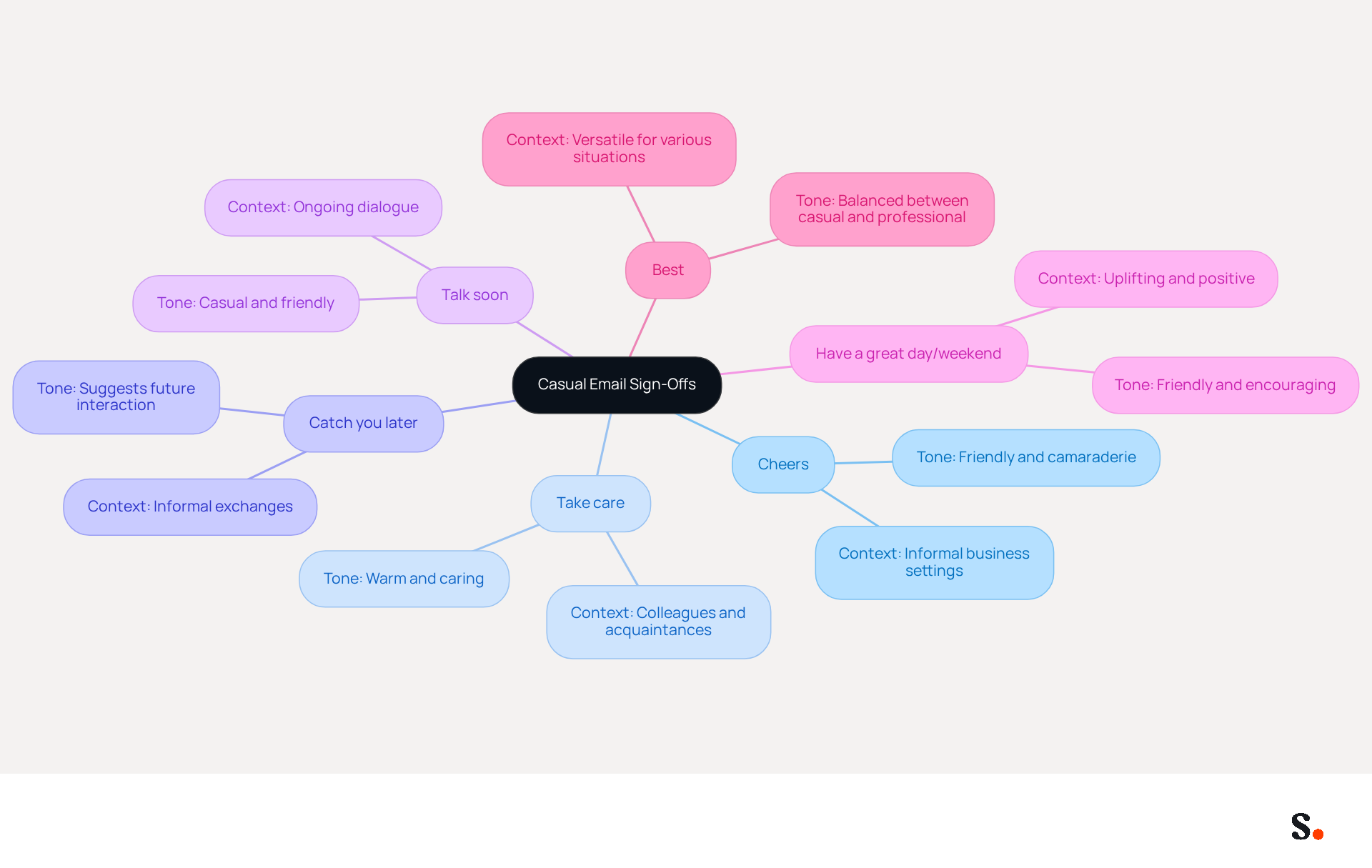
Selecting the right tone for how to end email informal is crucial for effective communication. When thinking about how to end email informal, consider the nature of your relationship with the person you are emailing. For instance, if you are communicating with a close colleague or friend, a casual farewell like 'Catch you later' or 'Take care' can enhance the friendly tone of your message. However, it is crucial to avoid overly casual phrases, such as 'Later, gator' or 'Cheers,' in professional correspondence, as they can undermine your professionalism.
On the other hand, if you are emailing someone you know less well, you might choose a slightly more neutral closing, such as 'Best wishes' or 'Thanks.' It is essential to align your closing statement with the overall tone of your message. If your message is light-hearted and informal, your closing should reflect that. Conversely, if your message discusses a serious topic, a more subdued closing may be appropriate, such as 'Sincerely' or 'Respectfully,' especially when delivering bad news.
Research shows that 'Best regards' is appropriate in about 95% of professional situations, balancing formality and warmth effectively. As Gen Z continues to influence workplace communication, with their share of the global workforce currently at 27%, incorporating fresh alternatives like 'Stay awesome' or 'Looking forward' can add a personal touch while maintaining professionalism.
Ultimately, the goal is to ensure that your closing feels natural and aligns with the context of your communication, particularly when thinking about how to end email informal, reinforcing the message you wish to convey. By thoughtfully considering your relationship with the recipient, you can choose a closing that strengthens your message and builds rapport.
Explore Examples of Casual Email Sign-Offs
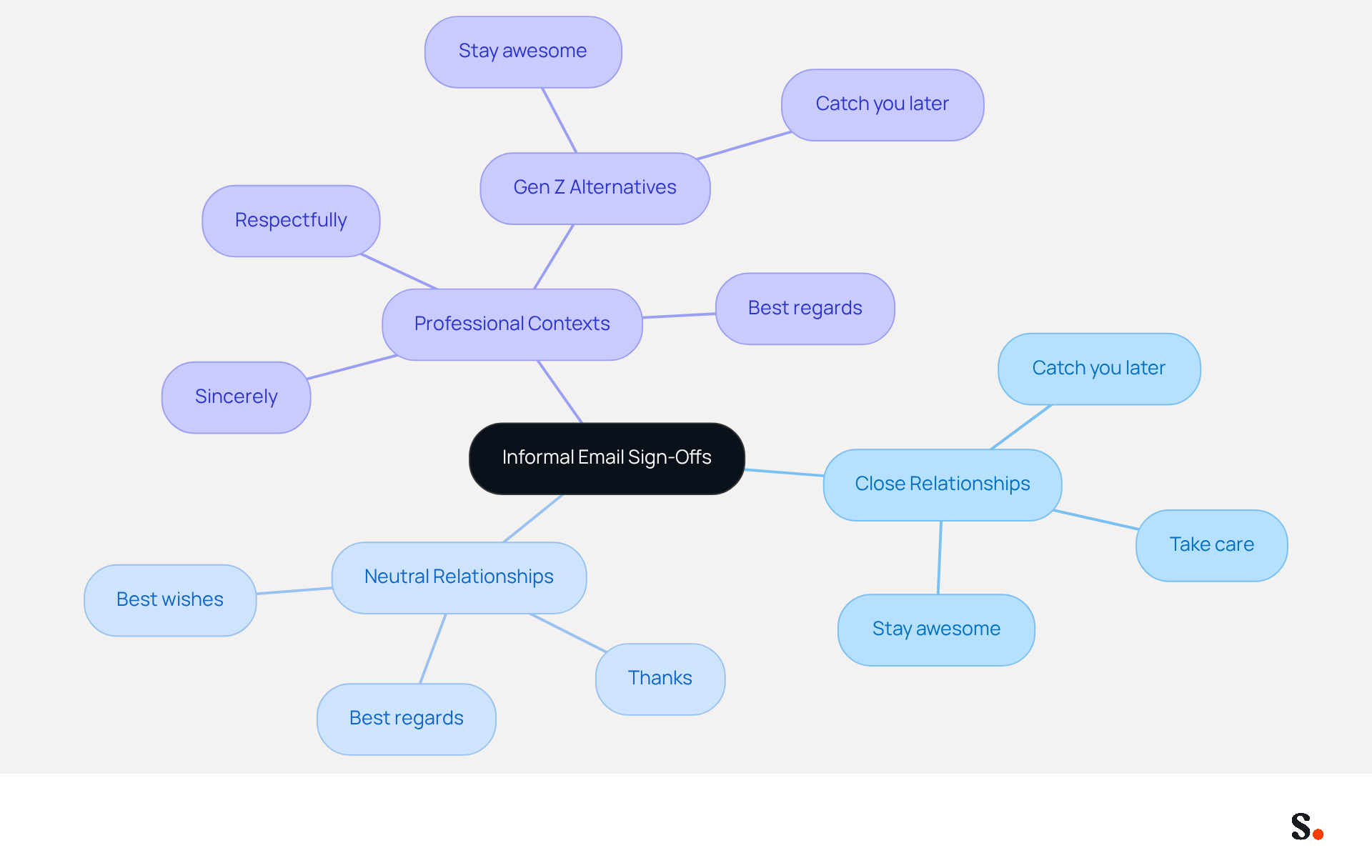
Choosing how to end email informal correspondence is crucial, as it shapes the recipient's perception of your message. Grasping your audience is essential when choosing a message closing, as it can greatly affect how your communication is perceived. Here are some popular casual sign-offs to consider:
- Cheers: Using 'Cheers' fosters camaraderie and is a friendly choice in informal business settings.
- Take care: A warm farewell that conveys goodwill, making it suitable for both colleagues and acquaintances. It reflects a caring attitude, enhancing the experience of the individual.
- Catch you later: Ideal for informal exchanges, suggesting a future interaction. This sign-off is particularly effective in maintaining a friendly tone, especially among peers.
- Talk soon: A casual way to imply that you expect to communicate again shortly. This phrase encourages ongoing dialogue and connection.
- Have a great day/weekend: A positive and friendly closing that leaves the individual with good vibes. This sign-off is often used to uplift the recipient's mood and strengthen relationships.
- Best: A versatile sign-off that can be used in various contexts, striking a balance between casual and professional. It is suitable for messages that require a touch of formality without being overly stiff.
These examples illustrate how to end email informal sign-offs to match your email's tone and your relationship with the recipient, enhancing the effectiveness and personal touch of your communication. For instance, Amethyst uses the phrase 'Looking forward to a great 2026 together,' which sets a positive expectation for future collaboration. Similarly, Peec AI's use of 'Thanks for being part of this' enhances customer loyalty by making individuals feel valued. These case studies emphasize the significance of aligning your sign-off with the message's context and the audience's expectations, ultimately reinforcing your brand voice and fostering stronger connections. The right sign-off can create a positive impression and encourage your reader to engage further.
Avoid Common Mistakes in Informal Email Closings
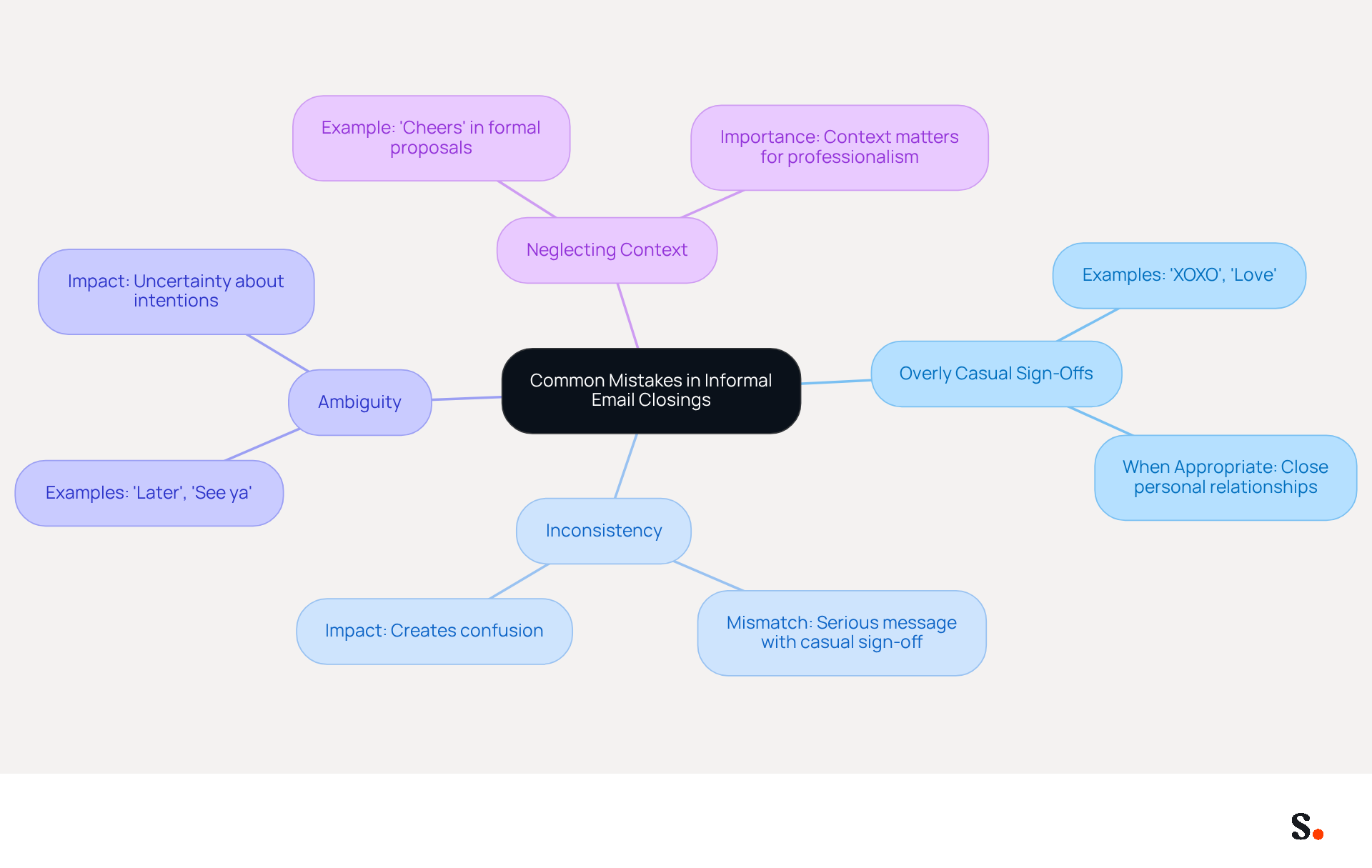
Maintaining professionalism in informal correspondence is crucial, yet many fall into common pitfalls. Here are key pitfalls to watch out for:
- Overly Casual Sign-Offs: Using overly informal sign-offs like 'XOXO' or 'Love' can appear unprofessional unless you share a close personal relationship with the recipient.
- Inconsistency: Ensure your approval aligns with the message's tone. A serious message paired with a casual sign-off can create confusion.
- Ambiguity: Avoid unclear sign-offs such as 'Later' or 'See ya,' which may leave the recipient uncertain about your intentions.
- Neglecting Context: Always consider the message's context. A sign-off suitable for one situation may not be appropriate in another; for instance, 'Cheers' may not convey professionalism in a formal business proposal.
Being mindful of these mistakes ensures your sign-offs enhance communication. This highlights the importance of thoughtful communication, as 80% of recipients are more likely to engage with personalized emails, and email marketing is 40 times more effective than social media for customer acquisition.
Conclusion
Mastering informal email sign-offs is crucial, as a poorly chosen closing can lead to miscommunication and weaken your message. A well-chosen closing not only reinforces the tone of your email but also reflects the nature of your relationship with the recipient. By understanding the nuances of informal sign-offs, individuals can enhance their communication strategies and foster stronger connections.
Throughout the article, key insights were shared on:
- Selecting the right tone for informal sign-offs
- Exploring popular casual phrases
- Avoiding common pitfalls
It was emphasized that aligning your sign-off with the context of your message is crucial, as it can significantly impact how your communication is received. Examples from various organizations illustrate the effectiveness of thoughtful sign-offs, demonstrating how they can lead to increased engagement and positive impressions.
By refining your sign-offs, you not only enhance your communication but also build stronger professional relationships that resonate with your audience. Embrace the power of a well-crafted closing to create a more engaging and effective communication experience.
Frequently Asked Questions
Why are email sign-offs important?
Email sign-offs significantly influence how your message is received, affecting the recipient's perception and the likelihood of receiving a response. A well-chosen sign-off can reinforce the tone of your message and reflect your relationship with the recipient.
What impact do different types of sign-offs have?
Casual sign-offs like 'Cheers' convey a friendly rapport, while formal closings such as 'Sincerely' denote professionalism. Thoughtful closings can enhance communication effectiveness and foster stronger connections.
How do gratitude-based sign-offs affect response rates?
Messages that end with gratitude-based phrases, like 'Thanks in advance,' have a response rate of 65.7%, demonstrating the effectiveness of thoughtful closings.
What is the effect of branded signatures on email responses?
Messages with branded signatures achieve a 22% higher response rate, highlighting the importance of effective sign-offs in enhancing communication.
How does Scribe assist with email sign-offs?
Scribe ensures that all modifications made to your Calendly configuration automatically sync with your signatures, maintaining brand consistency and allowing for effortless updates.
What are the consequences of inappropriate email closures?
Inappropriate closures can lead to misunderstandings or appear unprofessional, which can negatively impact communication.
How can personalized closings affect response rates?
Messages with personalized or considerate closings can experience a response increase of up to 36%, underscoring the strategic value of tailoring your endings to the situation.
What is the average response rate for messages without closings?
Messages without closings have an average response rate of only 43%, emphasizing the importance of effective conclusions in email communication.
How can mastering sign-offs improve communication?
Mastering the nuances of sign-offs can enhance communication strategies, strengthen professional relationships, and improve overall effectiveness in messaging.
List of Sources
- Understand Email Sign-Offs and Their Importance
- Is 'Best' a Good Way to End an Email? Compare Sign-Offs Here (https://scribe-mail.com/en-US/blog/is-best-a-good-way-to-end-an-email-compare-sign-offs-here)
- 75 Best Email Sign-Offs for Any Situation - All-in-One Marketing Automation Toolset | FosterFlow (https://fosterflow.ai/75-best-email-sign-offs-for-any-situation)
- Why 'Is Best' is a Good Email Sign-Off for Engagement (https://scribe-mail.com/en-US/blog/why-is-best-is-a-good-email-sign-off-for-engagement)
- Master Email Signature Sign Offs: Best Practices for Brand Impact (https://scribe-mail.com/en-US/blog/master-email-signature-sign-offs-best-practices-for-brand-impact)
- Identify the Right Tone for Informal Sign-Offs
- Gen Z Email Sign-Offs: Funny Email Sign Offs - NEWOLDSTAMP (https://newoldstamp.com/blog/gen-z-sign-offs)
- How to end an email: 70+ professional sign-offs & examples (https://blog.superhuman.com/how-to-end-an-email)
- How to Sign Off on an Email Correctly | Rocketseed (https://rocketseed.com/blog/correct-way-to-sign-off-emails)
- Explore Examples of Casual Email Sign-Offs
- Gen Z Email Sign-Offs: Funny Email Sign Offs - NEWOLDSTAMP (https://newoldstamp.com/blog/gen-z-sign-offs)
- How to End an Email: 100+ Best Sign-Offs & Real Examples (https://omnisend.com/blog/email-sign-offs)
- Best Email Sign-Offs for Any Correspondence (https://wisestamp.com/examples/email-sign-offs)
- 110 Completely Unhinged Email Sign Offs That People Have Actually Used Or Received At Work (https://buzzfeed.com/meganeliscomb/funny-email-sign-offs)
- Avoid Common Mistakes in Informal Email Closings
- 11 Common Email Mistakes Everyone Makes (https://linkedin.com/pulse/11-common-email-mistakes-everyone-makes-betty-liu)
- 100 Compelling Email Statistics for 2026 | PGM Solutions (https://porchgroupmedia.com/blog/100-compelling-email-statistics-to-inform-your-strategy-in-2023)
- 5 Common Mistakes You’re Making With Your Email Signature (https://fastcompany.com/3025208/5-common-mistakes-youre-making-with-your-email-signature)
- 49 Top Email Marketing Statistics (https://forbes.com/advisor/business/software/email-marketing-statistics)
Get started with Scribe
Build a professional email signature
Free 14-day trial — no credit card.