Master Best Wishes Email Sign-Offs for Effective Communication
Many professionals underestimate the impact of email sign-offs on communication effectiveness. Best wishes email sign-offs convey warmth and professionalism
Sophie Grant
Email Signature Specialist, Scribe
Introduction
Many professionals underestimate the impact of email sign-offs on communication effectiveness. Best wishes email sign-offs convey warmth and professionalism, helping to build positive relationships and encourage responses. However, many professionals struggle to determine the right context for using these sign-offs. This article will provide insights and techniques for crafting effective best wishes email sign-offs, ensuring your messages resonate with recipients and enhance your professional correspondence.
Define Best Wishes Email Sign-Offs and Their Importance
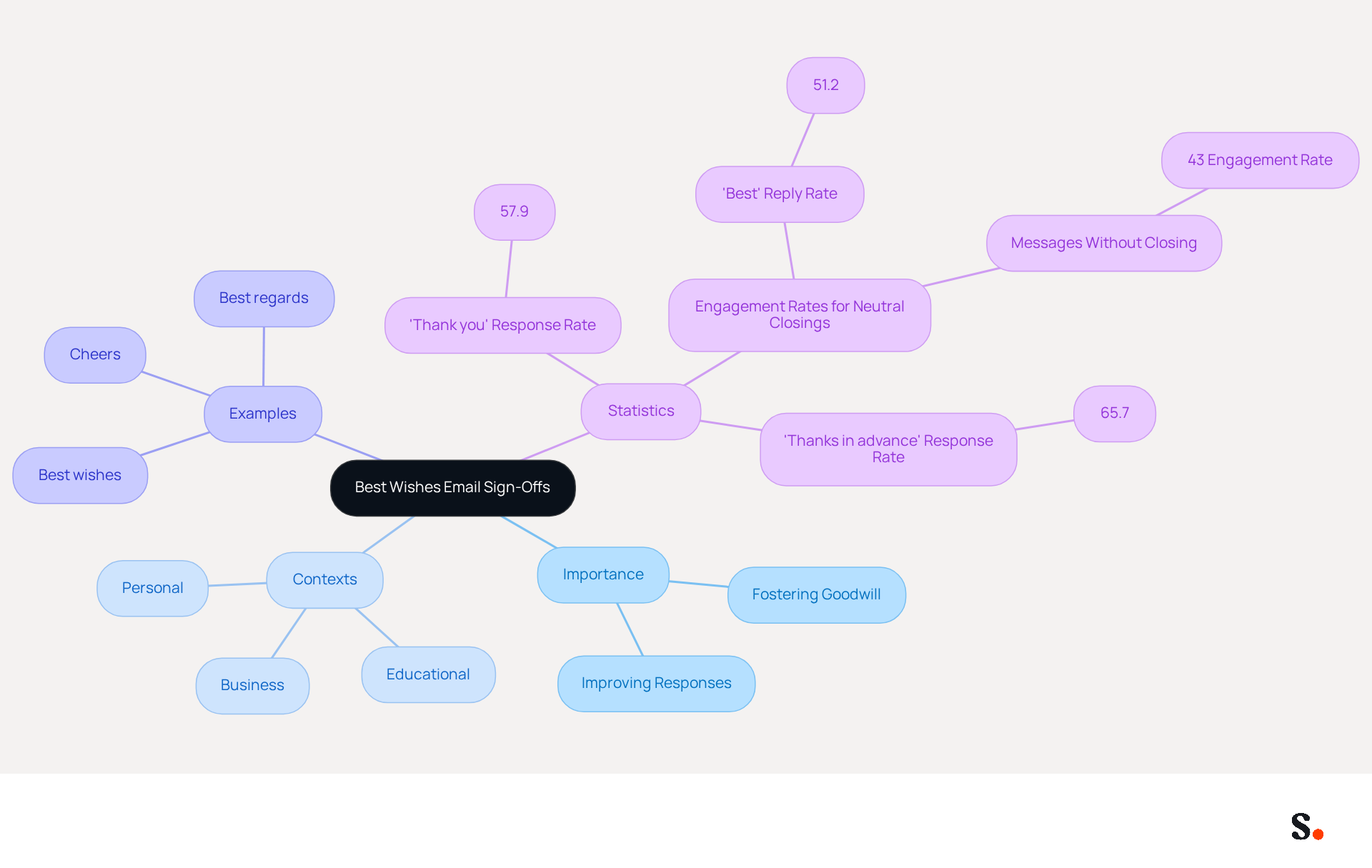
The use of a best wishes email sign-off serves as an essential tool for fostering goodwill and strengthening professional relationships. The best wishes email sign-off is used in personal and business contexts to soften message tones and leave recipients with a positive impression. They are particularly effective in scenarios such as follow-ups, thank-you notes, or communications with clients and colleagues, where maintaining a warm rapport is crucial.
Utilizing a kind sign-off indicates respect and consideration, which can greatly improve rapport and promote future interactions. Research indicates that messages with warm, professional tones receive up to 22% more responses, highlighting the importance of customizing closings to fit the context and relationship with the recipient. For instance, in educational settings, phrases like 'Best wishes' and 'Collegially' are favored for their ability to convey professionalism while remaining friendly.
Case studies reveal that tailoring email closings to specific contexts can greatly impact communication outcomes. In corporate environments, phrases such as 'Best regards' and 'Sincerely' are widely accepted, while creative industries allow for more personality, with expressions like 'Cheers' being appropriate. Furthermore, statistics indicate that expressions of gratitude, such as 'Thank you' and 'Thanks in advance', achieve higher engagement rates, with 'Thanks in advance' boasting a remarkable 65.7% response rate. Notably, messages lacking a closing average a 43% engagement rate, underscoring the necessity of including a closing to enhance interaction, as noted by Sophie Grant, an Email Signature Specialist at Scribe.
In the end, the right sign-off can turn a simple message into a key element for building relationships and improving communication. By incorporating warm closing phrases, professionals can convey kindness and sincerity, making their emails more effective and encouraging positive responses. However, it is essential to avoid overly casual closings in formal settings, as this can undermine professionalism and clarity in communication.
Identify Appropriate Contexts for Best Wishes Sign-Offs
Selecting the right sign-off in professional communication can significantly impact engagement and relationship-building. Best wishes sign-offs are particularly effective in various contexts, including:
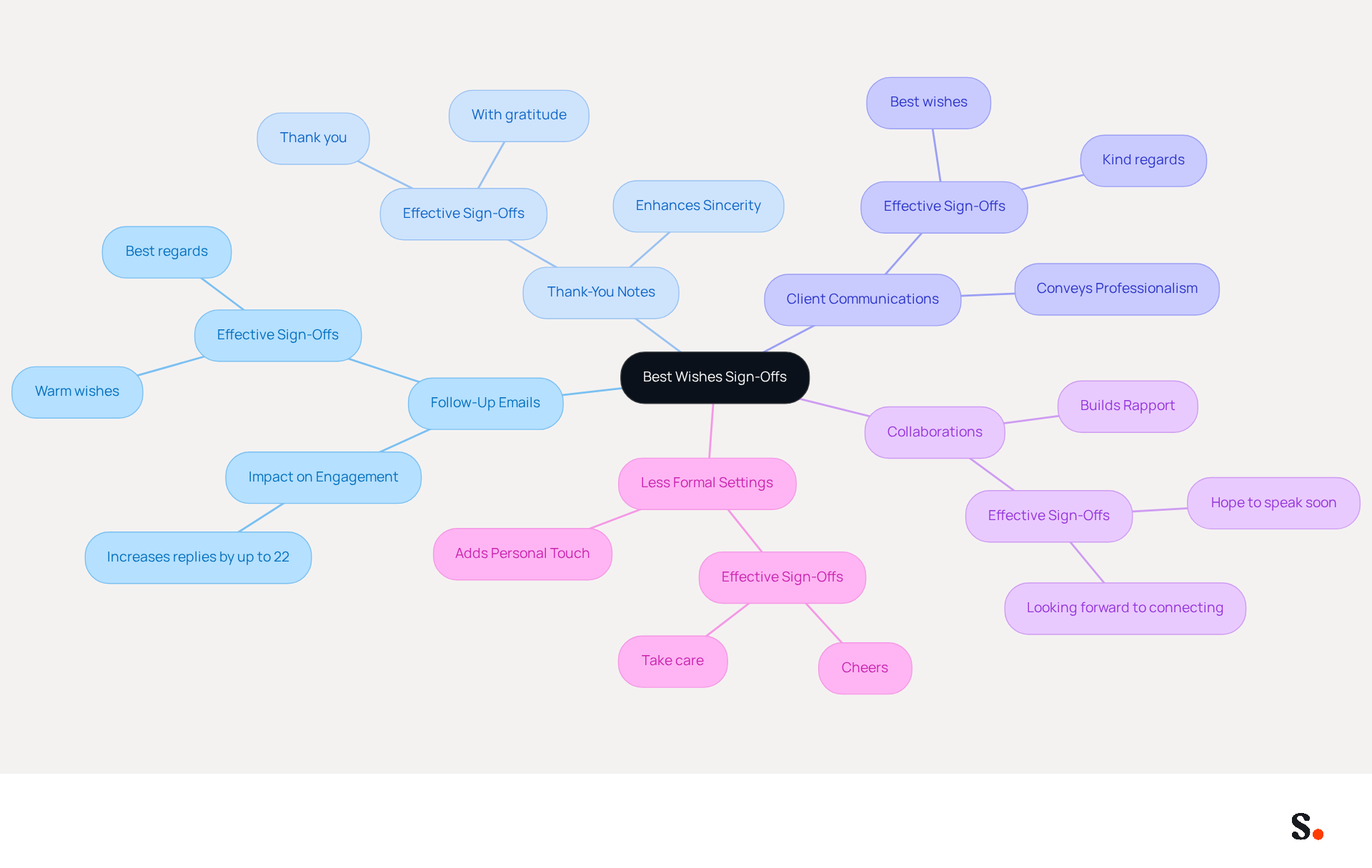
- Follow-Up Emails: After meetings or discussions, a best regards sign-off can reinforce a positive connection and encourage ongoing dialogue. Research shows that friendly closings, such as 'Warm Wishes,' can increase engagement, leading to up to 22% more replies.
- Thank-You Notes: Expressing gratitude with a warm sign-off enhances the sincerity of your message, making it more memorable. Without a warm sign-off, your message may lack sincerity and memorability. Incorporating a simple 'Thank you' can also significantly increase response rates.
- Client Communications: When reaching out to clients, a best wishes email sign-off conveys professionalism and friendliness, fostering stronger relationships. Experts suggest that the most effective sign-offs for general professional use are 'Best regards' and 'Best.'
- In messages to potential collaborators or industry contacts, using these closings can help you build rapport and make a lasting impression. A research analysis on the function of electronic correspondence closings in professional relationships indicates that employing effective closings nurtures positive connections.
- In less formal settings, such as emails to colleagues or friends, kind regards closings add a personal touch, enhancing the warmth of the communication. However, using overly casual closings can lead to negative perceptions in professional settings.
By recognizing these contexts, you can select the most appropriate sign-off to match the tone and intent of your message, ultimately improving engagement and relationship-building. Ultimately, the right sign-off can enhance your professional image and foster stronger connections.
Craft Effective Best Wishes Sign-Offs: Tips and Techniques
Crafting effective sign-offs is crucial for maintaining professionalism and fostering connections in communication. To achieve this, consider the following tips:
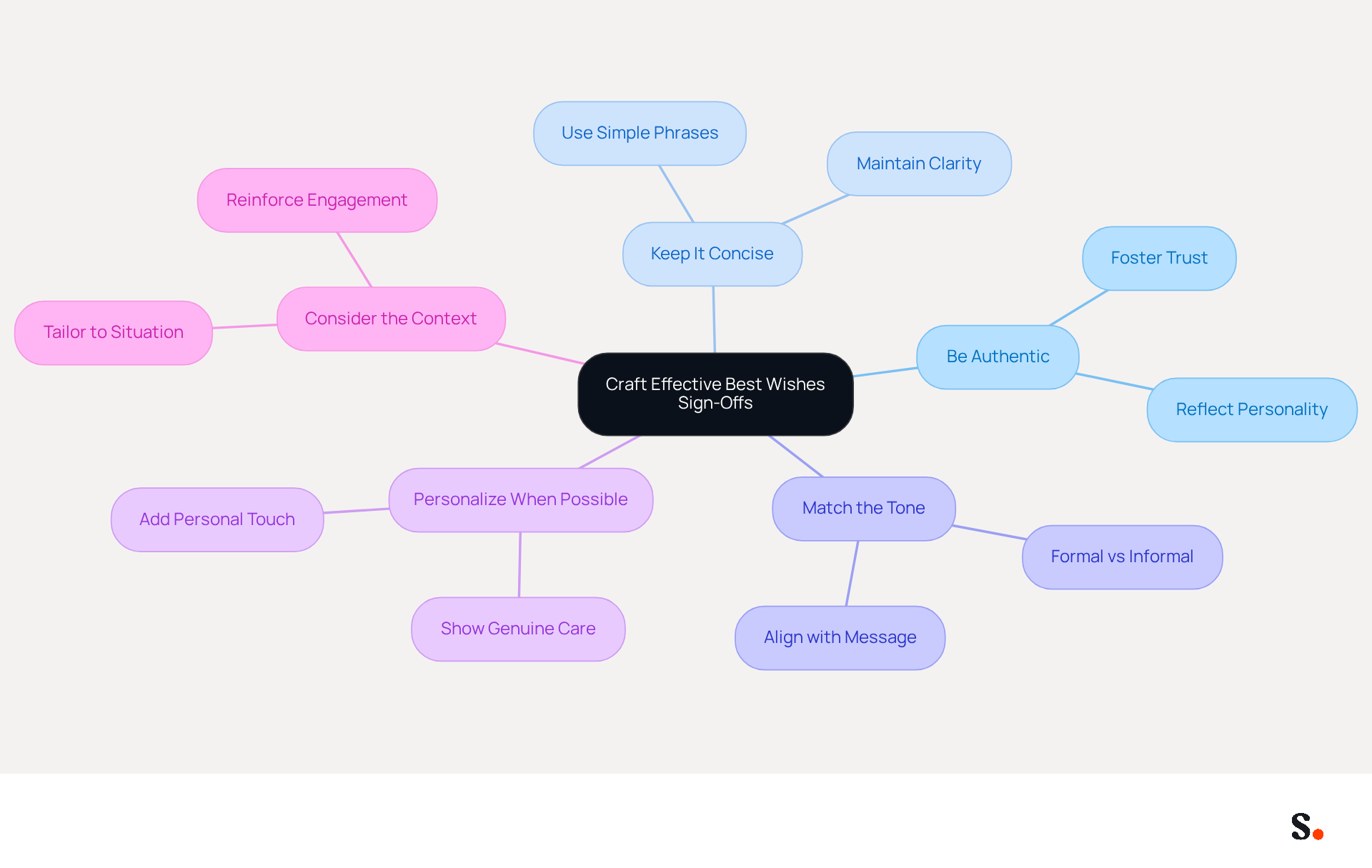
- Be Authentic: Choose a sign-off that genuinely reflects your personality and the nature of your relationship with the recipient. Authenticity fosters trust and strengthens connections.
- Keep It Concise: Simple phrases like 'Best wishes' or 'Warm regards' are often the best wishes email sign-off and more impactful than lengthy sign-offs. Brevity helps maintain professionalism and clarity in communication.
- Match the Tone: Ensure your sign-off aligns with the overall tone of your message. For formal communication, a 'best wishes email sign-off' is suitable, while informal messages may benefit from sign-offs like 'Cheers' or 'Take care.'
- Personalize When Possible: If you share a closer relationship with the recipient, consider adding a personal touch, such as 'Best regards for your upcoming project!' This demonstrates genuine care and attention.
- Consider the Context: Tailor your sign-off to the specific situation of your correspondence. For example, in a follow-up email after a meeting, you might include a best wishes email sign-off such as, 'Best regards for your next steps,' which reinforces your engagement and support.
By thoughtfully applying these techniques, you can significantly enhance the impact of your communication and strengthen your professional relationships.
Avoid Common Mistakes with Best Wishes Sign-Offs
To enhance the effectiveness of your email sign-offs, it is essential to avoid common pitfalls that can diminish your professionalism:
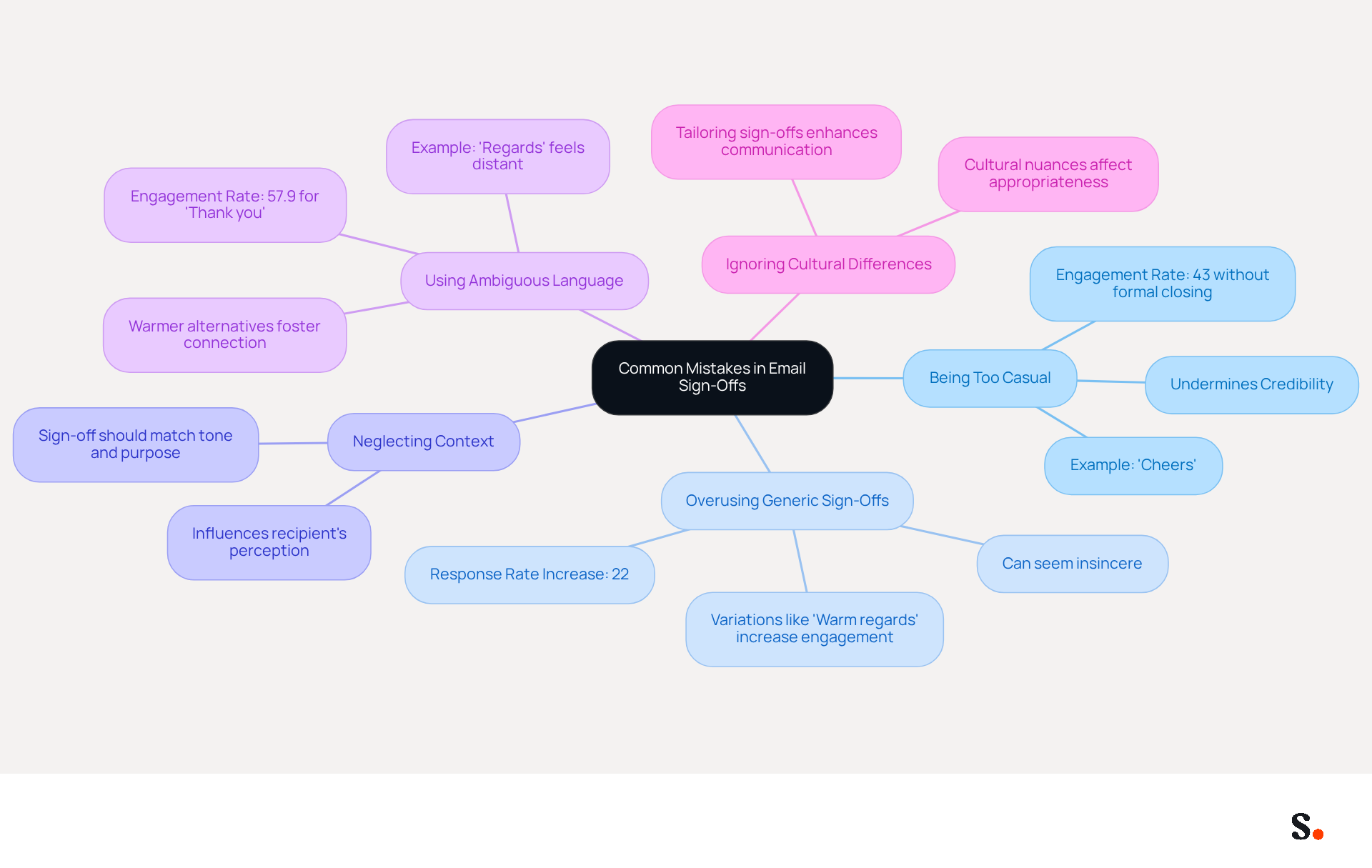
- Being Too Casual: In professional settings, overly casual sign-offs can undermine your credibility. Phrases like 'Cheers' may be suitable for friends but should be avoided in formal emails. Studies indicate that emails without a formal closing see an average engagement rate of 43%, underscoring the need for professionalism.
- Overusing Generic Sign-Offs: Repeatedly using the same sign-off can come across as insincere. Mixing it up with variations such as 'Warm regards' or 'Best wishes' keeps your communication fresh and engaging. Messages that end with warm, professional tones receive up to 22% more responses, reinforcing the need for considerate conclusions.
- Neglecting Context: Ignoring the context of your email can result in a sign-off that feels out of place. Always align your sign-off with the tone and purpose of your message to maintain professionalism. Choosing the right sign-off is vital; it can greatly affect how the recipient perceives your message.
- Using Ambiguous Language: Phrases like 'Regards' can feel distant and impersonal. Opt for warmer alternatives like a 'best wishes email sign-off' to foster a stronger connection with your recipient. Messages that end with 'Thank you' tend to get a 57.9% engagement rate, which is much higher than those with more neutral sign-offs.
- Ignoring Cultural Differences: Be mindful of cultural nuances in interaction. What works in one culture may not be appropriate in another, so adjust your sign-offs accordingly to avoid misunderstandings. Tailoring your closing to reflect the recipient's preferences can significantly enhance professional correspondence.
By avoiding these common mistakes, you can significantly improve your email communication and foster stronger professional relationships.
Conclusion
Effective communication hinges on the often-overlooked art of email sign-offs. Mastering the art of best wishes email sign-offs is crucial for effective communication in both personal and professional contexts. These sign-offs soften message tones and leave recipients with a positive impression, which fosters goodwill and strengthens relationships. Choosing the right closing phrases can significantly improve communication effectiveness, leading to higher engagement rates.
Throughout the article, key insights were shared on the importance of selecting appropriate sign-offs based on context. From follow-up emails to thank-you notes and client communications, the right sign-off can significantly impact engagement rates and relationship-building. Techniques such as being authentic, concise, and context-aware were emphasized as essential for crafting effective sign-offs. Additionally, avoiding common mistakes, such as being overly casual or using generic phrases, can further enhance professionalism and clarity in communication.
Thoughtful email sign-offs play a crucial role in effective communication. They serve as a powerful tool for building connections and improving communication outcomes. By implementing the strategies discussed, professionals can ensure their emails resonate with recipients, paving the way for stronger relationships and more effective interactions. Consider the impact of your sign-offs; they could be the key to unlocking more meaningful connections.
Frequently Asked Questions
What is the purpose of a best wishes email sign-off?
A best wishes email sign-off serves to foster goodwill and strengthen professional relationships by softening message tones and leaving recipients with a positive impression.
In what contexts are best wishes email sign-offs particularly effective?
They are particularly effective in personal and business contexts such as follow-ups, thank-you notes, and communications with clients and colleagues.
How does a kind sign-off impact professional relationships?
Utilizing a kind sign-off indicates respect and consideration, which can improve rapport and promote future interactions.
What does research indicate about the effectiveness of warm, professional tones in emails?
Research indicates that messages with warm, professional tones receive up to 22% more responses, highlighting the importance of customizing closings to fit the context and relationship with the recipient.
What are some examples of appropriate sign-offs in educational settings?
In educational settings, phrases like 'Best wishes' and 'Collegially' are favored for their ability to convey professionalism while remaining friendly.
How do email closings vary between corporate and creative environments?
In corporate environments, phrases such as 'Best regards' and 'Sincerely' are widely accepted, while creative industries allow for more personality, with expressions like 'Cheers' being appropriate.
What impact do expressions of gratitude have on email engagement rates?
Expressions of gratitude, such as 'Thank you' and 'Thanks in advance', achieve higher engagement rates, with 'Thanks in advance' boasting a remarkable 65.7% response rate.
What is the engagement rate for messages lacking a closing?
Messages lacking a closing average a 43% engagement rate, underscoring the necessity of including a closing to enhance interaction.
What should be avoided when choosing email sign-offs in formal settings?
It is essential to avoid overly casual closings in formal settings, as this can undermine professionalism and clarity in communication.
How can the right sign-off affect communication?
The right sign-off can turn a simple message into a key element for building relationships and improving communication by conveying kindness and sincerity.
List of Sources
- Define Best Wishes Email Sign-Offs and Their Importance
- Is 'Best' a Good Way to End an Email? Compare Sign-Offs Here (https://scribe-mail.com/en-US/blog/is-best-a-good-way-to-end-an-email-compare-sign-offs-here)
- 100 Email Sign-Offs for Any Professional Message (https://pathwise.io/email-sign-offs-100-ways-to-sign-off-an-email)
- Email Sign Offs for Every Industry and Situation | Mailchimp (https://mailchimp.com/resources/email-sign-offs)
- How to Sign Off on an Email Correctly | Rocketseed (https://rocketseed.com/blog/correct-way-to-sign-off-emails)
- Identify Appropriate Contexts for Best Wishes Sign-Offs
- Best regards, Kind regards, Best wishes, Yours sincerely - which to use and when | Email Signature Rescue Blog (https://emailsignaturerescue.com/blog/best-regards-kind-regards-best-wishes-yours-sincerely-which-to-use-and-when)
- How to end an email: a guide to professional sign-offs and closings (https://sparkmailapp.com/how-to-end-an-email-template)
- What is the Best Regards Email Sign Off and When to Use It? (https://scribe-mail.com/en-US/blog/what-is-the-best-regards-email-sign-off-and-when-to-use-it)
- The 37 best ways to close emails (https://signitic.com/en/resources/email-sign-offs)
- Email Sign Offs for Every Industry and Situation | Mailchimp (https://mailchimp.com/resources/email-sign-offs)
- Craft Effective Best Wishes Sign-Offs: Tips and Techniques
- Best Email Sign-Offs for Any Correspondence (https://wisestamp.com/examples/email-sign-offs)
- Email Sign Offs for Every Industry and Situation | Mailchimp (https://mailchimp.com/resources/email-sign-offs)
- Memorable Email Sign-Offs: A Beginner's Guide (https://constantcontact.com/blog/email-sign-offs)
- 89 Ways To Sign Off On An Email (https://forbes.com/sites/susanadams/2014/10/08/89-ways-to-sign-off-on-an-email)
- Avoid Common Mistakes with Best Wishes Sign-Offs
- The 37 best ways to close emails (https://signitic.com/en/resources/email-sign-offs)
- 10 Common Email Mistakes - Mindtools Membership (https://mindtools.com/at253lr/10-common-email-mistakes)
- 10 Email Etiquette Mistakes That Damage Your Reputation (https://simaraguard.com/blog/email-etiquette-mistakes)
- Is 'Best' a Good Way to End an Email? Compare Sign-Offs Here (https://scribe-mail.com/en-US/blog/is-best-a-good-way-to-end-an-email-compare-sign-offs-here)
- Different Sign-offs & When You Should Use Them | Heinz Marketing (https://heinzmarketing.com/blog/different-sign-offs-when-you-should-use-them)
Get started with Scribe
Build a professional email signature
Free 14-day trial — no credit card.