Master 'Cheers' as a Sign-Off: A Step-by-Step Guide
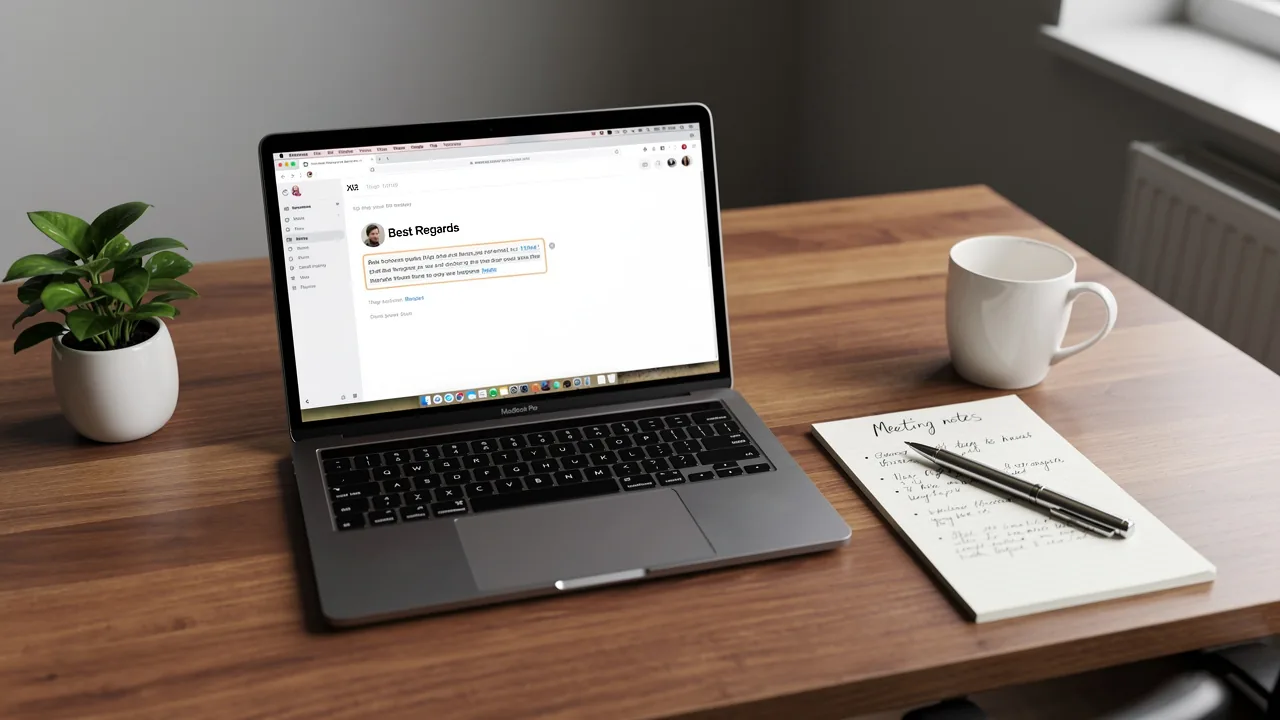
Navigating the complexities of email sign-offs is crucial for effective professional communication. Cultural nuances significantly shape these interactions
Sophie Grant
Email Signature Specialist, Scribe
Introduction
Navigating the complexities of email sign-offs is crucial for effective professional communication. Cultural nuances significantly shape these interactions. The sign-off "Cheers" has gained popularity, particularly in informal settings, yet its appropriateness varies widely across different regions and contexts.
Professionals often wonder how to navigate these complexities to ensure their sign-offs resonate well with recipients. This guide provides an authoritative analysis of the effective use of "Cheers" as a sign-off, offering insights into its cultural significance, appropriate contexts, and best practices to enhance email communication.
Understand the Context of 'Cheers' in Professional Emails
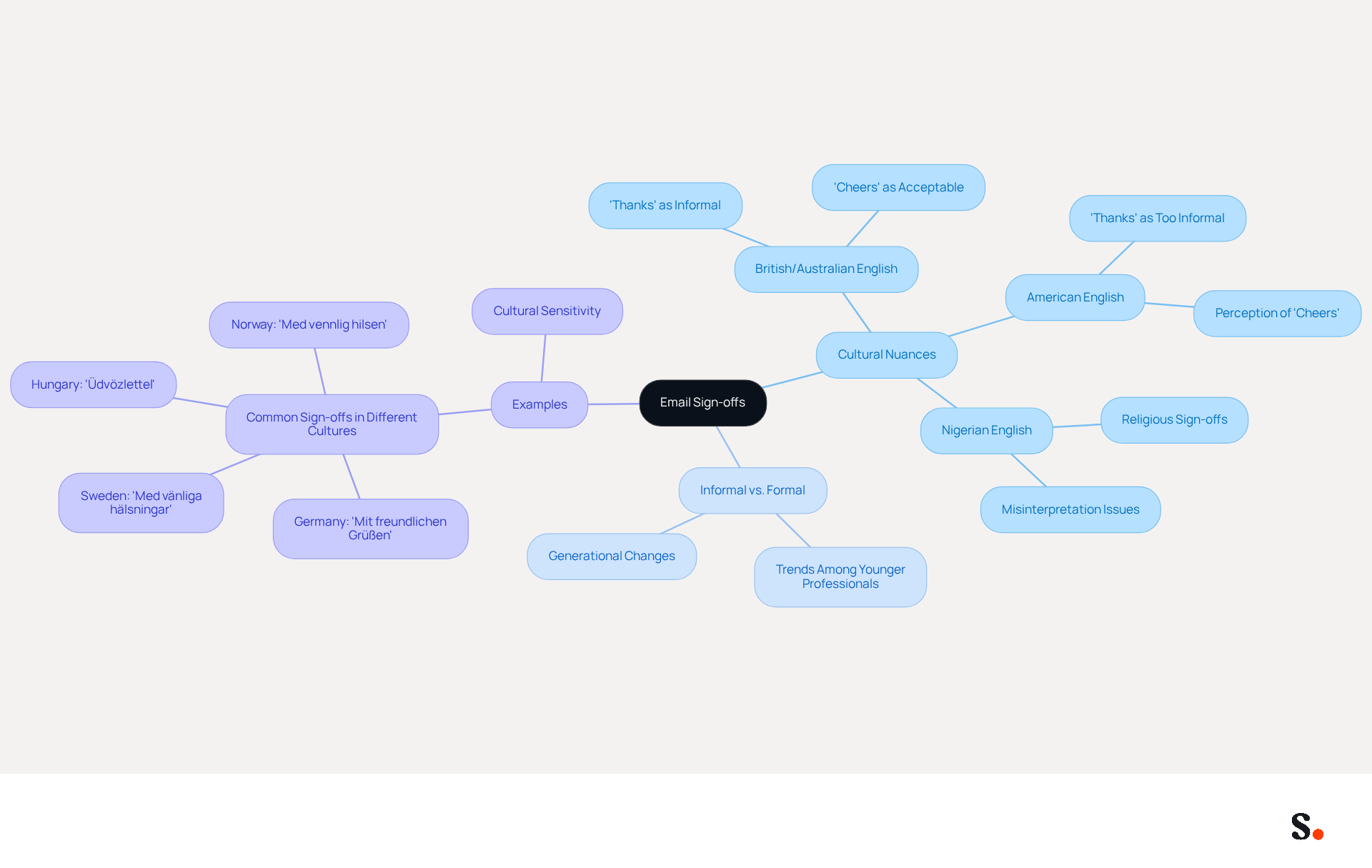
Understanding the nuances of email sign-offs is crucial for effective communication in a global context. 'Thanks' serves as a friendly and informal sign-off in professional emails, particularly prevalent in British and Australian English. However, the appropriateness of sign-offs can differ widely across cultures. In American English, the expression may be viewed as too informal or even unsuitable in formal situations.
Navigating cultural nuances in email sign-offs can be challenging; for instance, using 'cheers as a sign-off' in correspondence with a colleague in the UK is generally acceptable, while it may not be suitable for formal interactions with clients in the U.S.
Research shows a growing trend toward informal sign-offs in professional emails, particularly among younger professionals. According to a study comparing perceptions of politeness in message closings, cultural differences can significantly affect how communications are received. For instance, a Nigerian professor's email closing was misinterpreted by an American colleague, highlighting the potential pitfalls of cultural differences in email etiquette.
Ultimately, choosing the right sign-off can foster warmth and familiarity in communication, but awareness of cultural context is key.
Identify Appropriate Situations for Using 'Cheers'
Using 'Thanks' as a sign-off can enhance communication in informal settings, but it requires careful consideration of context. Here are some scenarios where 'Thanks' is particularly suitable:
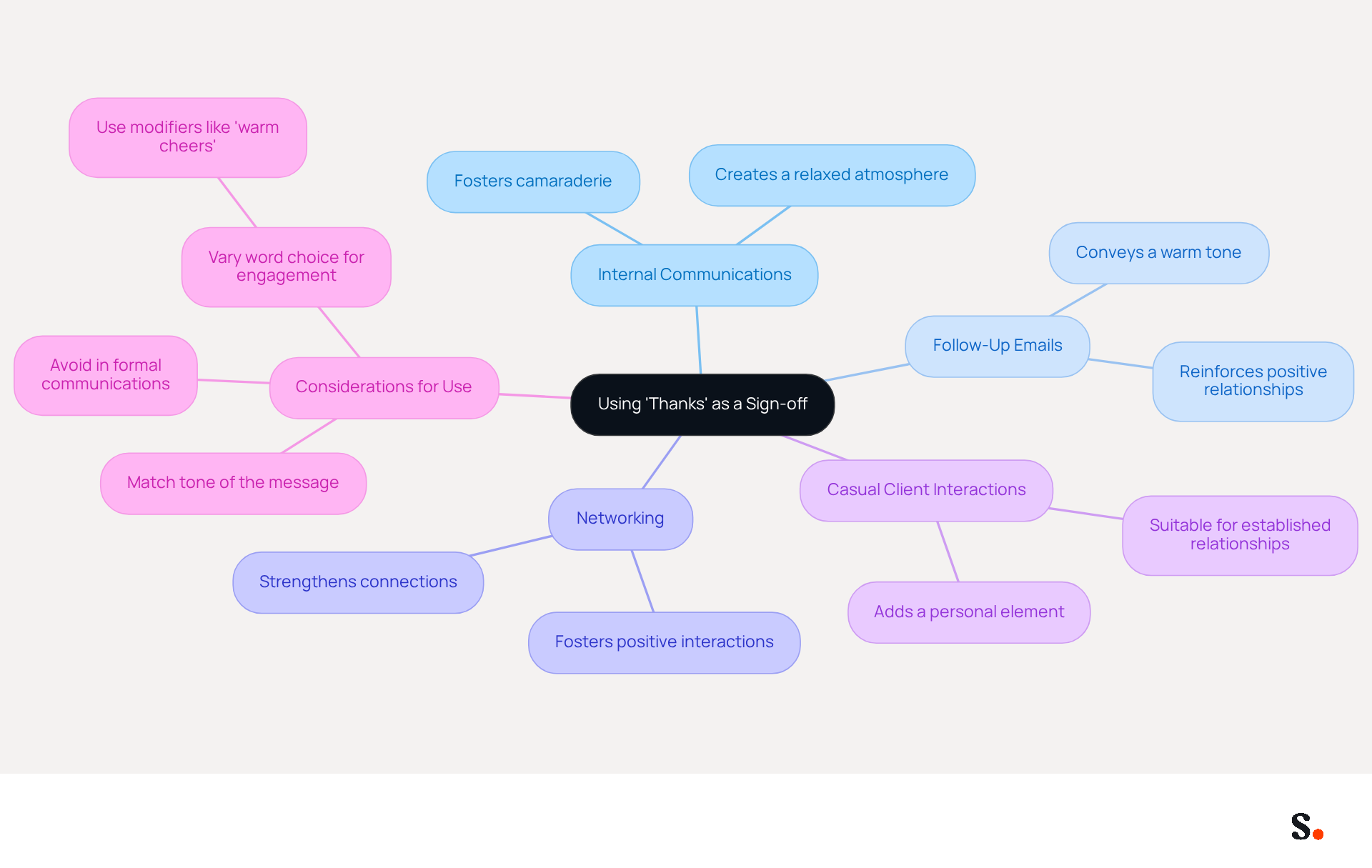
- Internal Communications: In a casual work environment, using 'Thanks' when emailing colleagues fosters camaraderie and a relaxed atmosphere.
- Follow-Up Emails: Following up on previous conversations or meetings with a friendly closing conveys a warm tone, reinforcing positive relationships.
- Networking: When reaching out to contacts made at events or informal gatherings, a warm and friendly sign-off can strengthen connections and foster positive interactions.
- Casual Client Interactions: If a friendly relationship has been established with a client, a casual expression adds a personal element to the interaction.
However, it is essential to avoid using informal greetings in formal communications, such as initial outreach to potential clients or correspondence with higher management. In these cases, more traditional sign-offs like 'Sincerely' or 'Best regards' are recommended to maintain professionalism. Furthermore, the effectiveness of a closure relies on the tone of the message and the greeting utilized. If a casual sign-off doesn’t match your message's tone, it’s wise to opt for something more formal. To keep your sign-offs fresh and engaging, consider varying your word choice, such as using modifiers like 'warm cheers' to personalize your message further.
Apply Best Practices for Using 'Cheers' in Emails
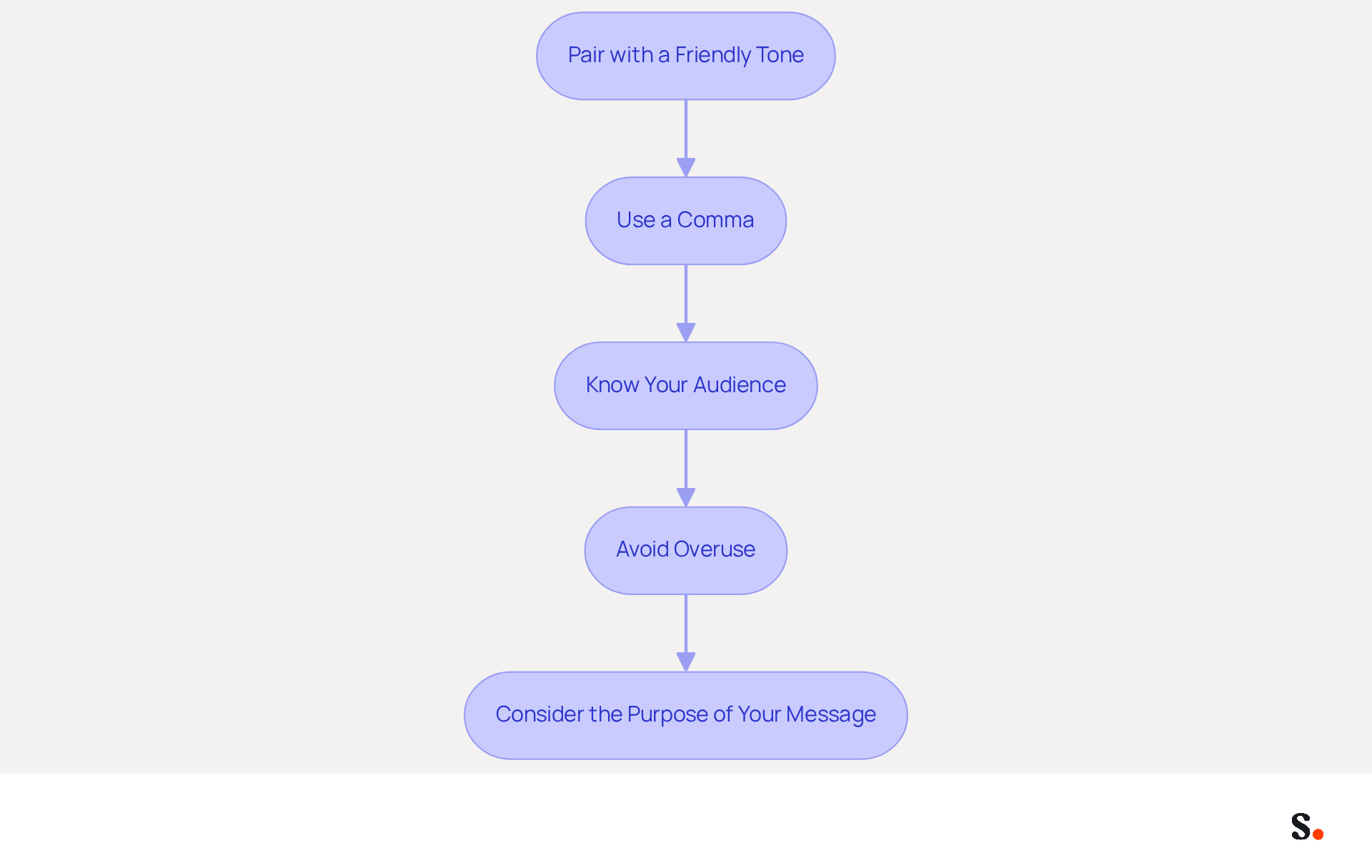
To maximize the effectiveness of 'Cheers' in your email sign-offs, it is essential to follow certain best practices:
- Pair with a Friendly Tone: A friendly tone throughout your message enhances its impact. In fact, 59% of digital marketers recognize this as a key driver of ROI.
- Use a Comma: Always follow your closing with a comma before your name to uphold standard email etiquette. For example, 'Cheers, John Doe.'
- Know Your Audience: Tailor your use of 'Cheers' based on the recipient's cultural background and your relationship with them. If uncertain, err on the side of caution and select a more formal closing. Failing to consider your audience may result in misunderstandings and strained professional relationships.
- Avoid Overuse: While 'Cheers' can be a great farewell, using it too often can lead to it losing its significance. Reserve it for suitable situations to maintain its impact, as excessive use can be perceived as carelessness in written correspondence.
- Consider the Purpose of Your Message: For serious issues or formal communications, opt for a traditional sign-off rather than 'Cheers.' This aligns with optimal practices for correspondence etiquette, ensuring that your interactions remain professional.
By following these best practices, you can ensure that your use of 'Cheers' enhances your interactions rather than detracts from them. Ultimately, understanding the nuances of your audience and context can significantly enhance the effectiveness of your email communications.
Utilize Tools for Effective Email Signature Management
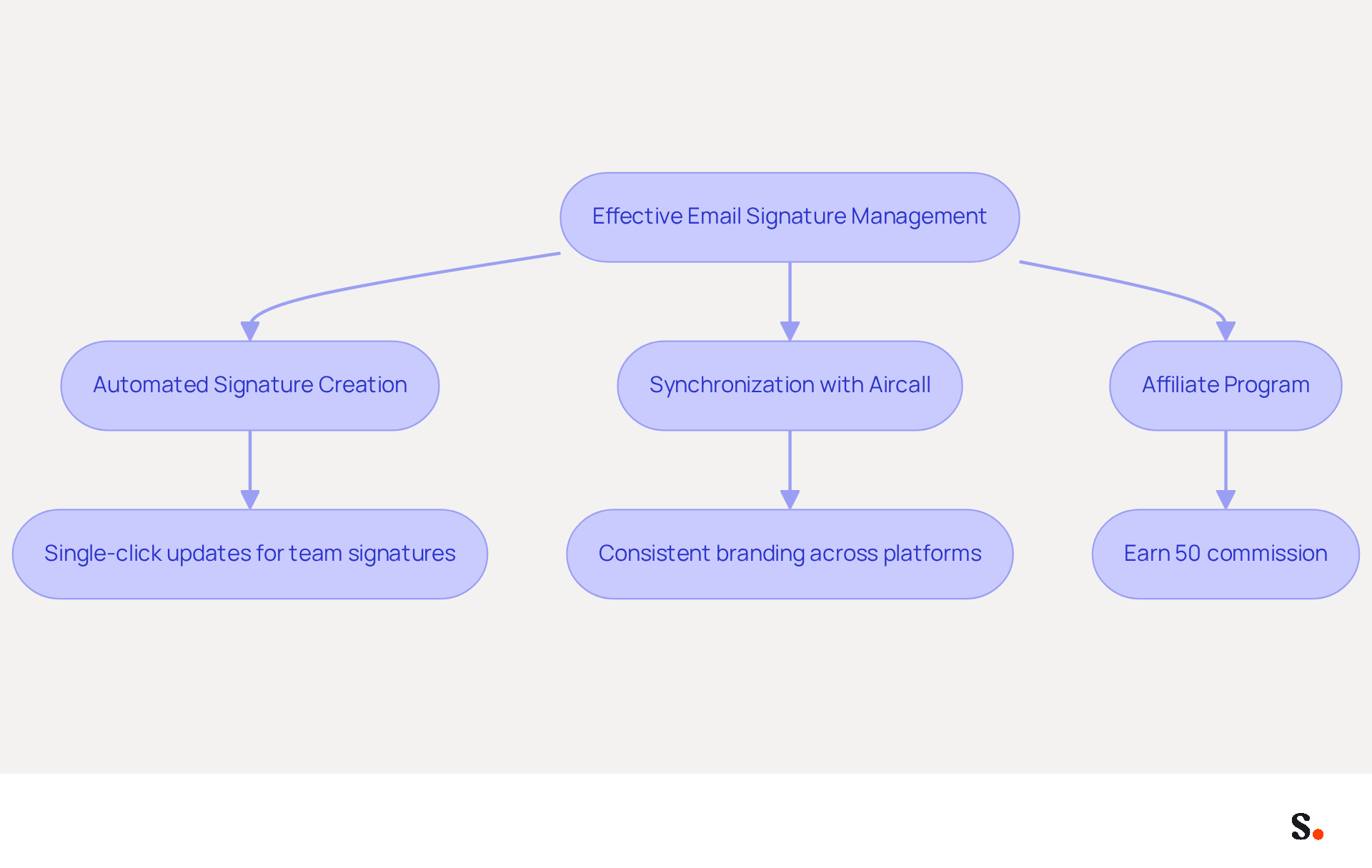
To maintain a professional image and ensure message consistency, effective signature management is essential. Scribe automates the creation and management of signatures, allowing businesses to maintain brand consistency effortlessly. With Scribe, you can update team signatures with a single click, ensuring that all messages reflect your brand accurately.
Utilizing Scribe streamlines the signature management process, ensuring professional and on-brand communications. Additionally, Scribe's automated synchronization with Aircall means that any changes made in your Aircall configuration will be reflected in your Scribe signatures, enhancing brand consistency across platforms.
For those seeking to maintain brand consistency and explore new marketing channels, Scribe's Affiliate Program offers a valuable opportunity. By joining, they can earn a 50% commission and offer a $30 credit on their subscription, creating a mutually beneficial opportunity. Effective email signature management not only enhances customer engagement but also boosts brand recognition through consistent messaging.
Conclusion
The use of 'Cheers' as a sign-off in professional emails can enhance communication, but it must be used judiciously to avoid potential pitfalls. Navigating cultural nuances and selecting the appropriate sign-off is crucial for building positive relationships in a global business context.
Key insights from this guide highlight the importance of understanding when and how to use 'Cheers' effectively. Situations such as internal communications, follow-ups, and casual client interactions are ideal for this informal sign-off, while formal communications should lean towards more traditional closings. Best practices, including maintaining a friendly tone, knowing your audience, and avoiding overuse, ensure that 'Cheers' remains impactful and appropriate.
Mastering the use of 'Cheers' can truly enhance how we connect with others in a professional setting. By being mindful of context and employing effective email signature management tools like Scribe, organizations can maintain brand consistency and enhance their communication strategies. Embrace the warmth of 'Cheers' in suitable situations, and watch as it strengthens connections and fosters a more engaging professional atmosphere.
Frequently Asked Questions
What is the significance of understanding email sign-offs in professional communication?
Understanding email sign-offs is crucial for effective communication, especially in a global context, as different cultures have varying perceptions of formality and appropriateness.
How is 'Thanks' perceived in professional emails?
'Thanks' is considered a friendly and informal sign-off in professional emails, particularly in British and Australian English, but may be viewed as too informal in American English.
Is 'cheers' an appropriate sign-off in professional emails?
'Cheers' is generally acceptable as a sign-off in correspondence with colleagues in the UK, but it may not be suitable for formal interactions with clients in the U.S.
What trends are observed regarding sign-offs in professional emails?
There is a growing trend toward informal sign-offs in professional emails, especially among younger professionals.
How can cultural differences impact email sign-offs?
Cultural differences can significantly affect how email sign-offs are perceived, leading to potential misunderstandings, as illustrated by a case where a Nigerian professor's email closing was misinterpreted by an American colleague.
What is the key takeaway when choosing an email sign-off?
The key takeaway is that while informal sign-offs can foster warmth and familiarity, being aware of the cultural context is essential for effective communication.
List of Sources
- Understand the Context of 'Cheers' in Professional Emails
- Are people misinterpreting your email sign-off? (https://bbc.com/worklife/article/20180413-best-wishes-kind-regards-or-an-icy-yrs)
- Cheers, Sincerely, Best....How to Sign Off on a Professional Email (https://24seventalent.com/blog/cheers-sincerely-best-how-to-sign-off-on-a-professional-email)
- What Your Email Sign-Off Is Really Saying (https://ctpost.com/news/article/What-Your-Email-Sign-Off-Is-Really-Saying-13631820.php)
- The beautiful ways different cultures sign emails (https://bbc.com/worklife/article/20190508-why-the-way-you-close-your-emails-is-causing-confusion)
- What do Americans think of using 'cheers' to sign off an email? (https://english.stackexchange.com/questions/10812/what-do-americans-think-of-using-cheers-to-sign-off-an-email)
- Identify Appropriate Situations for Using 'Cheers'
- All About Email Sign-Offs - LG Networks, Inc. (https://lgnetworksinc.com/all-about-email-sign-offs)
- Cheers, Sincerely, Best....How to Sign Off on a Professional Email (https://24seventalent.com/blog/cheers-sincerely-best-how-to-sign-off-on-a-professional-email)
- Digital etiquette: What your email sign-off says about you (https://theweek.com/articles/466784/digital-etiquette-what-email-signoff-says-about)
- How do you avoid sounding too casual or too formal with cheers? (https://linkedin.com/advice/1/how-do-you-avoid-sounding-too-casual-formal-cheers)
- Apply Best Practices for Using 'Cheers' in Emails
- All About Email Sign-Offs - LG Networks, Inc. (https://lgnetworksinc.com/all-about-email-sign-offs)
- Email marketing ROI: Key stats & proven effectiveness (https://blog.hubspot.com/marketing/email-marketing-stats)
- Cheers, Sincerely, Best....How to Sign Off on a Professional Email (https://24seventalent.com/blog/cheers-sincerely-best-how-to-sign-off-on-a-professional-email)
- 8 Email Marketing Statistics to Reinforce Your Strategy | Mailjet (https://mailjet.com/blog/email-best-practices/stats-email-marketing)
- Utilize Tools for Effective Email Signature Management
- 10 Best Email Signature Software Reviewed In 2026 (https://thecmo.com/tools/best-email-signature-software)
- Best Email Signature Management Software (Evaluated May 2026) (https://wisestamp.com/guides/best-email-signature-management-software)
- Why you should be using an email signature manager (https://blinq.me/blog/why-you-should-be-using-an-email-signature-manager)
- Best Email Signature Editors Online (2026): 10 Tools Compared (https://maileditor.net/blog/best-email-signature-editors-online)
- Best Email Signature Management Software: Top 12 Tools (2026)
- NEWOLDSTAMP (https://newoldstamp.com/blog/email-signature-software)
Get started with Scribe
Build a professional email signature
Free 14-day trial — no credit card.