Master Polite Email Sign-Offs: Key Practices for Effective Communication
While polite email sign-offs may seem trivial, they hold the potential to shape professional interactions significantly. Mastering the art of email sign-offs
Sophie Grant
Email Signature Specialist, Scribe

Introduction
While polite email sign-offs may seem trivial, they hold the potential to shape professional interactions significantly. Mastering the art of email sign-offs enhances professionalism, fosters trust, and can even boost response rates. Yet, navigating the nuances of tone, context, and cultural differences can be tricky, ensuring each sign-off resonates with the recipient. What strategies can be employed to elevate email sign-offs from mere formalities to powerful tools for engagement?
Understand the Importance of Polite Email Sign-Offs
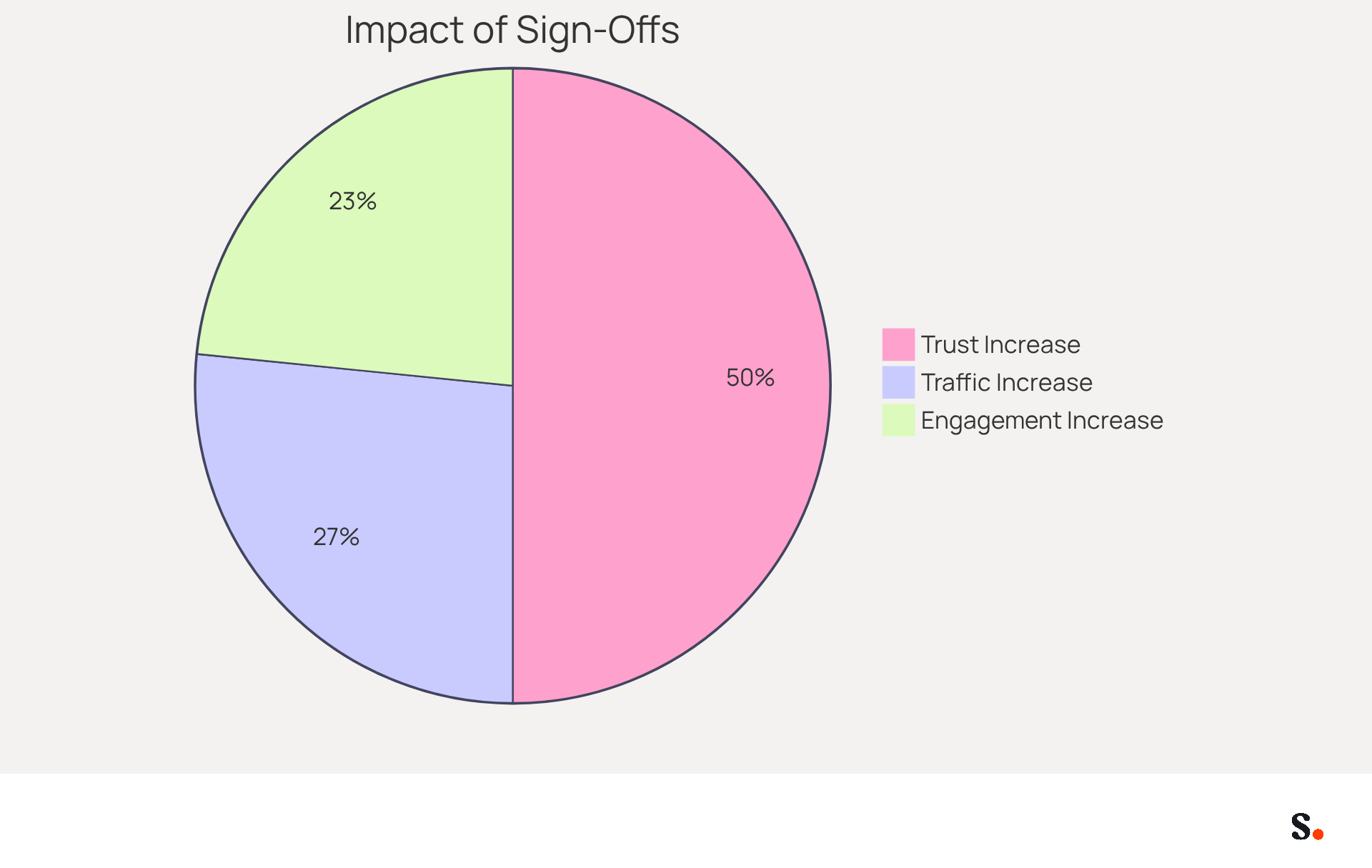
Polite email sign-offs are crucial for effective communication, impacting how recipients perceive your professionalism. Studies indicate that professional sign-offs can increase trust by 47% and engagement by 22%. Polite email sign-offs are essential as they reinforce the tone of your message and significantly influence how recipients perceive your competence and approachability. Failing to conclude messages effectively can lead to misunderstandings and missed opportunities.
By incorporating polite email sign-offs to acknowledge the recipient with a respectful closing, you convey professionalism and build a positive rapport with recipients, enhancing communication effectiveness. Moreover, keeping your message closings simple and concise not only improves clarity but also boosts effectiveness.
Research indicates that organizations employing well-designed signature conclusions experience a 25% rise in traffic to particular landing pages, highlighting their efficiency in enhancing engagement and conversions. By syncing your Google Workspace with Scribe, you can simplify the management of signatures, ensuring that any changes in your team’s information are automatically updated. This not only saves time but also ensures that your message conclusions remain consistent and professional, reinforcing your brand's image.
Thus, the choice of polite email sign-offs can fundamentally transform your communication strategy and outcomes.
Follow Key Guidelines for Effective Email Sign-Offs
To enhance the effectiveness of your email sign-offs, consider these essential guidelines:
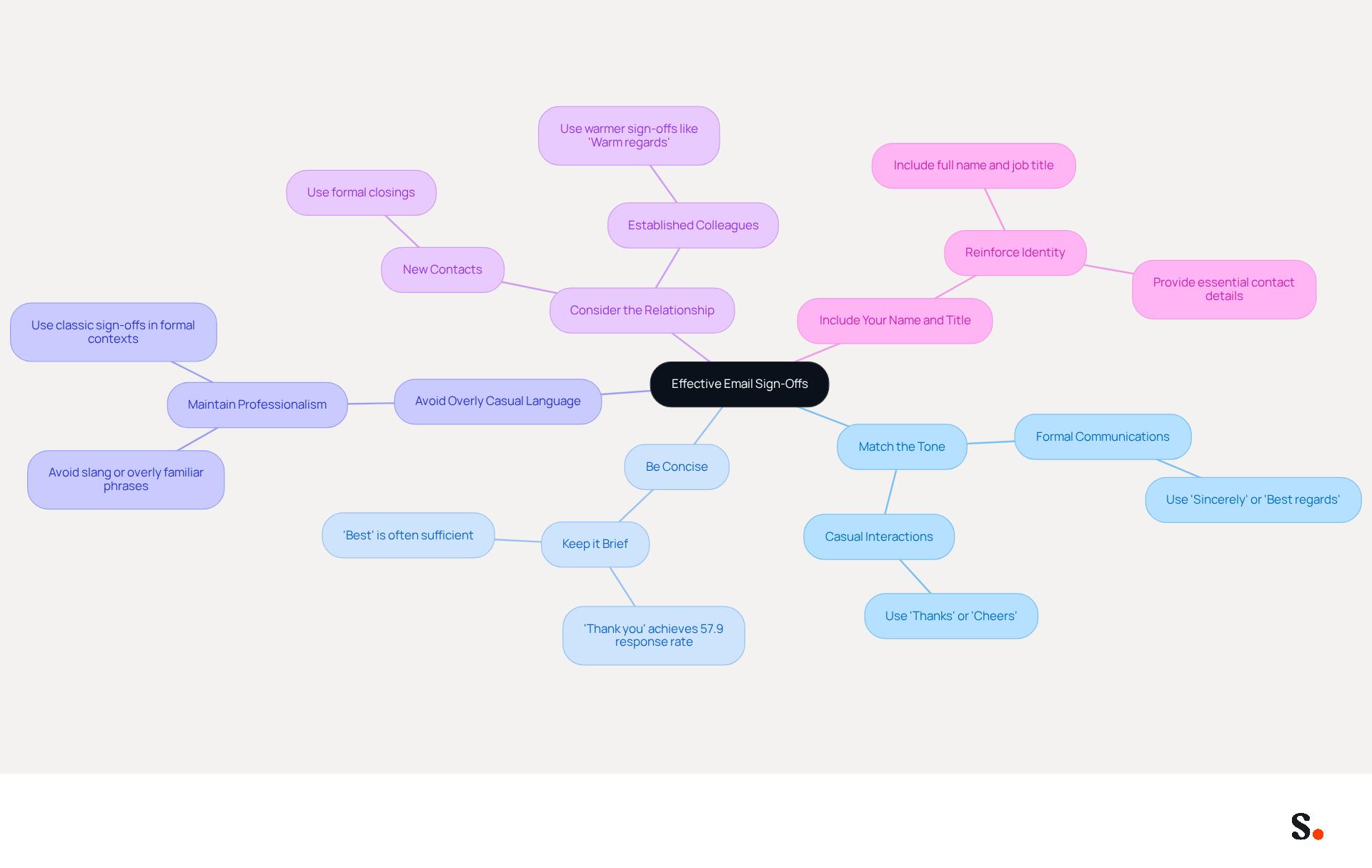
- Match the Tone: Align your sign-off with the overall tone of your email. For formal communications, it is advisable to use polite email sign-offs such as 'Sincerely' or 'Best regards.' For more casual interactions, using polite email sign-offs such as 'Thanks' or 'Cheers' may be appropriate. Research shows that formal closings in initial interactions convey respect, while warmer polite email sign-offs can enhance rapport in ongoing relationships.
- Be Concise: Keep your sign-off brief and to the point. A simple 'Thank you' or 'Best' is often sufficient. Concise closings can significantly increase response rates, with 'Thank you' leading to a remarkable 57.9% response rate.
- Avoid Overly Casual Language: While casual sign-offs can be friendly, it's essential to avoid slang or overly familiar phrases in professional emails. Using overly casual language can lead to misinterpretations and diminish your professional image.
- Consider the Relationship: Tailor your sign-off based on your relationship with the recipient. Use more formal closings for new contacts and casual ones for colleagues. This approach not only maintains professionalism but also incorporates polite email sign-offs to foster deeper relationships.
- Include Your Name and Title: Always include your name and, if appropriate, your title or position to reinforce your identity and professionalism. Including your name and title not only reinforces your identity but also provides essential contact details.
By following these guidelines, you can enhance your professional image and strengthen your communication effectiveness.
Select Appropriate Sign-Offs for Different Contexts and Relationships
The choice of polite email sign-offs plays a crucial role in shaping recipients' perceptions of your communication. Here are examples tailored to different contexts:
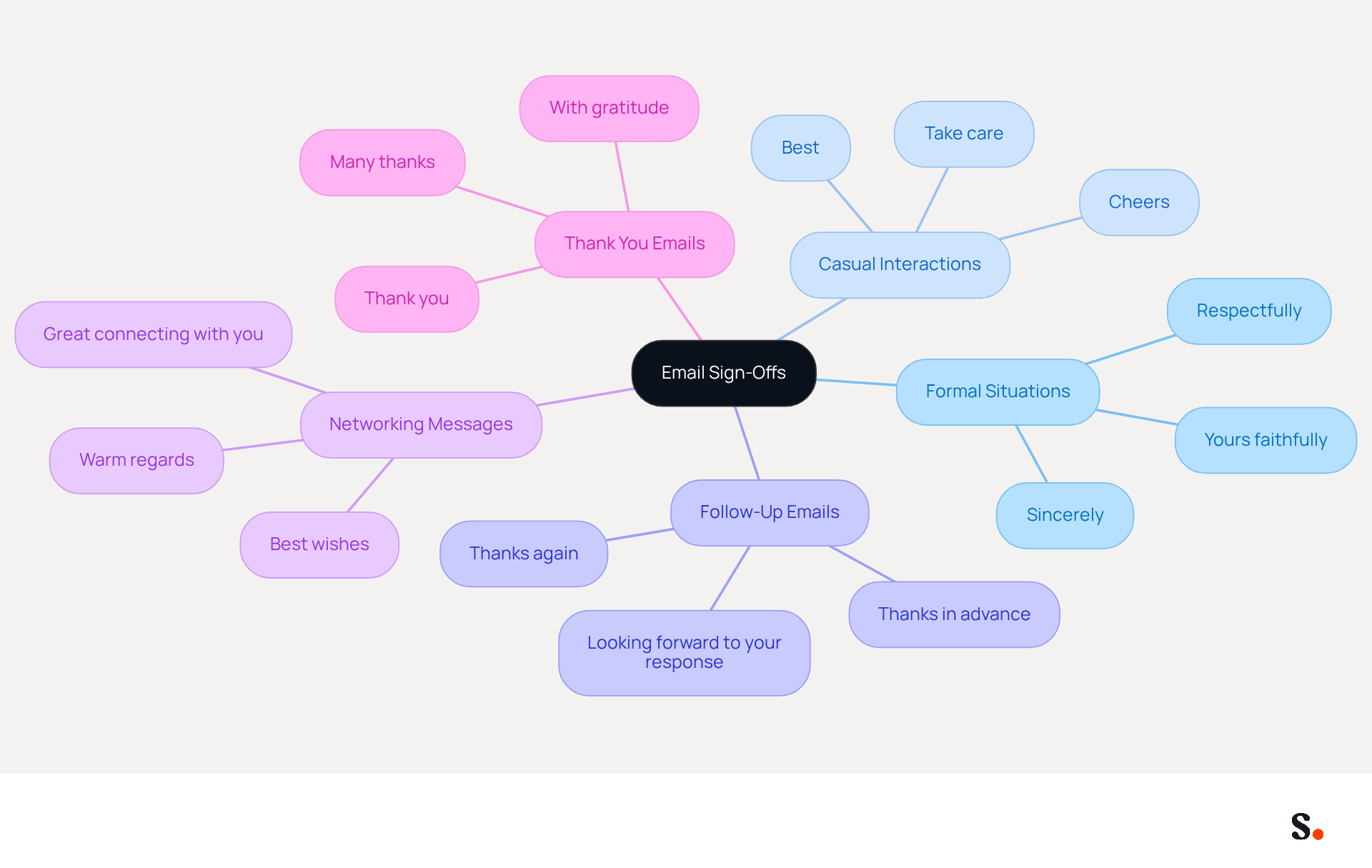
- Formal Situations: For business proposals or legal communications, opt for 'Sincerely' or 'Yours faithfully.' These sign-offs convey respect and professionalism, making them suitable for serious messages.
- Casual Interactions: In emails to colleagues or friends, using 'Cheers' or 'Best' fosters a friendly tone, enhancing rapport and approachability. However, overly casual sign-offs may lead to misunderstandings about your professionalism in formal contexts.
- Follow-Up Emails: When following up on previous conversations, phrases like 'Thanks again' or 'Looking forward to your response' reinforce your engagement and encourage timely replies. Studies show that sign-offs like 'Thanks' and 'Thank you' often lead to better response rates than more formal alternatives.
- For networking messages, consider 'Warm regards' or 'Best wishes' to convey a sense of connection and openness, which can strengthen professional relationships. Various nations have distinct practices for concluding messages, so be aware of cultural variations.
- Thank You Emails: In gratitude-based interactions, using 'Thank you' or 'Many thanks' shows sincerity and makes recipients feel appreciated. As mentioned, digital correspondence closings can influence views of professionalism in business interactions.
By thoughtfully selecting your polite email sign-offs, you can strengthen professional connections and improve your communication effectiveness.
Avoid Common Email Sign-Off Mistakes
To maintain professionalism in email communications, it is crucial to avoid common sign-off mistakes that can undermine your credibility:
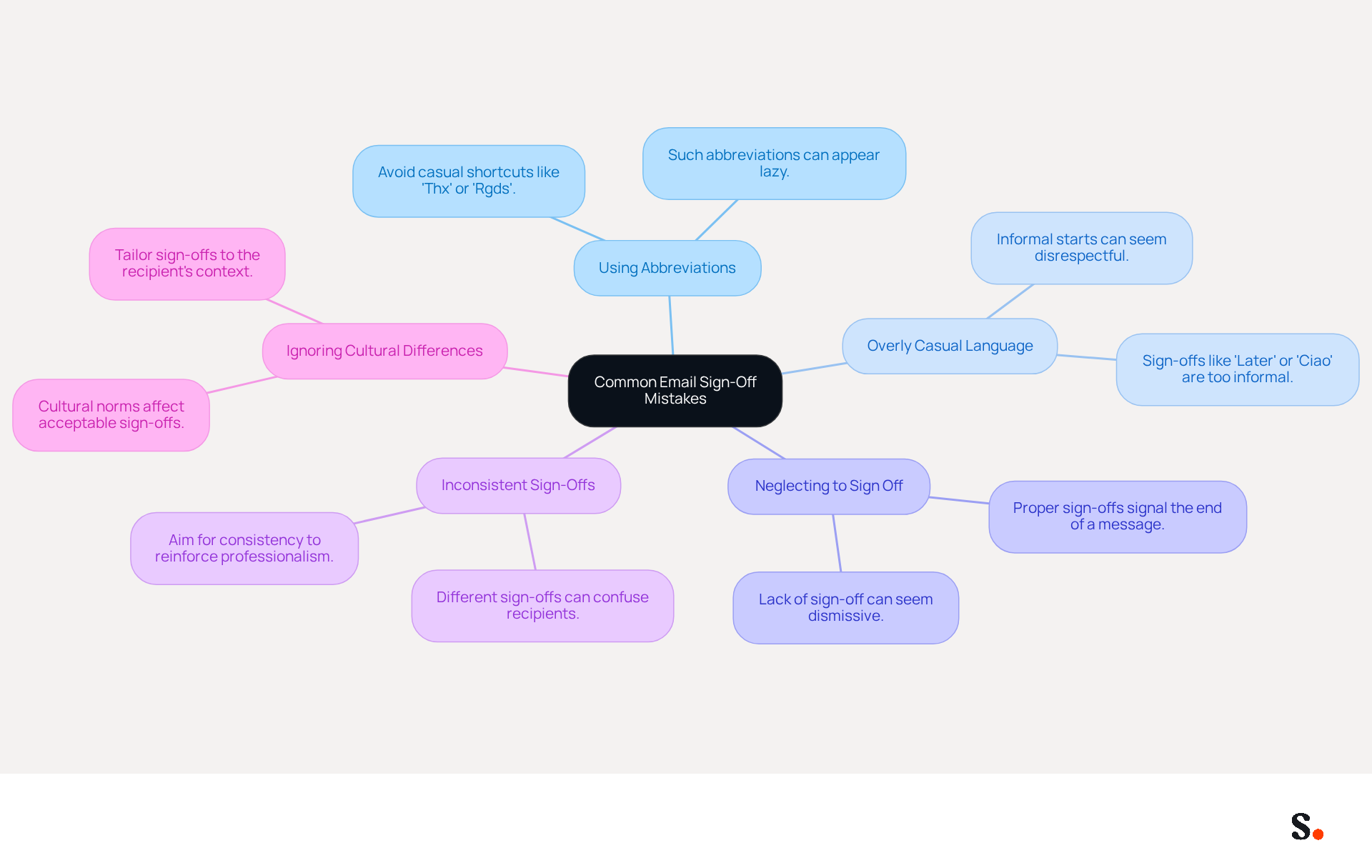
- Using Abbreviations: Avoid casual abbreviations like 'Thx' or 'Rgds.' Diane Gottsman advises that such shortcuts can come across as lazy and unprofessional, diminishing your authority.
- Overly Casual Language: Sign-offs like 'Later' or 'Ciao' may be too informal for professional settings. As Judith Kallos highlights, starting messages too informally can appear disrespectful, particularly with new contacts.
- Neglecting to Sign Off: Without a proper sign-off, your message risks being perceived as incomplete or dismissive. Always conclude your message with polite email sign-offs to signal its end, as this practice enhances the professionalism of your communication.
- Inconsistent Sign-Offs: Using different sign-offs in your correspondence can confuse recipients and dilute your brand image. Aim for consistency across your communications to reinforce professionalism. It's important to remember that even seasoned professionals can overlook these details amidst their busy schedules.
- Ignoring Cultural Differences: Be aware of cultural norms regarding sign-offs, as what is acceptable in one culture may not be in another. Tailoring your sign-off to the recipient's cultural context can enhance communication effectiveness.
By being mindful of these sign-off practices, you can significantly enhance your professional image and communication effectiveness.
Conclusion
Effective communication hinges on the details, and polite email sign-offs play a crucial role in shaping perceptions of professionalism. By choosing the right sign-off, individuals can enhance their credibility and foster positive relationships, ultimately leading to improved engagement and response rates.
Throughout the article, key practices for crafting effective email sign-offs have been highlighted. These include:
- Matching the tone of the email
- Being concise
- Tailoring sign-offs to the relationship with the recipient
Additionally, avoiding common mistakes such as using overly casual language or neglecting to sign off altogether is crucial for maintaining a professional image. Research shows that well-crafted sign-offs can actually boost trust and engagement, highlighting their importance in professional communication.
In a world where digital correspondence is prevalent, mastering the nuances of email sign-offs can transform routine exchanges into opportunities for building lasting professional connections. By implementing these best practices, professionals can not only enhance their communication effectiveness but also strengthen their professional relationships. Embracing the art of the email sign-off is a simple yet powerful way to convey respect and professionalism, ultimately leading to more successful interactions in the workplace.
Frequently Asked Questions
Why are polite email sign-offs important?
Polite email sign-offs are crucial for effective communication as they impact how recipients perceive your professionalism, competence, and approachability.
How do polite email sign-offs affect trust and engagement?
Studies indicate that professional sign-offs can increase trust by 47% and engagement by 22%.
What are the consequences of failing to use effective email sign-offs?
Failing to conclude messages effectively can lead to misunderstandings and missed opportunities.
How do polite email sign-offs enhance communication?
By incorporating polite sign-offs, you acknowledge the recipient with a respectful closing, which conveys professionalism and builds a positive rapport, enhancing communication effectiveness.
What is the benefit of keeping email closings simple and concise?
Keeping message closings simple and concise improves clarity and boosts effectiveness.
What impact do well-designed signature conclusions have on organizations?
Research indicates that organizations using well-designed signature conclusions experience a 25% rise in traffic to specific landing pages, highlighting their efficiency in enhancing engagement and conversions.
How can Scribe help with managing email signatures?
By syncing your Google Workspace with Scribe, you can simplify the management of signatures, ensuring that any changes in your team’s information are automatically updated, saving time and maintaining consistency.
How can the choice of email sign-offs transform communication strategy?
The choice of polite email sign-offs can fundamentally transform your communication strategy and outcomes by reinforcing professionalism and enhancing recipient engagement.
List of Sources
- Understand the Importance of Polite Email Sign-Offs
- The impact of email signatures on your branding (https://signitic.com/en/resources/the-impact-of-email-signatures-on-your-branding)
- Master Email Signature Sign Offs: Best Practices for Brand Impact (https://scribe-mail.com/en-US/blog/master-email-signature-sign-offs-best-practices-for-brand-impact)
- Master Warmly Email Sign-Offs: Best Practices for Impactful Communication (https://scribe-mail.com/en-US/blog/master-warmly-email-sign-offs-best-practices-for-impactful-communication)
- Master Proper Email Sign-Offs to Boost Your Brand Image (https://scribe-mail.com/en-US/blog/master-proper-email-sign-offs-to-boost-your-brand-image)
- Follow Key Guidelines for Effective Email Sign-Offs
- Mastering Professional Email Sign-Offs in 2026 (https://linkedin.com/pulse/mastering-professional-email-sign-offs-2026-bulksignature-qsr4e)
- Master Business Sign-Off Emails: Best Practices for Impactful Communication (https://scribe-mail.com/en-US/blog/master-business-sign-off-emails-best-practices-for-impactful-communication)
- Email Etiquette in the Workplace (https://adminvc.ucla.edu/news/email-etiquette-workplace)
- How to End an Email Professionally (With Examples) (https://iconnect.isenberg.umass.edu/blog/2024/07/10/how-to-end-an-email-professionally-with-examples)
- Email Sign Offs Professional: Best Practices for Business Emails (https://mailwarm.com/blog/professional-email-sign-offs-best-practices)
- Select Appropriate Sign-Offs for Different Contexts and Relationships
- Master Business Sign-Off Emails: Best Practices for Impactful Communication (https://scribe-mail.com/en-US/blog/master-business-sign-off-emails-best-practices-for-impactful-communication)
- 80+ Professional Email Sign-Offs for Every Situation, Role, and Industry (https://syncsignature.com/blog/email-sign-offs)
- Email Sign Offs for Every Industry and Situation | Mailchimp (https://mailchimp.com/resources/email-sign-offs)
- How to Sign Off on an Email Correctly | Rocketseed (https://rocketseed.com/blog/correct-way-to-sign-off-emails)
- 50 Best Email Sign-Offs to End an Email Properly in [year] (https://elementor.com/blog/best-email-sign-offs)
- Avoid Common Email Sign-Off Mistakes
- Email Etiquette: Best Practices for Professional Communication (https://memberportal.gfwc.org/news/communications-public-relations/111/111-Email-Etiquette-Best-Practices-for-Professional-Communication)
- Email Etiquette: Dos and Don’ts of Professional Emails (https://businessnewsdaily.com/8262-email-etiquette-tips.html)
- The 12 Most Common Email Mistakes Professionals Make (https://businessinsider.com/common-email-mistakes-professionals-make-2014-7)
- 5 Common Mistakes You’re Making With Your Email Signature (https://fastcompany.com/3025208/5-common-mistakes-youre-making-with-your-email-signature)
- Email Etiquette in the Workplace (https://adminvc.ucla.edu/news/email-etiquette-workplace)
Get started with Scribe
Build a professional email signature
Free 14-day trial — no credit card.