Master the 'With Gratitude' Email Sign-Off for Effective Communication
Effective email communication hinges not just on the content but also on how messages are concluded, particularly with the 'With Gratitude' sign-off. This
Sophie Grant
Email Signature Specialist, Scribe

Introduction
Effective email communication hinges not just on the content but also on how messages are concluded, particularly with the 'With Gratitude' sign-off. This sign-off serves as a powerful tool for fostering professional relationships and enhancing communication effectiveness. By incorporating this thoughtful closing, individuals can convey appreciation, build rapport, and encourage positive interactions.
Many professionals struggle to determine the right context for using the 'With Gratitude' sign-off, risking miscommunication. What best practices can ensure it resonates genuinely with recipients?
Understanding the significance of gratitude in communication highlights its impact on workplace dynamics and the potential pitfalls to avoid, making it essential for professionals to master this subtle yet impactful aspect of email etiquette.
Understand the Importance of 'With Gratitude' Sign-Off
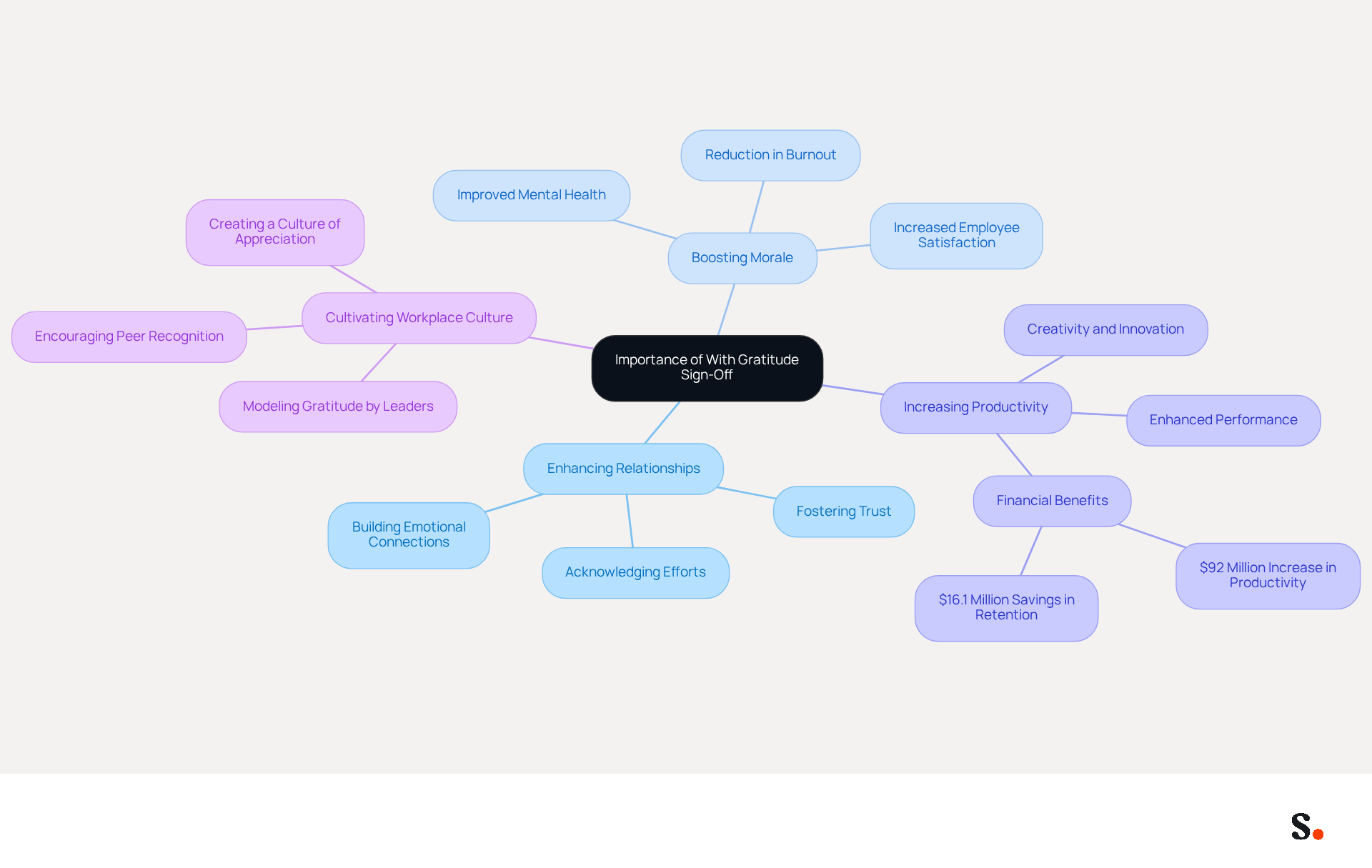
The 'with gratitude email sign-off' is more than a courteous gesture; it is a strategic approach to enhancing professional relationships. By showing appreciation, you acknowledge the recipient's efforts and foster rapport and trust. Studies show that expressing appreciation can boost workplace morale and collaboration significantly, leading to a more cohesive team. Emails that conclude with a gratitude email sign-off tend to receive more responses because they demonstrate appreciation and respect. This sign-off conveys professionalism while reinforcing the sender's commitment to maintaining a positive relationship, establishing it as a crucial practice in any professional setting.
Case studies reveal that organizations promoting a culture of appreciation can see substantial increases in productivity and employee retention. For instance, a typical 10,000-person company can gain nearly $92 million in productivity and save $16.1 million through improved employee retention by implementing strong appreciation practices. Moreover, showing appreciation is associated with improved mental health and overall well-being, which can result in increased energy and fewer sick days among employees.
Incorporating appreciation into your communication not only enhances interpersonal connections but also contributes to a healthier workplace culture. As leaders model gratitude, they encourage a broader adoption of appreciation practices, creating an environment where employees feel valued and motivated. In the end, the 'with gratitude email sign-off' is more than just a way to close an email; it’s a meaningful way to show respect and appreciation that can change how we interact professionally.
Identify Appropriate Contexts for 'With Gratitude'
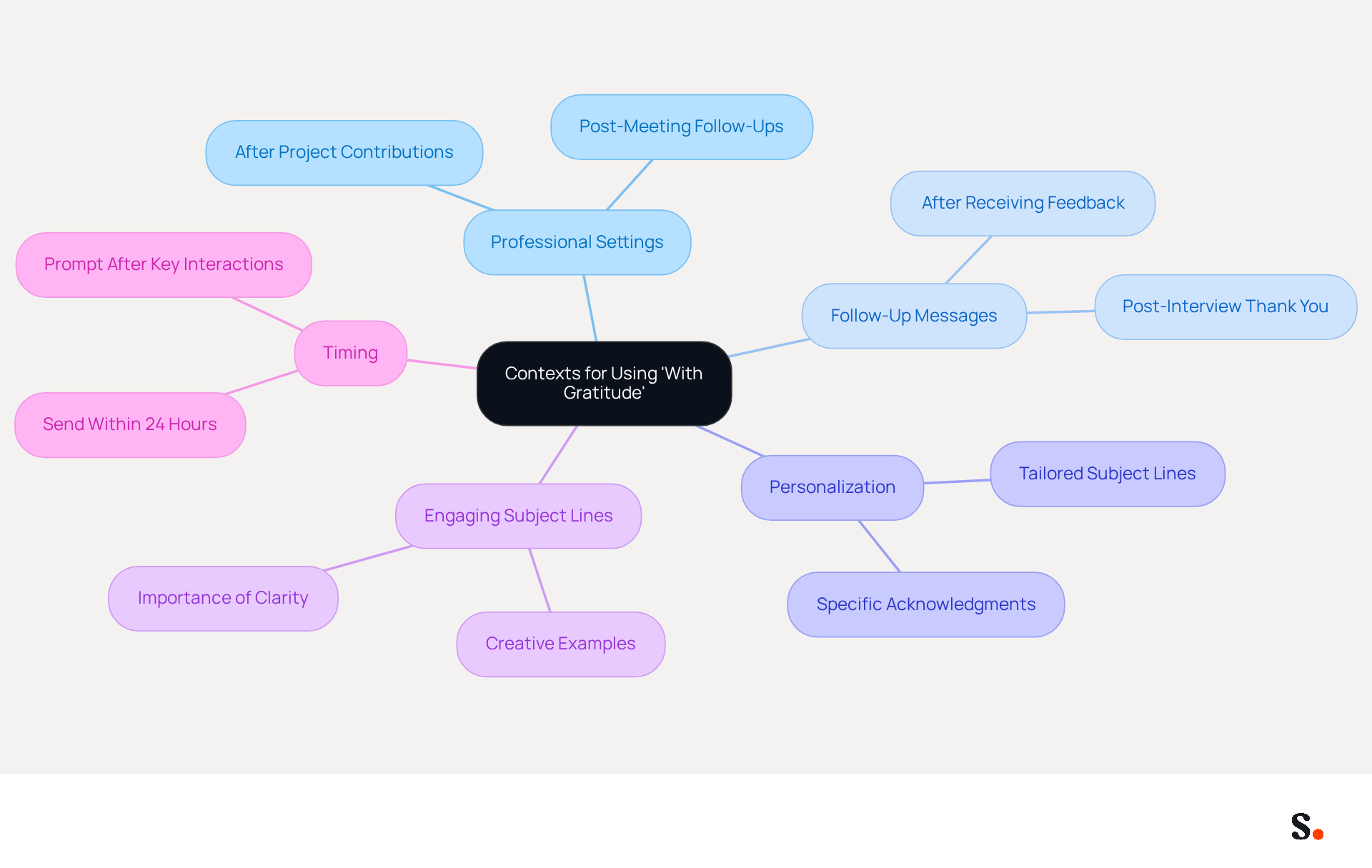
The 'with gratitude email sign-off' serves as a powerful tool for expressing appreciation in professional settings, particularly after receiving support or feedback. For instance, when a colleague has made significant contributions to a project or a client has provided valuable insights, expressing this with gratitude email sign-off reinforces your appreciation and fosters goodwill.
It is also suitable for follow-up messages after meetings or discussions where the recipient's input was crucial, particularly when concluding with a with gratitude email sign-off. Personalizing your messages is crucial; generic expressions often fail to convey genuine appreciation, leading to missed opportunities for connection.
Engaging subject lines, such as 'You’re amazing! Here’s a small thank-you from us,' can capture attention and convey sincerity. Furthermore, timing is essential - sending appreciation emails promptly after important interactions ensures that your thankfulness feels timely and sincere.
Studies show that when appreciation is expressed in notes, it can really boost trust and teamwork among colleagues. By strategically selecting the right moments to express appreciation and incorporating these best practices, you can significantly enhance trust and collaboration within teams, making it an invaluable practice in professional interactions.
Implement Best Practices for Using 'With Gratitude'
To maximize the effectiveness of your email sign-offs, particularly with 'With Gratitude,' consider these best practices:
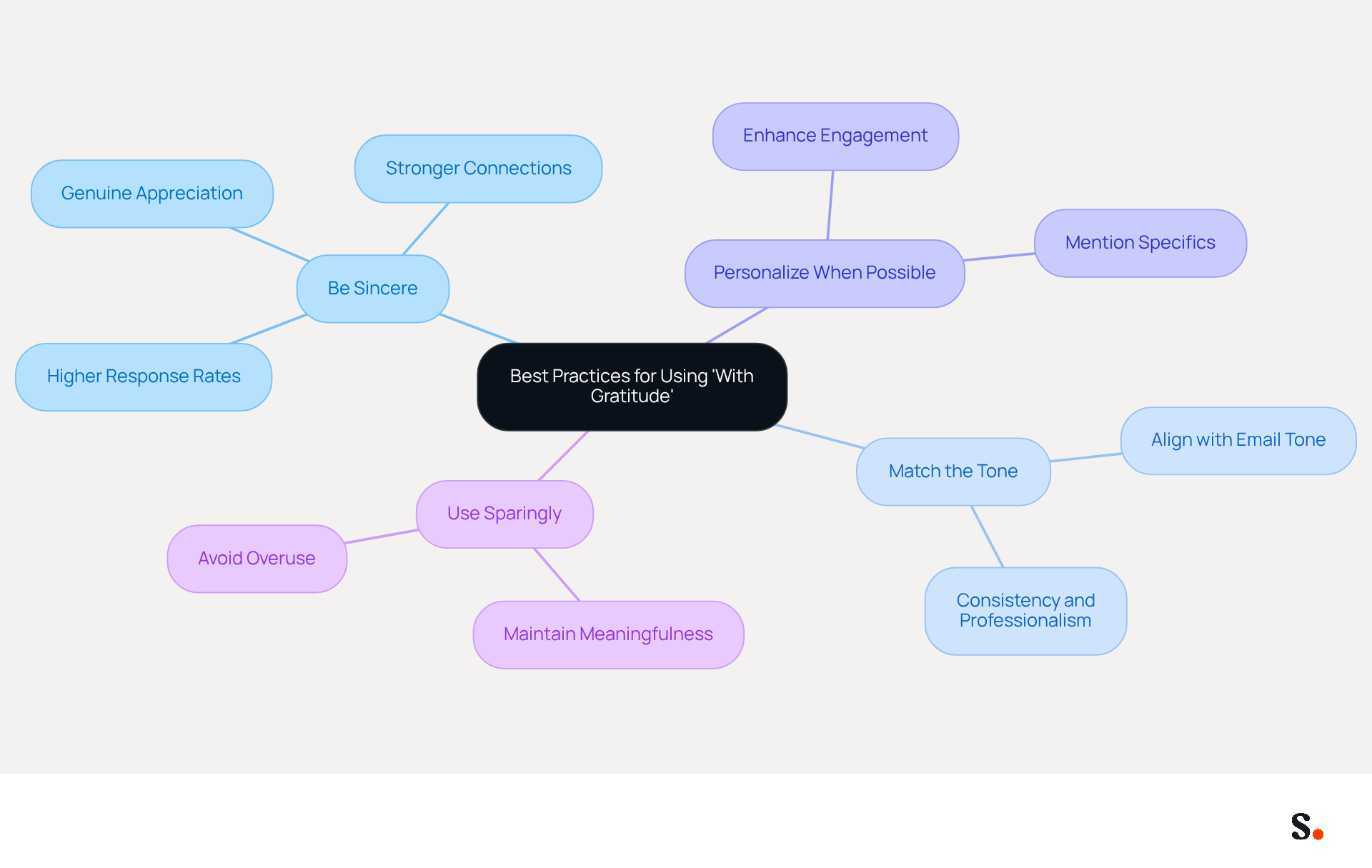
- Be Sincere: Ensure that your expression of appreciation is genuine. Use this closing only when you truly value the recipient's efforts, as sincerity fosters stronger connections. Research shows that emails that include a with gratitude email sign-off receive higher response rates, highlighting the importance of sincerity.
- Match the Tone: Align your closing with the overall tone of your email. If your message is formal, maintain that formality in your closing to ensure consistency and professionalism. This alignment is essential, as the level of formality in your sign-off should match the relationship with the recipient.
- Personalize When Possible: If appropriate, add a personal touch by mentioning what you are grateful for, such as using a 'with gratitude email sign-off' for your support on the recent project. Personalization can enhance engagement and make your interactions more memorable. Tailored communication has been shown to significantly improve engagement rates.
- Use Sparingly: However, excessive use of this closing can lead to diminished impact. Reserve it for moments that truly warrant appreciation, ensuring that it remains meaningful. Avoiding common pitfalls, such as overusing the closing phrase, can help maintain its effectiveness.
Following these practices can enhance your professional communication and strengthen relationships, especially when you conclude your messages with gratitude email sign-off, leading to better response rates and engagement. Sophie Grant, an Email Signature Specialist, notes that thoughtful closings convey genuine concern for the recipient's well-being.
Avoid Common Mistakes with 'With Gratitude' Sign-Off
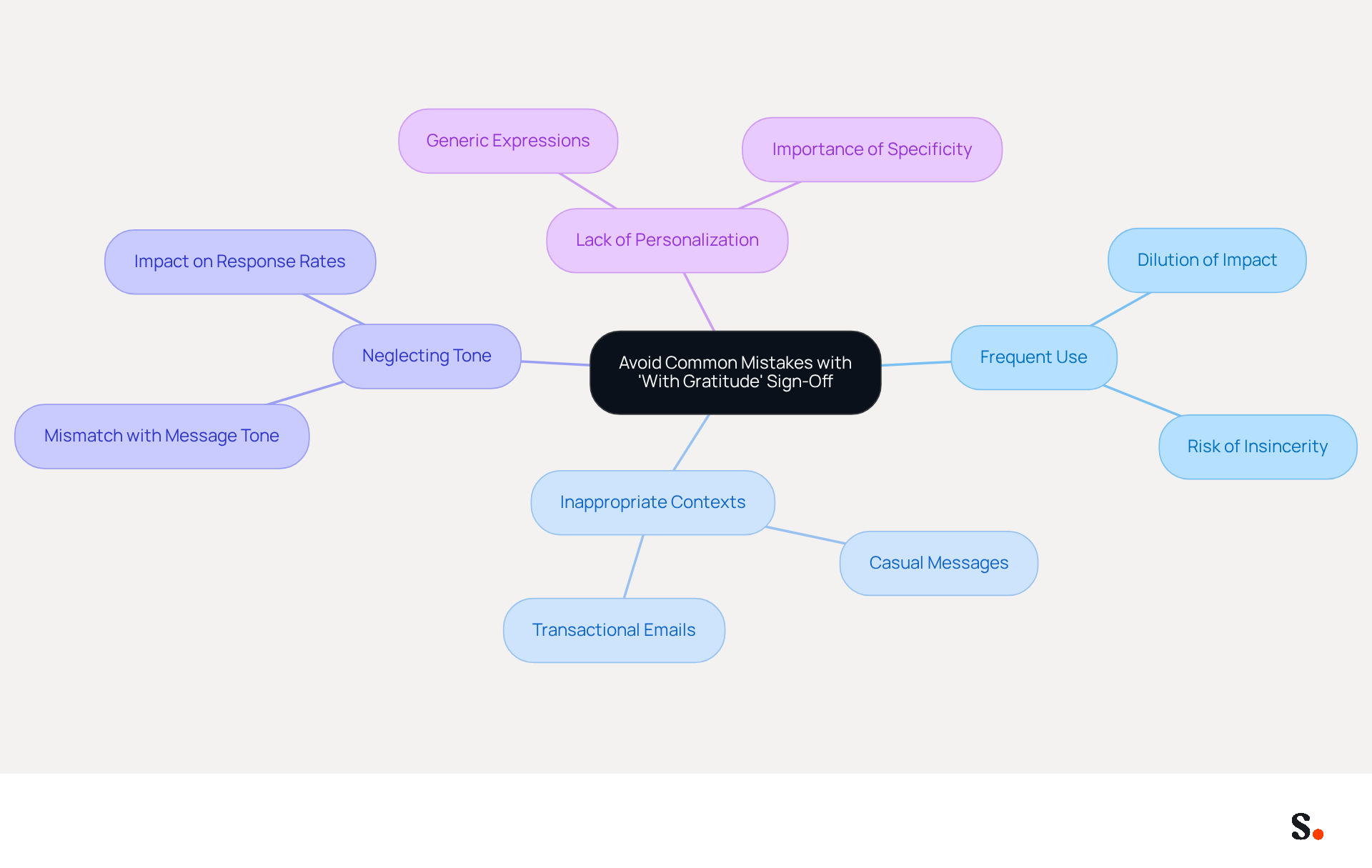
To ensure your 'With Gratitude' sign-off is impactful, it's crucial to avoid common pitfalls:
- Frequent use of this closing can dilute its impact, risking that your gratitude feels less genuine. Research shows that messages expressing gratitude, particularly those with gratitude email sign-off, tend to engage recipients more, highlighting the need for thoughtful use of this closing.
- Inappropriate Contexts: Avoid using 'With Gratitude' in overly casual or transactional messages, as it may appear forced or insincere. Customizing your closing to the situation is essential for upholding professionalism.
- Neglecting Tone: Ensure that your closing aligns with the overall tone of your correspondence. A formal message should not conclude with a casual sign-off. Research shows that emails with a warm, professional tone can get up to 22% more responses, emphasizing the importance of tone in email interactions.
- Lack of Personalization: Generic expressions of appreciation can diminish the message's effectiveness. Whenever possible, specify what you are thankful for to add a personal touch. Personalization can significantly enhance the impact of your messaging.
Avoiding these common mistakes and applying these insights can ensure your expressions of gratitude are both authentic and effective, especially when using a with gratitude email sign-off.
Conclusion
The 'With Gratitude' email sign-off is more than just a polite gesture; it is a strategic tool for enhancing professional relationships. This sign-off expresses appreciation, acknowledges contributions, and builds trust and collaboration, making it a vital component of effective communication.
Key insights throughout the article highlight the importance of sincerity, appropriate context, and personalization when using the 'With Gratitude' sign-off. However, many professionals struggle with ensuring their expressions of gratitude are both genuine and impactful. Avoiding common mistakes, such as overuse or lack of personalization, is crucial to maintaining the sign-off's effectiveness.
Using the 'With Gratitude' sign-off in your emails can really boost communication and help build stronger relationships. By embracing this practice, individuals contribute to a culture of appreciation that not only enhances morale but also drives productivity and engagement within teams. Ultimately, integrating gratitude into communication practices can transform workplace dynamics and elevate overall team performance.
Frequently Asked Questions
What is the significance of using a 'with gratitude' email sign-off?
The 'with gratitude' email sign-off is a strategic approach to enhancing professional relationships by showing appreciation, acknowledging the recipient's efforts, and fostering rapport and trust.
How does expressing gratitude in emails affect workplace dynamics?
Expressing gratitude can significantly boost workplace morale and collaboration, leading to a more cohesive team. Emails that conclude with a gratitude sign-off tend to receive more responses, demonstrating appreciation and respect.
What are the benefits of promoting a culture of appreciation in organizations?
Organizations that promote a culture of appreciation can see substantial increases in productivity and employee retention. For example, a typical 10,000-person company can gain nearly $92 million in productivity and save $16.1 million through improved employee retention by implementing strong appreciation practices.
How does showing appreciation impact employee well-being?
Showing appreciation is associated with improved mental health and overall well-being, resulting in increased energy and fewer sick days among employees.
What role do leaders play in fostering a culture of appreciation?
Leaders who model gratitude encourage broader adoption of appreciation practices, creating an environment where employees feel valued and motivated.
Why is the 'with gratitude' sign-off considered a crucial practice in professional settings?
The 'with gratitude' sign-off conveys professionalism while reinforcing the sender's commitment to maintaining a positive relationship, making it a meaningful way to show respect and appreciation in professional interactions.
List of Sources
- Understand the Importance of 'With Gratitude' Sign-Off
- The power of gratitude in the workplace | Legal Blog (https://legal.thomsonreuters.com/blog/the-power-of-gratitude-in-the-workplace)
- 3 Reasons to Practice Gratitude At Work — And How To Get Started (https://forbes.com/sites/lisaconn/2023/11/20/3-reasons-to-thank-your-team-today---and-how-to-build-a-culture-of-gratitude)
- 5 Science-Backed Reasons to Express Gratitude, according to UC San Diego Research (https://today.ucsd.edu/story/5-science-backed-reasons-to-express-gratitude-according-to-uc-san-diego-research)
- 5 Benefits Of Expressing Gratitude In The Workplace | Last Eight Percent (https://ihhp.com/blog/2021/09/20/5-benefits-of-expressing-gratitude-in-the-workplace)
- The Impact of Gratitude - Structure for Success (https://structure4success.com/the-impact-of-gratitude)
- Identify Appropriate Contexts for 'With Gratitude'
- 60+ Thank You Email Subject Lines (2026) - Genuine & Professional | Sequenzy (https://sequenzy.com/email-subject-lines/thank-you)
- Thank You Email Examples (https://mailsoftly.com/blog/thank-you-email-examples)
- How to Communicate Appreciation and Gratitude in Your Workplace This Thanksgiving Season (https://messiah.edu/dept-communication/pages/how_to_communicate_appreciation_and_gratitude_in_your_workplace_this_thanksgiving_season)
- The power of gratitude: How appreciation email can transform your marketing — Stripo.email (https://stripo.email/blog/the-power-of-gratitude-how-appreciation-email-can-transform-your-marketing)
- The Value of Thank-You Notes in Professional Communication (https://linkedin.com/top-content/writing/writing-professional-thank-you-notes/the-value-of-thank-you-notes-in-professional-communication)
- Implement Best Practices for Using 'With Gratitude'
- Master the Take Care Email Sign-Off: Best Practices for Impact (https://scribe-mail.com/en-US/blog/master-the-take-care-email-sign-off-best-practices-for-impact)
- How to Create More Effective Email Sign-Offs - SCORE (https://score.org/articles/how-create-more-effective-email-sign-offs)
- Email Sign Offs Professional: Best Practices for Business Emails (https://mailwarm.com/blog/professional-email-sign-offs-best-practices)
- Best Email Sign-Offs for Any Correspondence (https://wisestamp.com/examples/email-sign-offs)
- Mastering Professional Email Sign-Offs in 2026 (https://linkedin.com/pulse/mastering-professional-email-sign-offs-2026-bulksignature-qsr4e)
- Avoid Common Mistakes with 'With Gratitude' Sign-Off
- 10 Common Email Mistakes - Mindtools Membership (https://mindtools.com/at253lr/10-common-email-mistakes)
- These 7 common email mistakes are making you look unprofessional (https://fastcompany.com/91353212/these-7-common-email-mistakes-are-making-you-look-unprofessional)
- How to Avoid the Most Common Email Mistakes (https://email.mamma.com/how-to-avoid-the-most-common-email-mistakes)
- Is 'Best' a Good Way to End an Email? Compare Sign-Offs Here (https://scribe-mail.com/en-US/blog/is-best-a-good-way-to-end-an-email-compare-sign-offs-here)
- 11 Common Email Mistakes Everyone Makes (https://linkedin.com/pulse/11-common-email-mistakes-everyone-makes-betty-liu)
Get started with Scribe
Build a professional email signature
Free 14-day trial — no credit card.