Maximize Marketing Impact with 4 Best Practices for v/r
The rise of virtual and augmented reality (v/r) is transforming marketing, presenting brands with unique opportunities to engage consumers in innovative ways
Sophie Grant
Email Signature Specialist, Scribe
Introduction
The rise of virtual and augmented reality (v/r) is transforming marketing, presenting brands with unique opportunities to engage consumers in innovative ways. By harnessing these immersive technologies, marketers can create captivating experiences that enhance customer interaction and drive measurable results. Yet, as v/r adoption grows, brands face the critical question of how to integrate these tools effectively into their marketing strategies while avoiding common pitfalls. By understanding and implementing best practices in v/r marketing, brands can maximize their impact and maintain a competitive edge.
Understand Virtual and Augmented Reality in Marketing
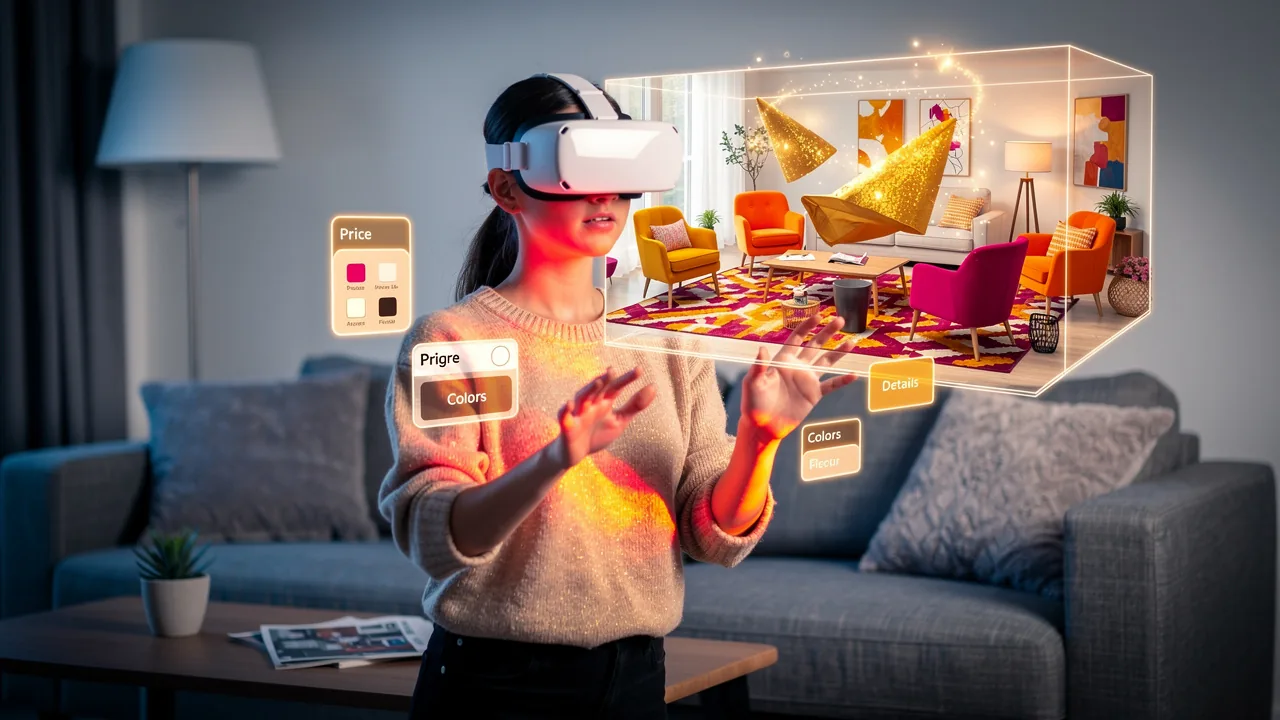
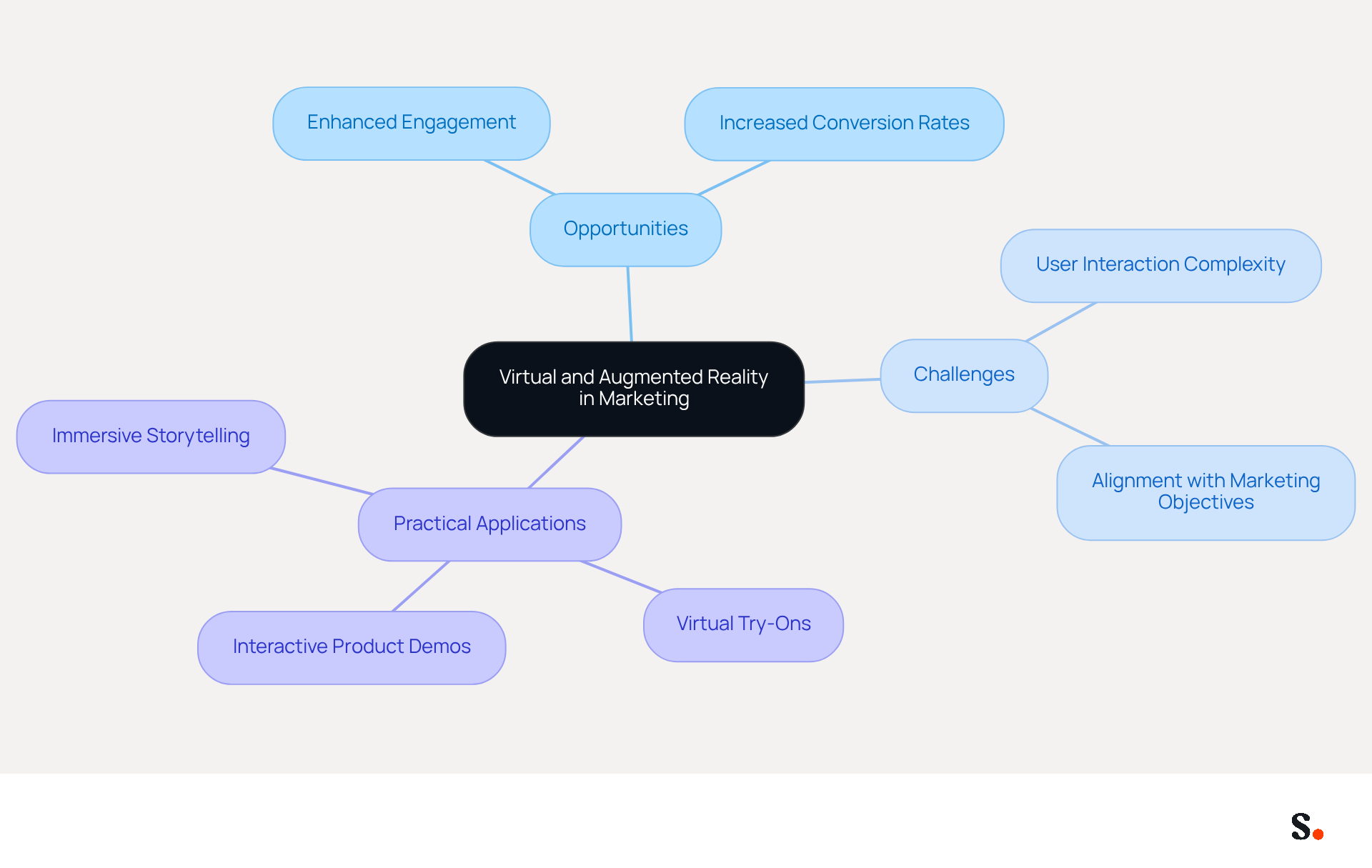
The rise of v/r, including virtual reality (VR) and augmented reality (AR), presents both opportunities and challenges for marketers. VR fully immerses users in a digital environment, while AR enhances the real world by overlaying digital content. These technologies are vital for promotions, giving brands fresh ways to engage with consumers.
For instance, IKEA utilizes AR to help customers visualize how furniture fits into their homes, significantly enhancing the shopping experience. AR promotion can increase conversion rates by 33.13%, highlighting its effectiveness in influencing consumer decisions.
As brands increasingly adopt these immersive technologies, marketers must grasp the applications and benefits of these technologies to innovate and connect with their audiences. According to expert Ashwani Kumar Sharma, 'The integration of AR and v/r in promotional strategies not only enhances customer engagement but also drives measurable results, making v/r essential tools for modern advertisers.'
Marketers should consider practical applications such as:
- Virtual try-ons
- Interactive product demos
- Immersive storytelling
to leverage these technologies effectively. However, they must also be aware of common pitfalls, such as overcomplicating user interactions or failing to align AR and VR initiatives with clear marketing objectives. Marketers who navigate these challenges effectively will position themselves at the forefront of innovation in consumer engagement.
Leverage v/r for Enhanced Customer Engagement
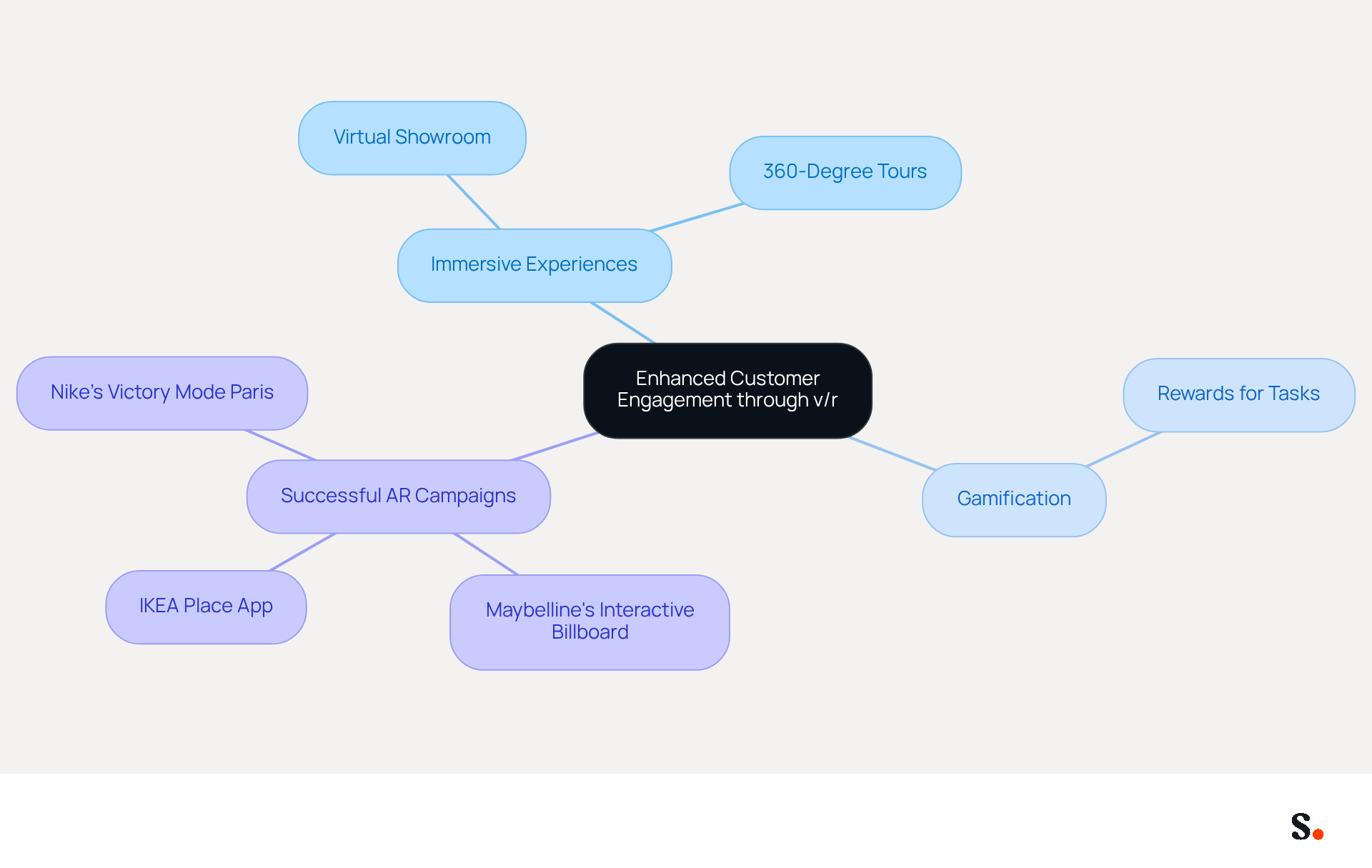
To maximize the impact of v/r, marketers must focus on creating engaging and immersive experiences that resonate with their audience. For instance, brands can develop VR experiences that allow customers to explore products in a virtual showroom or take a 360-degree tour of a location, enhancing product visualization and interaction. Augmented reality can further elevate customer interaction by integrating interactive elements into product packaging or advertisements, encouraging consumers to engage more deeply with the brand.
Adding gamification elements, like rewards for completing virtual tasks, can greatly boost participation. Successful AR campaigns, such as Maybelline's interactive billboard that enabled passersby to try on mascara in real time, illustrate the effectiveness of this approach, generating over 10,000 interactions in just eight hours. Notably, AR campaigns produce engagement durations four times longer than mobile video and a 70% greater memory recall, demonstrating AR's powerful role in promotional strategies.
By 2029, v/r adoption is projected to reach 56.5%, with a global audience of 3.728 billion individuals, underscoring the growing importance of these technologies in promotional strategies. As v/r promotion transitions from being perceived as 'cool' to 'essential' in 2026, brands must embrace v/r technologies now to maintain a competitive edge. However, many marketers struggle with the limitations of current AR/VR technology, including cumbersome hardware and high costs. By focusing on customer experience and interactivity, brands can build stronger connections with their audience, leading to increased engagement and higher conversion rates in their marketing strategies.
Measure and Optimize v/r Marketing Campaigns
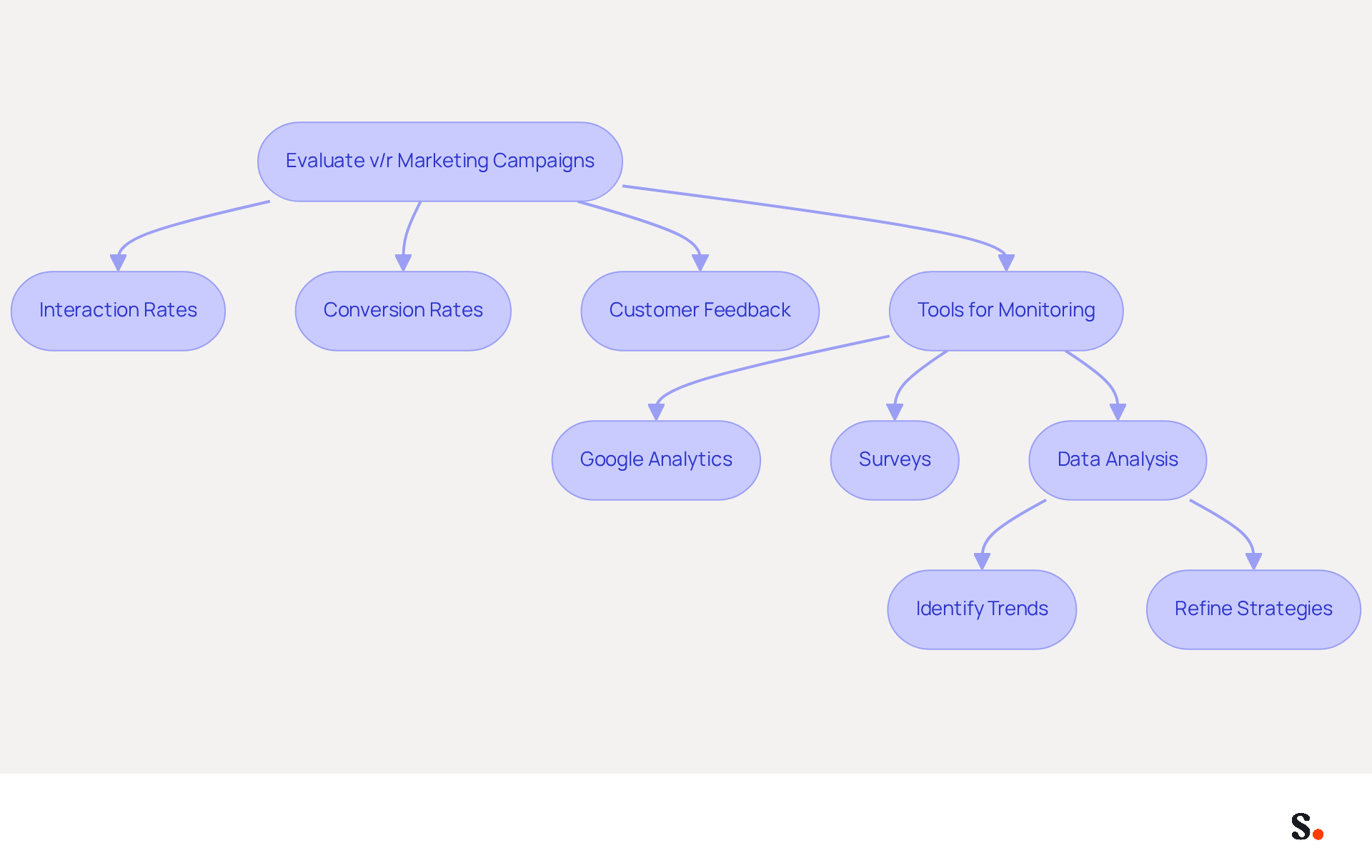
To effectively evaluate v/r marketing campaigns, marketers must establish clear performance indicators, including:
- Interaction rates
- Conversion rates
- Customer feedback
Marketers can utilize tools like Google Analytics to effectively monitor interactions within VR environments, while surveys can assess customer satisfaction. Regular analysis of this data enables marketers to pinpoint trends and identify areas for improvement. For instance, marketers face challenges when high engagement does not translate into conversions, highlighting the necessity for marketers to refine their strategies to improve conversion rates. Continuous optimization based on data insights is essential for maximizing the impact of v/r marketing efforts.
Integrate v/r with Existing Marketing Tools
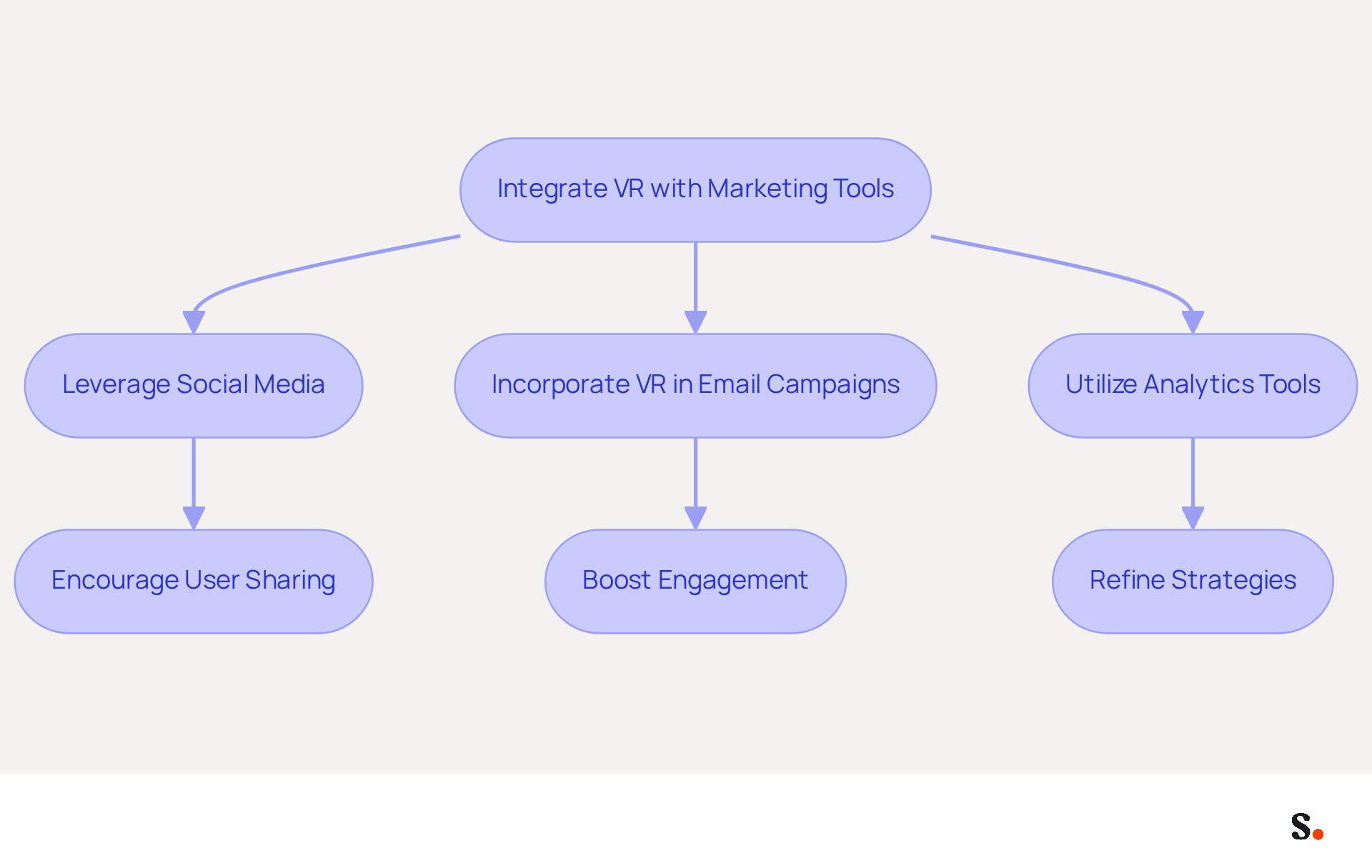
Integrating virtual reality technologies with existing promotional tools is crucial for maximizing their promotional impact. For instance, brands can leverage social media to promote their VR experiences, encouraging users to share their interactions and generate organic buzz. Incorporating VR content into email campaigns significantly boosts engagement, as recipients are more inclined to interact with VR immersive content. Additionally, utilizing analytics tools to track the performance of integrated campaigns allows marketers to refine their strategies and ensure that their VR initiatives complement broader marketing efforts.
Conclusion
For brands striving to enhance customer engagement, the integration of virtual and augmented reality is not just an option; it is a necessity. By harnessing the unique capabilities of VR and AR, marketers can create immersive experiences that engage audiences and transform traditional promotional strategies into dynamic interactions.
The article highlights several key practices for maximizing the impact of VR and AR in marketing:
- Virtual try-ons
- Interactive product demos
- Integration of gamification elements
These strategies not only captivate consumers but also significantly boost engagement and conversion rates. Measuring campaign success with clear performance indicators and optimizing strategies based on data insights is crucial for effective marketing. As brands struggle to adapt to rapid technological changes, they risk falling behind competitors who embrace innovation.
Integrating VR and AR into marketing strategies is a game changer for how brands connect with consumers. By leveraging these immersive technologies, marketers can create memorable experiences that foster deeper relationships with their audiences. Brands that fail to adapt to this shift may find themselves outpaced by competitors who leverage these technologies effectively.
Frequently Asked Questions
What are virtual reality (VR) and augmented reality (AR) in marketing?
VR fully immerses users in a digital environment, while AR enhances the real world by overlaying digital content. Both technologies offer new opportunities for brands to engage with consumers.
How does IKEA utilize augmented reality in its marketing?
IKEA uses AR to help customers visualize how furniture fits into their homes, significantly enhancing the shopping experience.
What impact does AR promotion have on conversion rates?
AR promotion can increase conversion rates by 33.13%, demonstrating its effectiveness in influencing consumer decisions.
What are some practical applications of VR and AR in marketing?
Practical applications include virtual try-ons, interactive product demos, and immersive storytelling.
What challenges should marketers be aware of when using VR and AR?
Marketers should avoid overcomplicating user interactions and ensure that AR and VR initiatives align with clear marketing objectives.
Why is the integration of VR and AR important for modern advertisers?
The integration enhances customer engagement and drives measurable results, making VR and AR essential tools for effective marketing strategies.
List of Sources
- Understand Virtual and Augmented Reality in Marketing
- AR & VR in Marketing 2026: Real Examples, Trends & Benefits (https://esignwebservices.com/blog/ar-and-vr-in-marketing-real-use-cases-2026)
- Augmented Reality Statistics and Facts (2026) (https://scoop.market.us/augmented-reality-statistics)
- Augmented and Virtual Reality:Future of Marketing Trends | Request PDF (https://researchgate.net/publication/338078017_Augmented_and_Virtual_RealityFuture_of_Marketing_Trends)
- AR/VR in Business: Enhancing Customer Experience and Marketing (https://ironhack.com/us/blog/ar-vr-in-business-enhancing-customer-experience-and-marketing)
- Virtual Reality (VR) Market Size, Growth, Share | Report, 2034 (https://fortunebusinessinsights.com/industry-reports/virtual-reality-market-101378)
- Leverage v/r for Enhanced Customer Engagement
- Best Augmented Reality Marketing Campaigns for Brands - FFFACE (https://ffface.me/media/best-augmented-reality-marketing-campaigns-for-brands)
- What marketers need to know about virtual reality — and why it may be worth a try (https://retaildive.com/news/what-marketers-need-to-know-about-virtual-reality-and-why-it-may-be-worth-2/428638)
- The Augmented Reality and Virtual Reality Industry 2026 (https://blog.shayaikehassan.com/the-augmented-reality-and-virtual-reality-industry-an-in-depth-overview-in-2026)
- Marketing Agent Blog (https://marketingagent.blog/2025/10/31/vr-marketing-in-2026-a-field-guide-for-cmos-growth-teams-and-creators)
- 14 examples of augmented reality brand experiences (https://econsultancy.com/14-examples-augmented-reality-brand-marketing-experiences)
- Measure and Optimize v/r Marketing Campaigns
- How to Measure KPIs of VR Marketing Campaigns (https://iflexion.com/blog/measure-kpis-vr-marketing-campaigns)
- Virtual Event Metrics and KPIs for Measuring Success (https://banzai.io/blog/virtual-event-metrics)
- Evaluating Performance and ROI in VR Campaigns: Understanding the Unique KPIs – Veris Behavior (https://verisbehavior.com/en/evaluating-performance-and-roi-in-vr-campaigns-understanding-the-unique-kpis)
- Measuring Success in VR industry (https://battlestart.com/news/tpost/7drf8g5sa1-measuring-success-key-performance-indica)
- Integrate v/r with Existing Marketing Tools
- How Businesses & Marketers Can Use Virtual Reality (VR Marketing) (https://opace.agency/blog/vr-marketing-for-business)
- VR Advertising - Worldwide | Statista Market Forecast (https://statista.com/outlook/amo/ar-vr/vr-advertising/worldwide?srsltid=AfmBOoq6ib5kr-aMemOTTnIyaXk3G-2dvxv3YNyIPcCWVnJ5ULqCNB4o)
- VR Marketing Might be the AdTech Oasis of the Future (https://kochava.com/blog/the-vr-marketing-oasis-of-the-future)
- Marketing Agent Blog (https://marketingagent.blog/2025/10/31/vr-marketing-in-2026-a-field-guide-for-cmos-growth-teams-and-creators)
- What marketers need to know about virtual reality — and why it may be worth a try (https://retaildive.com/news/what-marketers-need-to-know-about-virtual-reality-and-why-it-may-be-worth-2/428638)
Get started with Scribe
Build a professional email signature
Free 14-day trial — no credit card.