What is the Best Regards Email Sign Off and When to Use It?
The nuances of email sign-offs significantly impact professional communication. Among these, the phrase "best regards" stands out as a versatile choice that
Sophie Grant
Email Signature Specialist, Scribe
Introduction
The nuances of email sign-offs significantly impact professional communication. Among these, the phrase "best regards" stands out as a versatile choice that balances warmth and professionalism, making it suitable for various contexts. Many professionals struggle with knowing when to use this sign-off effectively. Exploring the origins, appropriate usage, and key characteristics of "best regards" can enhance communication and strengthen professional relationships.
Define 'Best Regards' in Email Communication
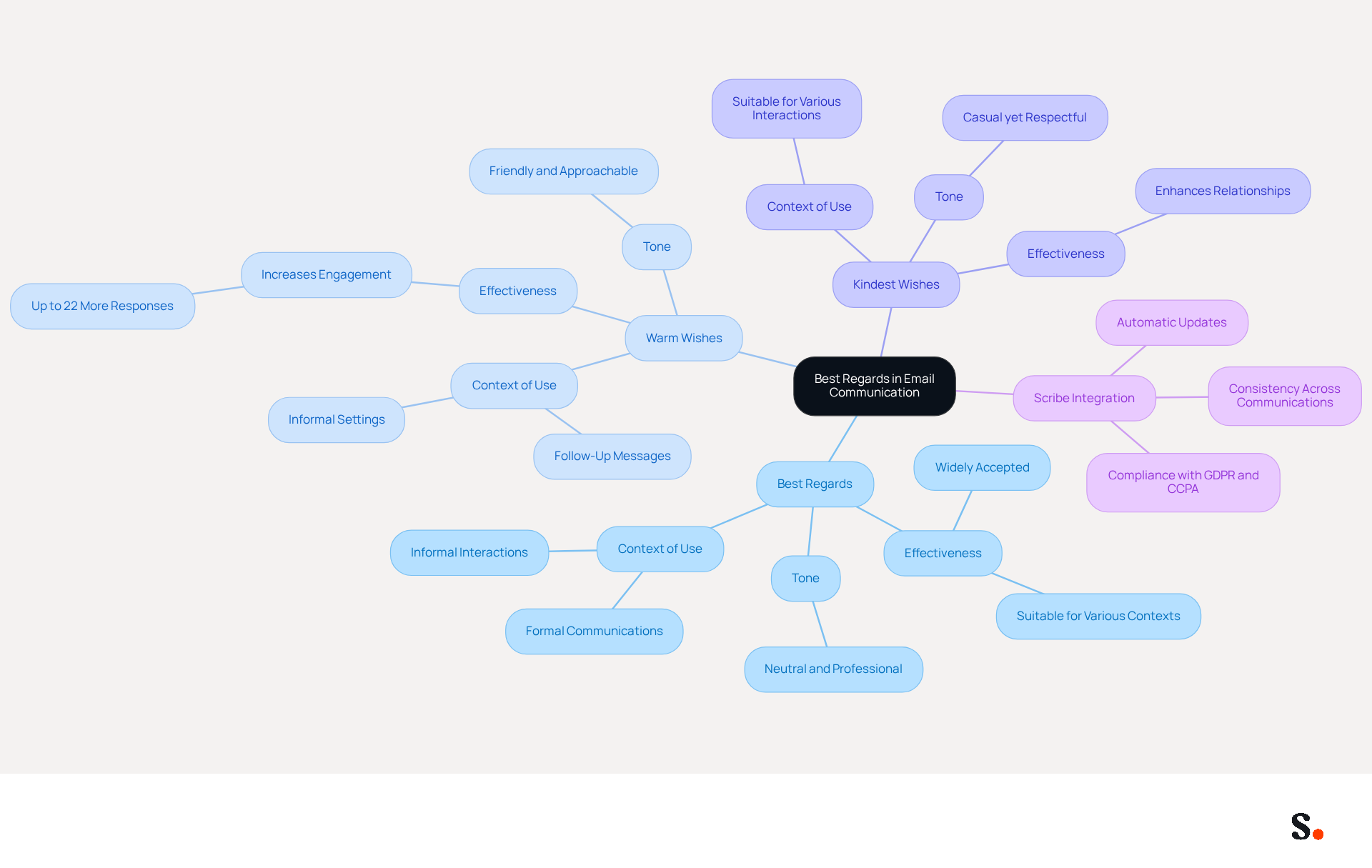
In the realm of professional communication, using the best regards email sign off can significantly influence engagement and perception. 'Warm Wishes' is a commonly used email sign-off that expresses a combination of professionalism and friendliness. This phrase conveys goodwill and respect towards the recipient while maintaining an appropriate level of formality. Serving as a polite closure, it indicates that the sender values the recipient's time and input.
In business communication, 'Kindest Wishes' strikes a balance between casual and overly formal tones, making it suitable for various professional interactions. Research indicates that friendly sign-offs like 'Warm Wishes' can boost engagement, with such messages receiving up to 22% more replies. For example, studies show that the 'best regards email sign off' in various contexts helps maintain professionalism and encourages friendly connections.
Furthermore, integrating Scribe with Google Workspace allows for automatic updates to signatures, ensuring that any changes in team member information are reflected without manual input. This smooth synchronization saves time and helps keep your brand consistent across all communications. Scribe's SOC 2 Type II compliance and adherence to GDPR and CCPA ensure secure data handling, making 'Kind Regards' a preferred choice for professionals aiming to optimize their communication while maintaining compliance and security.
Context and Appropriate Usage of 'Best Regards'
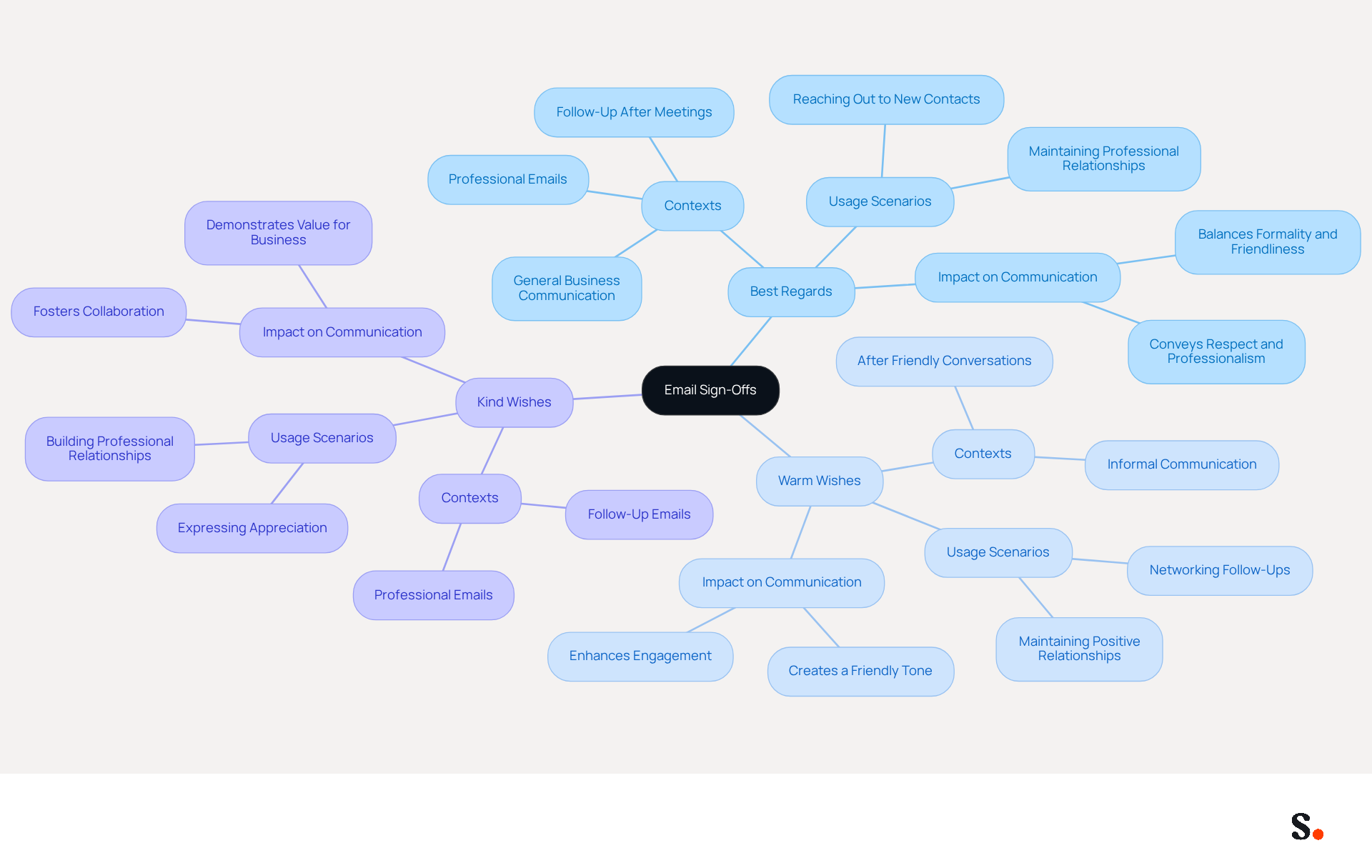
The choice of the best regards email sign off in professional correspondence can greatly influence the tone and effectiveness of communication. 'Warm Wishes' is frequently used in semi-formal to formal correspondence, especially when there is a developed connection between the sender and recipient.
The best regards email sign off is suitable for concluding emails directed at colleagues, clients, and business partners, particularly after discussions that necessitate a polite closure. For instance, after a successful meeting or when following up on a project, using 'Warm Wishes' conveys professionalism while maintaining a friendly tone.
Studies show that thoughtful sign-offs can greatly impact engagement, with warmer messages often getting more responses. As noted by Akvilė Marčiukaitytė, 'Optimal Salutations' effectively balances respect and friendliness, helping to maintain those connections.
However, using 'Kind Wishes' may not be suitable for very casual conversations or when addressing someone with whom you share a close personal relationship, where a more informal sign-off might be preferred. Indeed, utilizing 'Kind Wishes' as a best regards email sign off in follow-up messages enhances professionalism and promotes further engagement, making it a strategic option for sustaining relationships.
Its versatility allows it to adapt to various tones in professional emails, making it suitable for both formal and informal correspondence. In general, grasping the context in which 'Kind Wishes' is utilized is essential for effective interaction and nurturing positive professional connections. Understanding the nuances of sign-offs like 'Kind Wishes' can ultimately strengthen professional ties and foster collaboration.
Origins and Evolution of 'Best Regards'
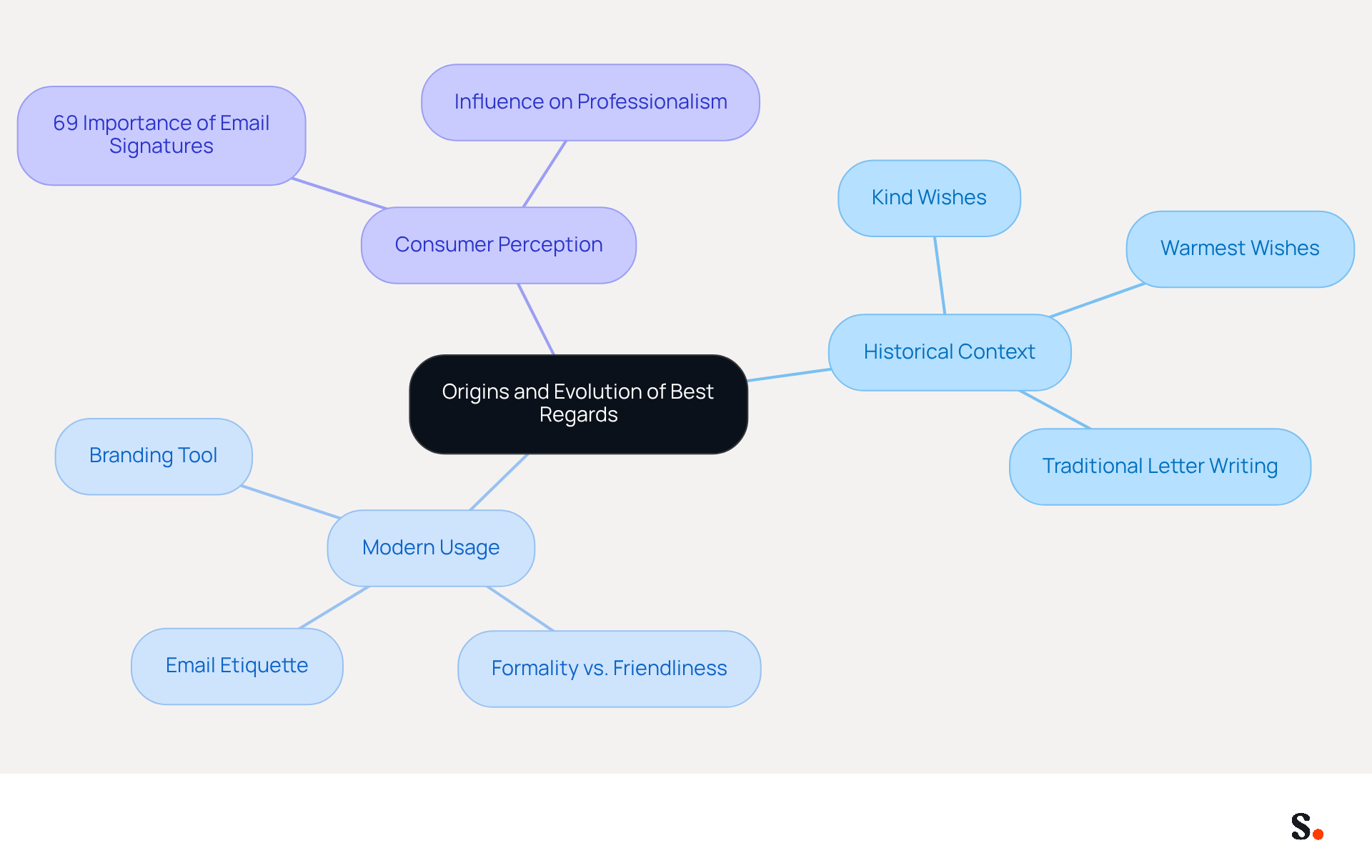
The phrase 'Kind Wishes' illustrates the evolution of communication from traditional letter writing to modern email etiquette. Its roots lie in expressions like 'with my warmest wishes,' which conveyed respect and goodwill. This transition has led to a challenge in maintaining the warmth of traditional communication while adapting to modern efficiency. Currently, the best regards email sign off serves as a widely accepted closing in both personal and professional emails, effectively balancing formality and friendliness. This evolution not only reflects changing communication styles but also highlights the potential for brands to enhance their identity through thoughtful sign-offs.
Interestingly, a significant 69% of consumers feel that having a consistent and professional email signature is essential for businesses, underscoring the importance of small details in communication and transforming a simple sign-off into a powerful branding tool. Ultimately, the best regards email sign off can significantly influence perceptions of professionalism and trustworthiness.
Key Characteristics of 'Best Regards'
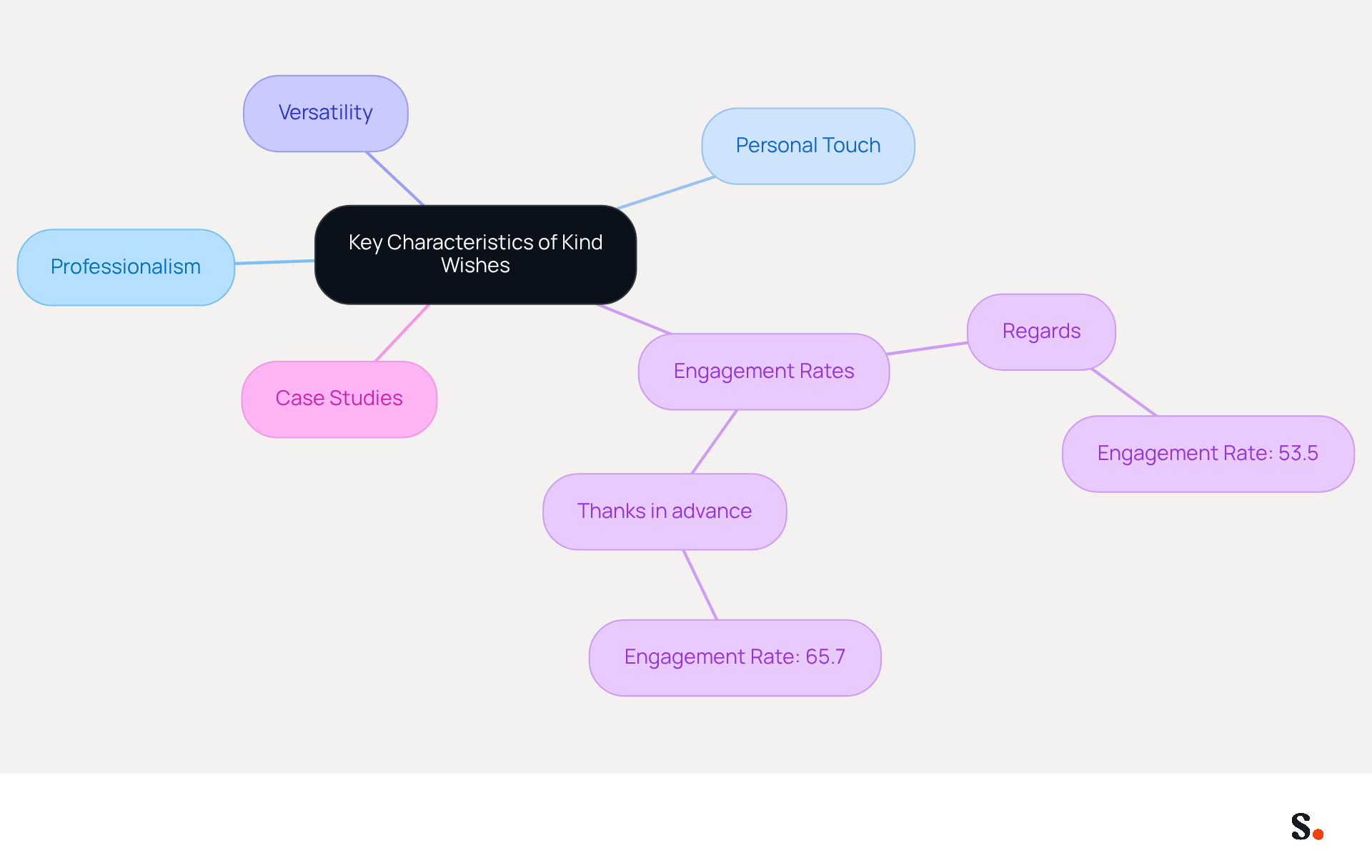
The sign-off 'Kind Wishes' effectively combines professionalism with a personal touch, making it a versatile choice in various contexts. In contrast to rigid sign-offs like 'Sincerely,' 'Warm Wishes' offers a friendly yet respectful alternative. This adaptability makes it suitable for emailing colleagues, clients, professors, and long-time contacts. In fact, emails that end with 'Kind Wishes' are often viewed as neutral, making it a safe option for various professional interactions.
Research indicates that vague sign-offs, such as 'Regards,' correlate with a lower engagement rate of 53.5%, while more engaging sign-offs like 'Thanks in advance' achieve an impressive 65.7% engagement rate. This emphasizes the effectiveness of 'Kind Wishes' in promoting positive communication.
Case studies further illustrate its versatility across various industries, demonstrating how 'Kind Wishes' can enhance rapport and professionalism in diverse settings. These qualities contribute to 'Kindest Wishes' being a preferred choice among professionals. Ultimately, adopting 'Kind Wishes' can transform your email interactions, fostering stronger professional relationships.
Examples of When to Use 'Best Regards'
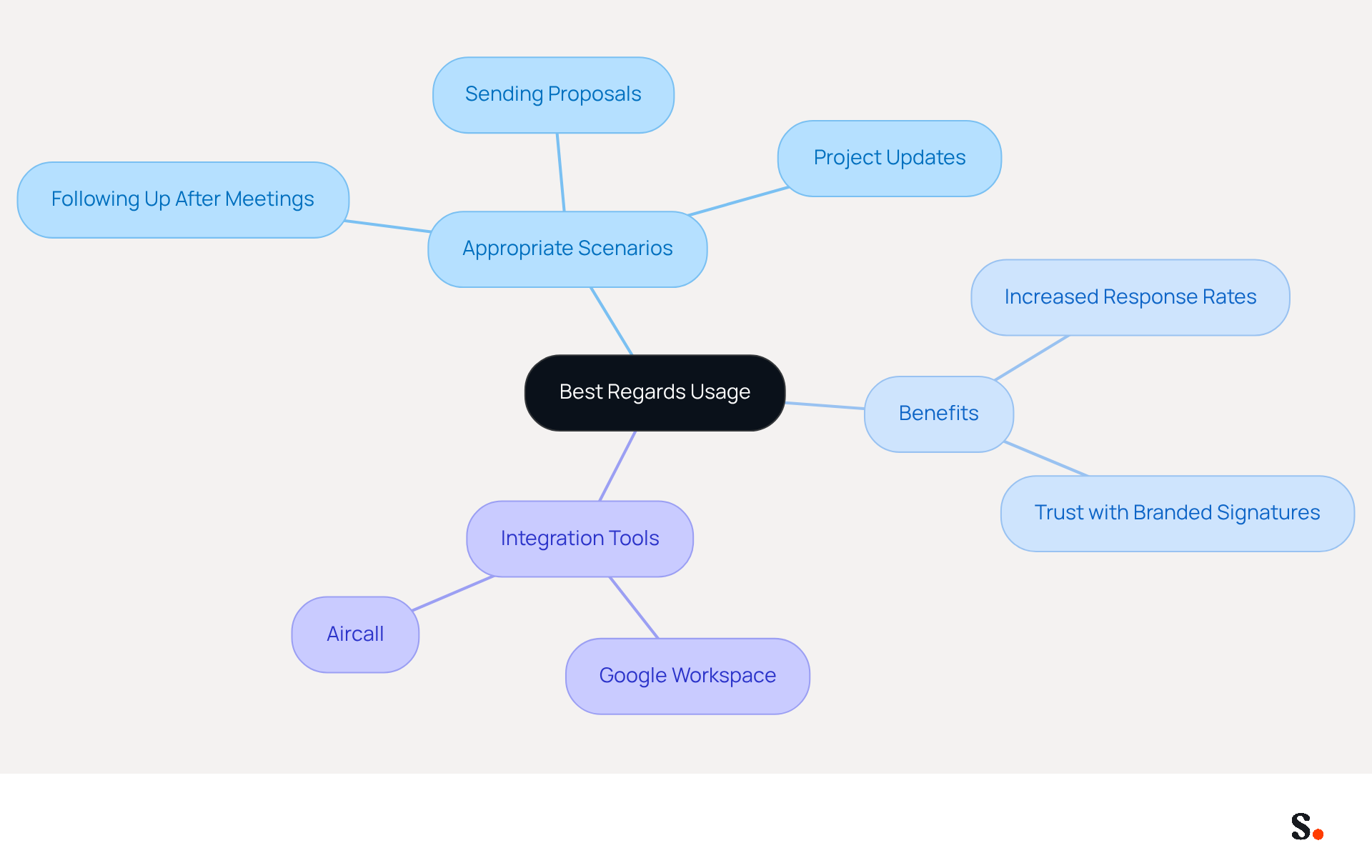
Effective email communication hinges on the choice of sign-offs, including the best regards email sign off, which can significantly influence professional relationships. Instances of suitable usage of 'Finest Salutations' include:
- Following up after a business meeting: 'Thank you for your time today. Best Wishes, [Your Name].'
- Sending a proposal to a client: 'Attached is the proposal we discussed. Best Wishes, [Your Name].'
- Communicating with colleagues on project updates: 'I appreciate your input on this matter. Best Wishes, [Your Name].'
In various business interactions, using 'Kind Wishes' not only conveys professionalism but also maintains a friendly tone. Research indicates that emails with warm tones tend to receive 22% more responses, reinforcing their effectiveness in fostering professional relationships. Furthermore, 76% of individuals trust senders with branded signatures, emphasizing the significance of consistency in communication. By utilizing a best regards email sign off, professionals can enhance their correspondence and ensure a polished image in their interactions.
Moreover, with Scribe's integration capabilities, syncing your Google Workspace ensures that your signatures are automatically updated, saving time and maintaining brand consistency. Any modifications made in your Google Workspace, such as updates to team members' information, will be reflected in Scribe without manual input, allowing for effortless management of signatures. This automated synchronization not only streamlines the process but also supports compliance with SOC 2 Type II standards, ensuring secure data handling.
Furthermore, integrating with Aircall enhances brand consistency across communications, as all signature updates are seamlessly synchronized, reinforcing your organization's identity. Understanding cultural norms in email sign-offs is crucial, as it helps avoid misunderstandings and shows respect for sensitivities.
Conclusion
In professional communication, the choice of sign-off can significantly influence the tone and effectiveness of the message. The best regards email sign-off is a powerful tool in professional communication. It strikes a balance between formality and warmth. By utilizing this phrase, individuals can convey respect and goodwill, fostering positive relationships while maintaining professionalism. This sign-off works well in many situations, making sure messages are polite and engaging.
Throughout the article, key insights highlight the importance of choosing the right sign-off. The best regards email sign-off is particularly effective in follow-up communications, proposals, and project updates, where a friendly yet professional tone is essential. Studies show that thoughtful sign-offs can boost engagement, with warmer messages often leading to higher response rates. Additionally, integrating tools like Scribe with platforms such as Google Workspace ensures that email signatures remain consistent and compliant, further reinforcing brand identity.
Ultimately, the importance of the best regards email sign-off goes beyond etiquette; it shows a commitment to effective communication and building relationships in the professional world. By adopting this sign-off, individuals can enhance their correspondence, leaving a lasting impression that promotes trust and collaboration. Embracing the nuances of email communication, including thoughtful sign-offs, can transform interactions and strengthen professional ties, making it a vital aspect of successful business practices.
Frequently Asked Questions
What does 'Best Regards' mean in email communication?
'Best Regards' is an email sign-off that conveys goodwill and respect towards the recipient while maintaining an appropriate level of formality. It serves as a polite closure, indicating that the sender values the recipient's time and input.
How does the sign-off 'Warm Wishes' impact email engagement?
Research indicates that friendly sign-offs like 'Warm Wishes' can boost engagement, with such messages receiving up to 22% more replies. It expresses a combination of professionalism and friendliness.
When is it appropriate to use 'Best Regards' in professional correspondence?
'Best Regards' is suitable for concluding emails directed at colleagues, clients, and business partners, especially after discussions that necessitate a polite closure, such as following a successful meeting or project update.
What is the difference between 'Warm Wishes' and 'Kindest Wishes'?
'Warm Wishes' is often used in semi-formal to formal correspondence, while 'Kindest Wishes' strikes a balance between casual and overly formal tones, making it suitable for various professional interactions.
Can using 'Kind Wishes' enhance professionalism in emails?
Yes, using 'Kind Wishes' as a sign-off in follow-up messages enhances professionalism and promotes further engagement, making it a strategic option for sustaining relationships.
What role does Scribe play in managing email signatures?
Scribe integrates with Google Workspace to allow for automatic updates to signatures, ensuring that any changes in team member information are reflected without manual input, which saves time and maintains brand consistency.
How does Scribe ensure secure data handling?
Scribe is SOC 2 Type II compliant and adheres to GDPR and CCPA regulations, ensuring secure data handling for its users.
Why is understanding the context of sign-offs important?
Grasping the context in which sign-offs like 'Kind Wishes' are utilized is essential for effective interaction and nurturing positive professional connections, ultimately strengthening professional ties and fostering collaboration.
List of Sources
- Define 'Best Regards' in Email Communication
- Define Best Regards: Master Email Sign-Offs for Success (https://scribe-mail.com/en-US/blog/define-best-regards-master-email-sign-offs-for-success)
- Warm Regards vs Best Regards: Choosing the Right Sign-Off (https://scribe-mail.com/en-US/blog/warm-regards-vs-best-regards-choosing-the-right-sign-off)
- Why Best Regards Is the Ultimate Email Sign-Off (With One Exception) (https://gmass.co/blog/best-regards)
- Context and Appropriate Usage of 'Best Regards'
- Warm Regards vs Best Regards vs Kind Regards: Choosing the Right Email Sign-Off (https://salesforge.ai/blog/warm-regards-vs-best-regards-vs-kind-regards)
- Master Business Sign-Off Emails: Best Practices for Impactful Communication (https://scribe-mail.com/en-US/blog/master-business-sign-off-emails-best-practices-for-impactful-communication)
- Why Best Regards Is the Ultimate Email Sign-Off (With One Exception) (https://gmass.co/blog/best-regards)
- How to Use 'Best Regards': Capitalization and Email Tips (https://scribe-mail.com/en-US/blog/how-to-use-best-regards-capitalization-and-email-tips)
- Origins and Evolution of 'Best Regards'
- What Does Best Regards Mean? (https://signature.email/blog/what-does-best-regards-mean)
- The History of Email Signatures: From Simple Sign-Offs to Smart Branding (https://digicomm360.com/history-of-email-signatures)
- What Email Signatures Really Mean for Your Marketing Strategy (https://scribe-mail.com/en-US/blog/what-email-signatures-really-mean-for-your-marketing-strategy)
- Key Characteristics of 'Best Regards'
- Why Best Regards Is the Ultimate Email Sign-Off (With One Exception) (https://gmass.co/blog/best-regards)
- Is 'Best' a Good Way to End an Email? Compare Sign-Offs Here (https://scribe-mail.com/en-US/blog/is-best-a-good-way-to-end-an-email-compare-sign-offs-here)
- Best Regards vs Sincerely: Choosing the Right Sign-Off for Impact (https://scribe-mail.com/en-US/blog/best-regards-vs-sincerely-choosing-the-right-sign-off-for-impact)
- How to Sign Off on an Email Correctly | Rocketseed (https://rocketseed.com/blog/correct-way-to-sign-off-emails)
- Examples of When to Use 'Best Regards'
- Why Best Regards Is the Ultimate Email Sign-Off (With One Exception) (https://gmass.co/blog/best-regards)
- How to Use 'Best Regards': Capitalization and Email Tips (https://scribe-mail.com/en-US/blog/how-to-use-best-regards-capitalization-and-email-tips)
- Master Business Sign-Off Emails: Best Practices for Impactful Communication (https://scribe-mail.com/en-US/blog/master-business-sign-off-emails-best-practices-for-impactful-communication)
- Email Sign Offs for Every Industry and Situation | Mailchimp (https://mailchimp.com/resources/email-sign-offs)
Get started with Scribe
Build a professional email signature
Free 14-day trial — no credit card.