What Is the Meaning of Best Regards in Professional Emails?
The choice of sign-off in professional emails significantly shapes the tone and effectiveness of communication. Among the myriad options available, "Best
Sophie Grant
Email Signature Specialist, Scribe
On this page
- Introduction
- Define 'Best Regards': Understanding Its Meaning in Email Communication
- Contextual Use: When to Employ 'Best Regards' in Professional Emails
- Origins of 'Best Regards': A Historical Perspective
- Key Characteristics: Analyzing the Tone and Formality of 'Best Regards'
- Conclusion
- Frequently Asked Questions
- List of Sources
Introduction
The choice of sign-off in professional emails significantly shapes the tone and effectiveness of communication. Among the myriad options available, "Best Regards" stands out as a versatile phrase that conveys goodwill and professionalism, making it suitable for various contexts. Understanding the strategic use of this closing is essential, as it can influence engagement and the overall impression left on the recipient.
What does "Best Regards" signify in business communication, and how can its effective application enhance professional relationships?
Define 'Best Regards': Understanding Its Meaning in Email Communication
In professional communication, the choice of sign-off can significantly influence engagement and perception. 'Kind regards' is a frequently utilized sign-off that expresses goodwill and professionalism, making it suitable for both formal and semi-formal communications. This phrase indicates respect and positive intentions towards the recipient, suggesting that the sender wishes them well. Its versatility allows it to be employed in various professional interactions, reinforcing a cordial tone while adhering to business etiquette.
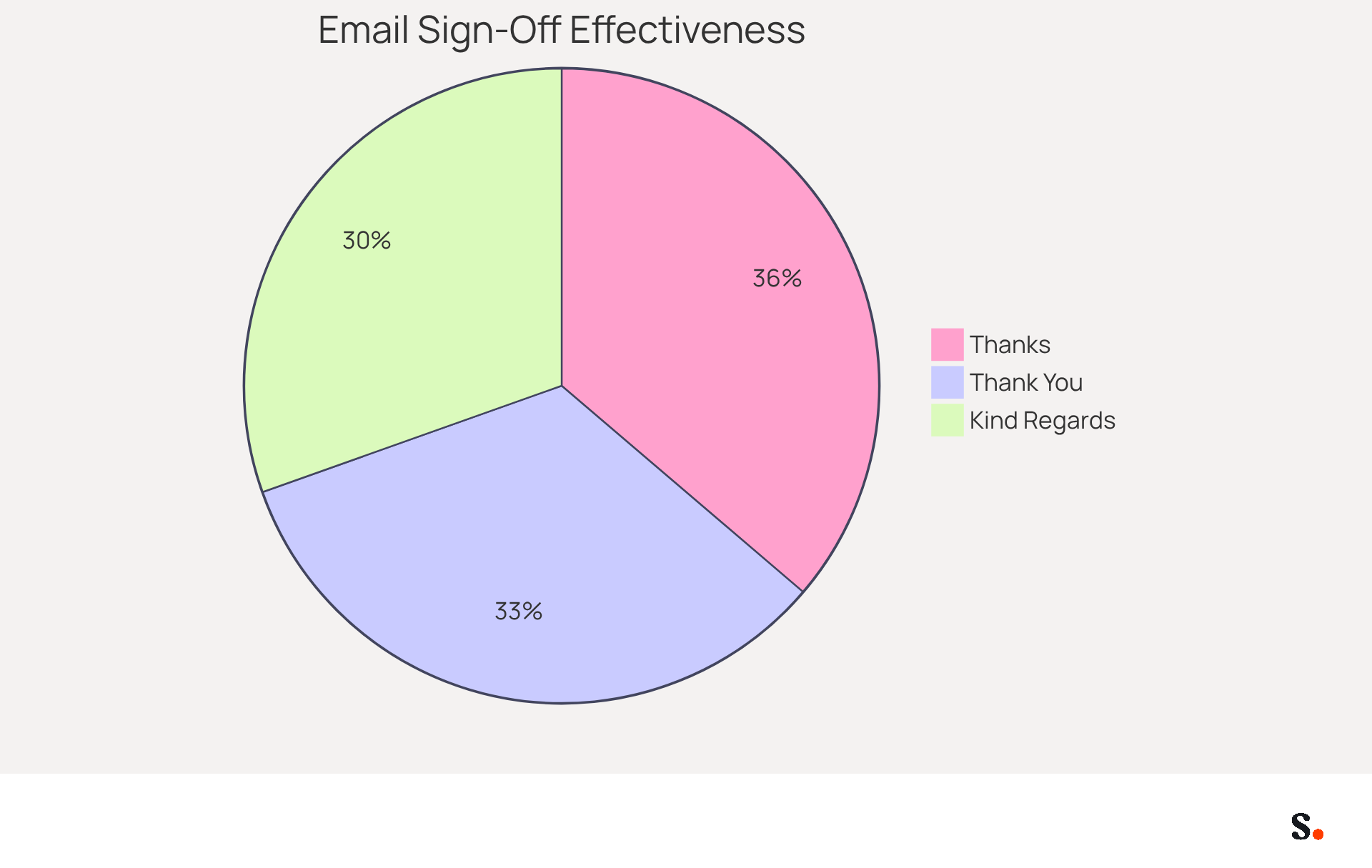
Research indicates that 'Kind regards' achieves a response rate of 52.9%, establishing it as a reliable choice for email sign-offs. In contrast, gratitude-based sign-offs like 'Thanks' and 'Thank you' outperform it, with response rates of 63% and 57.9%, respectively. This emphasizes the significance of choosing the appropriate concluding phrase to enhance engagement.
According to Email Signature Rescue, 'Kind regards' is recognized as a dependable all-purpose sign-off, appropriate even for initial cold contacts, demonstrating its role in maintaining professionalism. Case studies reveal that companies utilizing consistent branded signatures, which often include such sign-offs, report over a 22% increase in response rates, further emphasizing the impact of thoughtful communication strategies.
With Scribe's automated signature management, organizations can effortlessly update signatures, ensuring that 'Kind regards' and other professional closings are consistently used across all communications. Scribe's SOC 2 Type II compliance guarantees that your data is handled securely, while its SAML Single Sign-On integration simplifies access for employees.
By leveraging Scribe's features, businesses can enhance their communication effectiveness, ensuring that every interaction reflects professionalism and brand consistency. Ultimately, the strategic use of sign-offs like 'Kind regards' can transform routine correspondence into opportunities for meaningful engagement.
Contextual Use: When to Employ 'Best Regards' in Professional Emails
The choice of sign-off in professional emails can significantly influence the tone and effectiveness of communication.
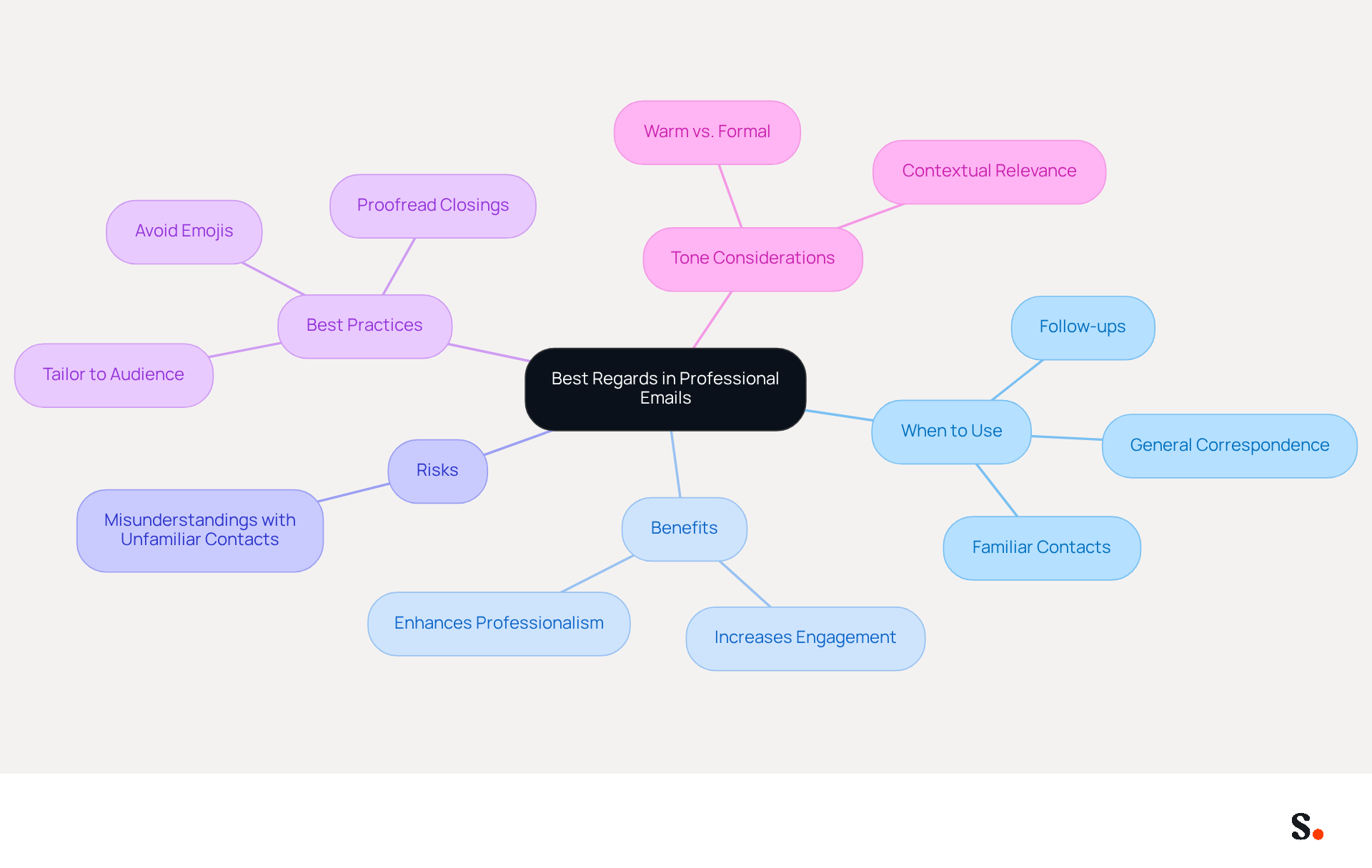
- 'Kind regards' is ideally used in situations where a level of familiarity exists between the sender and recipient, such as communications with colleagues, clients, or business partners with whom a rapport has been established.
- It's especially useful in follow-ups, project updates, and any general correspondence where a friendly yet professional tone is desired.
- For example, utilizing 'Kind regards' in follow-up emails enhances professionalism and promotes further interaction, as studies indicate that emails with warm tones get 22% more responses, highlighting how effective 'Kind regards' can be for engagement.
- However, using 'Kind regards' with unfamiliar contacts may lead to misunderstandings or a lack of professionalism.
- Understanding the context in which to use 'Kind regards' can greatly improve the effectiveness of email communication.
- This understanding can lead to more successful interactions and stronger professional relationships, making it a flexible choice in roughly 95% of professional scenarios.
- Best practices suggest that tailoring the sign-off to your audience and context can enhance the overall impression of your correspondence, ensuring it aligns with the message's tone and the dynamics of the relationship.
- It's also wise to avoid emojis in sign-offs to keep a professional tone.
Origins of 'Best Regards': A Historical Perspective
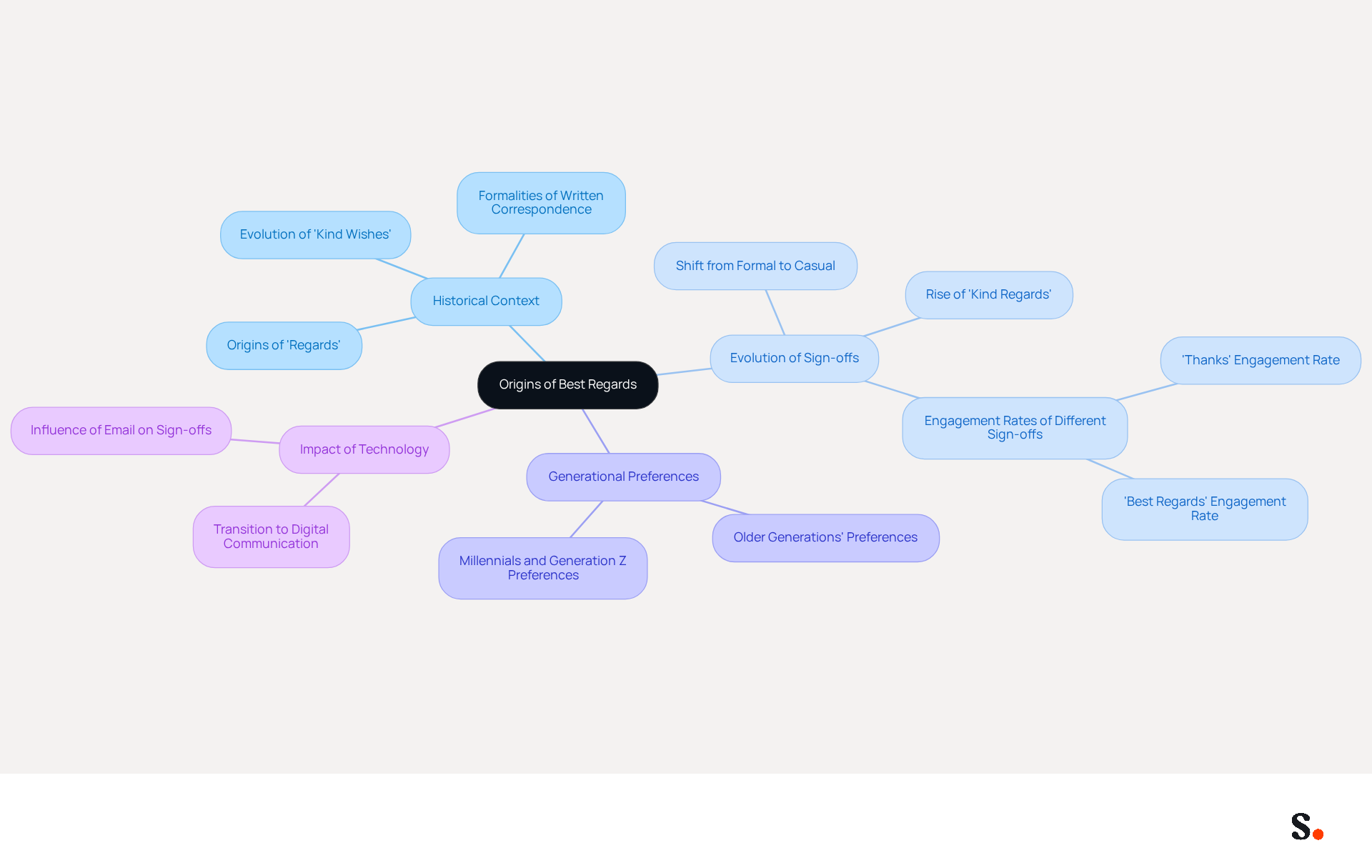
The evolution of sign-offs in professional correspondence reflects changing communication norms and preferences. The expression 'Kind wishes' has its origins in the customary practices of letter writing, where it functioned as a courteous conclusion to express good sentiments. Historically, the term 'regards' comes from the Old French 'regarder,' meaning 'to look at' or 'to consider,' which evolved into a way of expressing esteem or respect. As communication shifted from handwritten letters to digital formats, many began to wonder what is the meaning of best regards, as it emerged as a concise and effective way to maintain the courteous tone of formal correspondence. Its continued popularity reflects the enduring importance of politeness in professional interactions.
The evolution of electronic correspondence sign-offs has mirrored technological advancements. Early email communications often mirrored traditional letter writing, with sign-offs like 'Sincerely' and 'Yours faithfully' being commonplace. However, as the digital landscape matured, preferences shifted towards more casual yet respectful sign-offs. 'Kind regards' became a popular option, balancing professionalism with a personable touch.
Studies indicate that sign-offs expressing gratitude, like 'Thank you,' lead to significantly higher engagement rates than neutral closings such as 'Kind regards.' For example, messages ending with 'Thanks' yield a 63% engagement rate, while 'Best regards' averages lower. This highlights what is the meaning of best regards in terms of showing appreciation in written communications.
Case studies reveal that generational preferences also influence the choice of sign-offs. Millennials and Generation Z tend to prefer more casual sign-offs, while older generations may lean towards traditional options. Recognizing these preferences can enhance engagement and foster better relationships, as the choice of sign-off can significantly impact how messages are perceived and responded to.
Furthermore, customizing message sign-offs according to context and recipient connections improves the genuineness of the communication. Ultimately, the choice of sign-off can shape the tone of communication and influence professional relationships.
Key Characteristics: Analyzing the Tone and Formality of 'Best Regards'
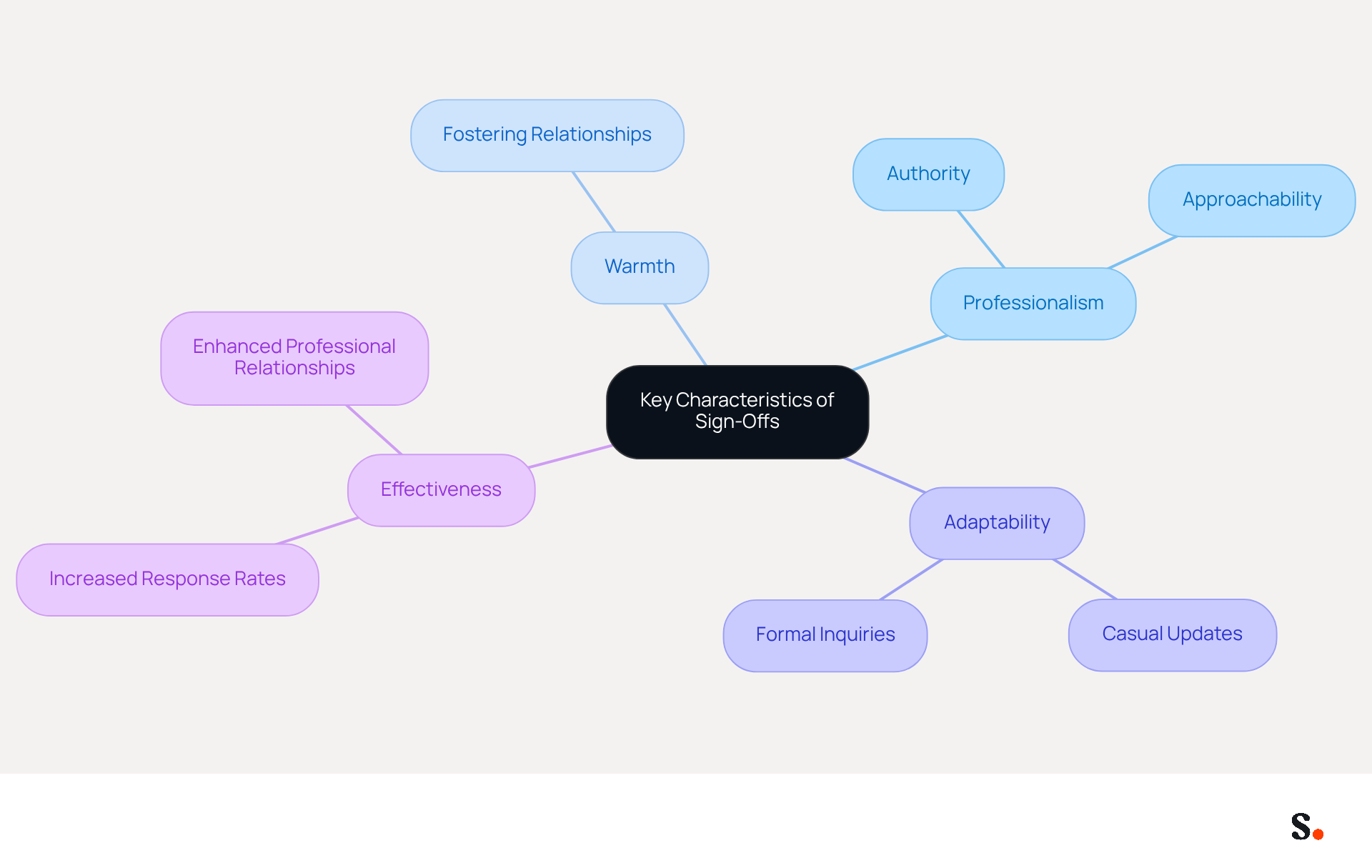
Finding the right sign-off in business communication can be challenging, yet 'Kind regards' strikes an ideal balance between professionalism and warmth. This phrase conveys respect without being overly stiff, which is essential for fostering positive workplace relationships. Its adaptability makes it effective for various contexts, from casual team updates to formal business inquiries. This flexibility enhances its effectiveness as a closing remark.
Communication specialists observe that 'Kind regards' is not obsolete; it remains one of the most commonly accepted and recognized sign-offs in contemporary correspondence etiquette. It toes the line between formal and informal, making it appropriate for a range of business interactions. In fact, messages that end with a friendly, professional tone, such as 'Warm wishes', receive 22% more responses than those that are distant and formal.
According to Sophie Grant, an Email Signature Specialist, choosing the right conclusion can really boost the sentiment of your message. Research examining the tone of sign-offs indicates that 'Kind regards' is especially effective in preserving professionalism while remaining approachable. This closing is often favored in professional settings because it reflects a sender's familiarity with the recipient, which can significantly impact the dynamics of communication. By choosing 'Best regards', senders can convey a sense of authority while also inviting collaboration, making it a strategic choice in email correspondence. Ultimately, the right sign-off can transform the tone of your message and enhance your professional relationships.
Conclusion
The phrase 'Best regards' is not just a sign-off; it is a strategic tool in professional email communication. Using it strategically can improve the tone of your emails, helping to build positive relationships and encourage engagement. Understanding the nuances of this sign-off helps professionals communicate more effectively, ensuring their messages resonate with recipients.
Throughout the article, the importance of selecting the right closing phrase has been emphasized. 'Best regards' is particularly effective in contexts where familiarity exists, such as interactions with colleagues or clients. The historical evolution of this phrase highlights its adaptability, transitioning from traditional letter writing to modern digital communication. Additionally, research indicates that sign-offs expressing warmth and professionalism, like 'Best regards,' can lead to higher response rates, reinforcing the need for thoughtful email etiquette.
In the end, your choice of sign-off can change how others perceive your professionalism. By using phrases like 'Best regards,' individuals can enhance their communication strategies, ensuring that every email reflects professionalism and fosters meaningful connections. Embracing the significance of email closings not only improves engagement but also contributes to building stronger professional relationships in an increasingly digital world.
Frequently Asked Questions
What does the sign-off 'Kind regards' mean in email communication?
'Kind regards' expresses goodwill and professionalism, indicating respect and positive intentions towards the recipient. It is suitable for both formal and semi-formal communications.
How effective is 'Kind regards' as an email sign-off?
Research shows that 'Kind regards' achieves a response rate of 52.9%, making it a reliable choice for email sign-offs.
How do gratitude-based sign-offs compare to 'Kind regards'?
Gratitude-based sign-offs like 'Thanks' and 'Thank you' have higher response rates, at 63% and 57.9% respectively, indicating they may enhance engagement more effectively than 'Kind regards'.
Is 'Kind regards' appropriate for initial cold contacts?
Yes, 'Kind regards' is recognized as a dependable all-purpose sign-off, making it suitable even for initial cold contacts.
What impact do consistent branded signatures have on response rates?
Companies that use consistent branded signatures, which often include sign-offs like 'Kind regards', report over a 22% increase in response rates.
How can Scribe assist organizations with email signatures?
Scribe's automated signature management allows organizations to effortlessly update signatures, ensuring consistent use of 'Kind regards' and other professional closings across all communications.
What security measures does Scribe provide for data handling?
Scribe is SOC 2 Type II compliant, ensuring that data is handled securely.
What is the benefit of using Scribe's features for businesses?
By leveraging Scribe's features, businesses can enhance communication effectiveness, ensuring that every interaction reflects professionalism and brand consistency.
List of Sources
- Define 'Best Regards': Understanding Its Meaning in Email Communication
- What Does Best Regards Mean? (https://signature.email/blog/what-does-best-regards-mean)
- Best Regards vs Other Email Sign-Offs: Which Gets More Responses? (https://dripdraft.com/q/best-regards-email-sign-off-response-rates-optA)
- This Analysis of 350,000 Messages Reveals the Best Way to End an Email (https://inc.com/jeff-haden/this-analysis-of-350000-messages-reveals-best-way-to-end-an-email.html)
- Contextual Use: When to Employ 'Best Regards' in Professional Emails
- How to end an email: 70+ professional sign-offs & examples (https://blog.superhuman.com/how-to-end-an-email)
- How to Properly End an Email: 4 Steps for Professional Sign-Offs (https://scribe-mail.com/en-US/blog/how-to-properly-end-an-email-4-steps-for-professional-sign-offs)
- How to Use 'Best Regards': Capitalization and Email Tips (https://scribe-mail.com/en-US/blog/how-to-use-best-regards-capitalization-and-email-tips)
- Origins of 'Best Regards': A Historical Perspective
- Is 'Best' a Good Way to End an Email? Compare Sign-Offs Here (https://scribe-mail.com/en-US/blog/is-best-a-good-way-to-end-an-email-compare-sign-offs-here)
- What Does Best Regards Mean? (https://signature.email/blog/what-does-best-regards-mean)
- 40 Best Email Practices Backed by Statistics (https://getmailbird.com/best-email-practices-backed-by-statistics)
- A personal history of email closings, 1988-present (https://dmcampbellwsu.org/2016/04/13/a-personal-history-of-email-closings-1988-present)
- Key Characteristics: Analyzing the Tone and Formality of 'Best Regards'
- Is 'Best' a Good Way to End an Email? Compare Sign-Offs Here (https://scribe-mail.com/en-US/blog/is-best-a-good-way-to-end-an-email-compare-sign-offs-here)
- Best Regards or Kind Regards: Choosing the Right Email Closing (https://scribe-mail.com/en-US/blog/best-regards-or-kind-regards-choosing-the-right-email-closing)
- The Importance of Email Etiquette by Ambition UK (https://ambition.co.uk/blog/2018/02/the-importance-of-email-etiquette.amp)
- The beautiful ways different cultures sign emails (https://bbc.com/worklife/article/20190508-why-the-way-you-close-your-emails-is-causing-confusion)
- Why Best Regards Is the Ultimate Email Sign-Off (With One Exception) (https://gmass.co/blog/best-regards)
Get started with Scribe
Build a professional email signature
Free 14-day trial — no credit card.